We may earn a commission from links on this page, at no extra cost to you. Picks are researched, not sponsored.
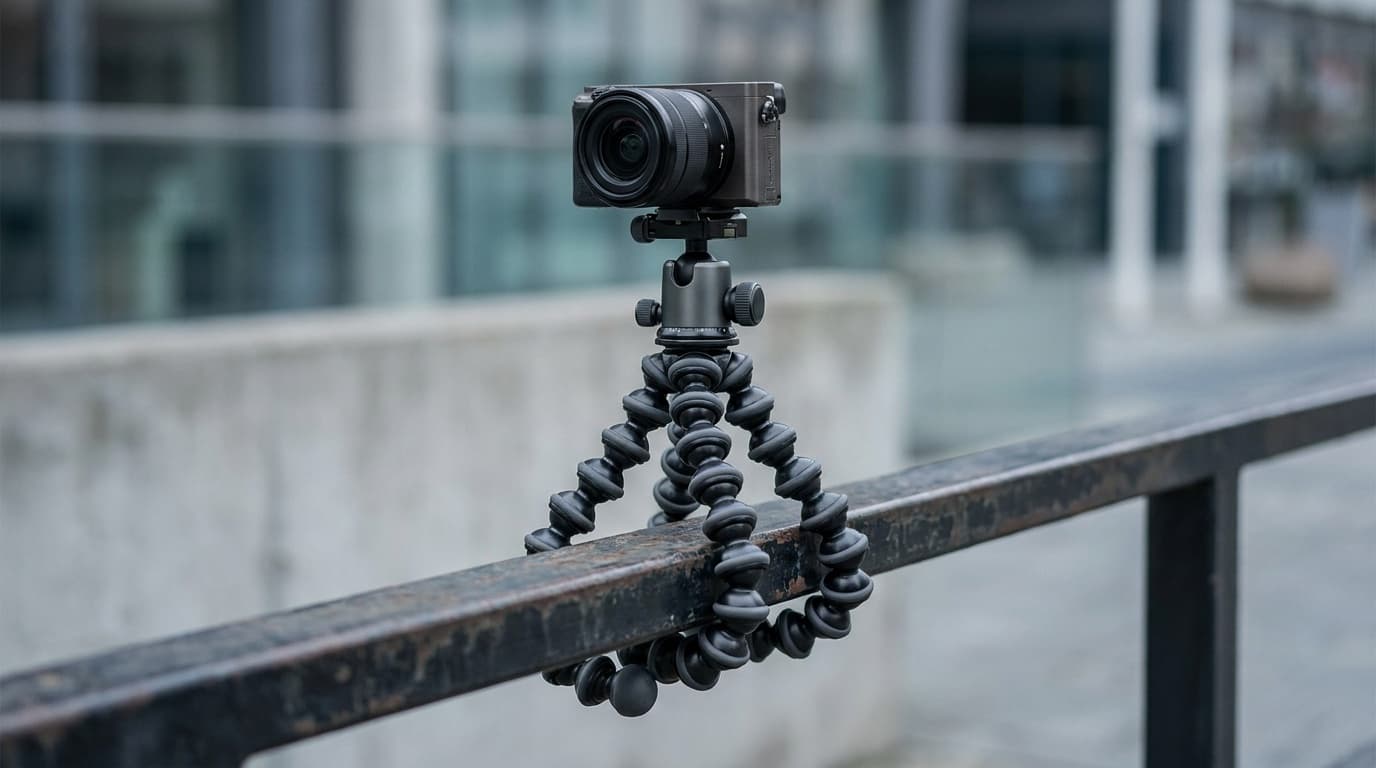
A mini tripod earns its place by being there. The full-size tripod delivers the cleanest files, but it stays home on casual walks, city trips, and any day the bag is already full. A support that weighs a few hundred grams and packs shorter than a water bottle comes along everywhere, and the flexible-leg style adds a trick no full-size set of legs has: wrap the legs around a railing, a fence post, or a branch and shoot from positions where no tripod could stand.
If you want full working height and are choosing your primary support, start with our best tripods guide, or best travel tripods for the packable middle ground. A mini tripod is the third layer: the one that lives in the bag permanently.
How to choose
Load rating first, same as any support. Add up your heaviest body and lens and buy comfortably above it; Joby's product names state the rating directly (1K = 1 kg, 3K = 3 kg, 5K = 5 kg). This matters more with flexible legs than with rigid ones, because an overloaded GorillaPod does not just sag at the head, the leg joints themselves slowly give way and the frame droops mid-exposure. A compact or action camera is fine on a 1 kg support, a mirrorless body with a standard zoom wants the 3 kg class, and a DSLR or gripped mirrorless with a bright zoom belongs on the 5 kg version.
Then decide flexible or rigid. Wrappable legs are the whole point of a GorillaPod: railings, poles, chain-link fences, and tree branches all become camera positions. The tradeoff is that ball-and-socket leg joints wear with heavy use and hold less rigidly than a solid casting. A rigid tabletop tripod like the Manfrotto PIXI gives up the wrapping trick but locks stiffer for its size, costs less, and doubles as a handheld vlogging grip.
Finally, check the head and plate. The GorillaPod 3K and 5K kits ship with a removable ball head and a quick-release plate, so you can reposition fast and swap the camera off the support without unscrewing anything. On any mini tripod with a fixed head, make sure the ball locks firmly at full tilt; a head that creeps under a lens ruins the long exposures these supports are usually bought for. Our best ball heads guide covers what separates a head that holds from one that sags.
The picks
Best Flexible
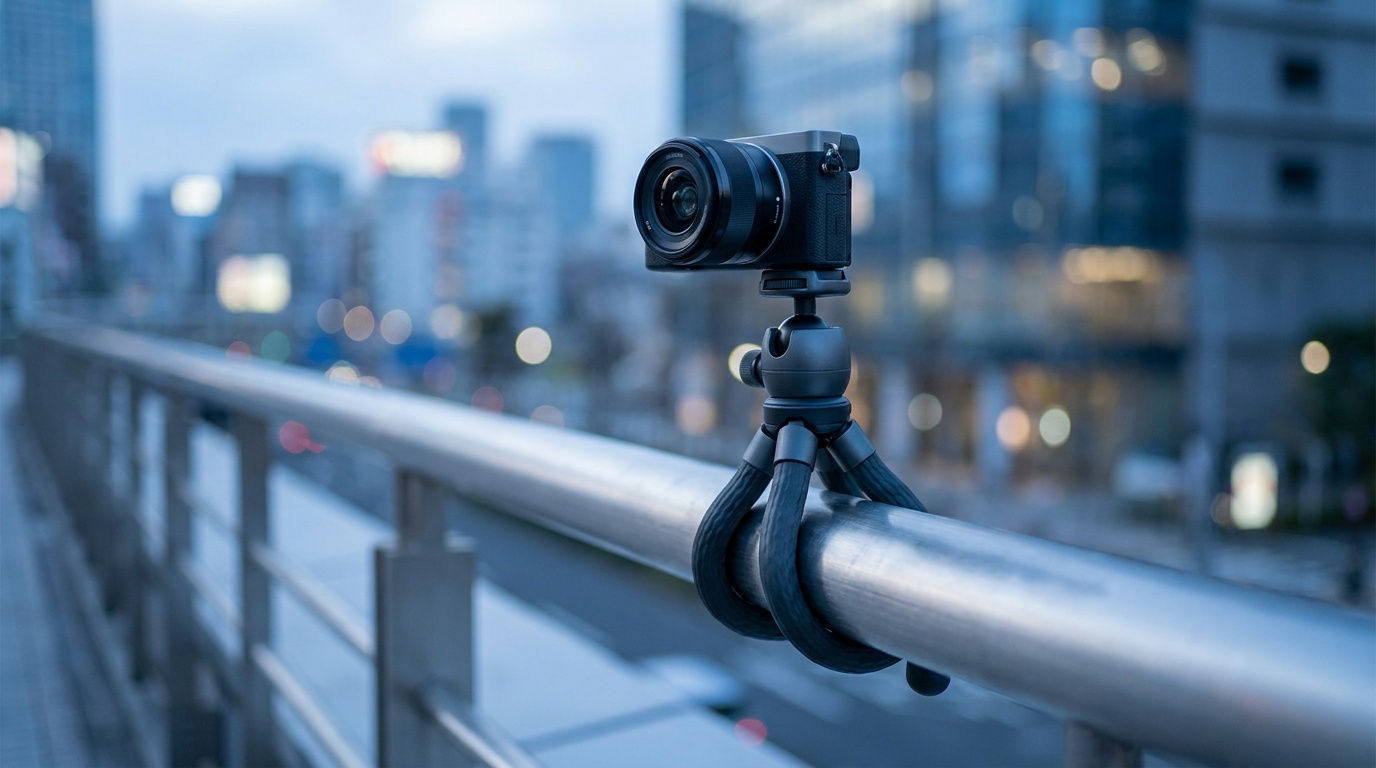
Joby GorillaPod 3K Kit
Vloggers and travelers who need a grip-anywhere support for compact rigs.
Check price at AmazonThe GorillaPod 3K Kit is the one to buy if you shoot mirrorless. The 3 kg rating covers a typical body and standard zoom with headroom, the included ball head has a quick-release plate, and the legs grip well on rough or curved surfaces. It is light enough to stay in the bag and strong enough that you stop thinking about the rating. The limits are the ones built into the format: on flat ground the camera sits barely 30 cm up, and the leg joints loosen after years of hard use. As the default flexible support, it is the clear pick.
Best Budget
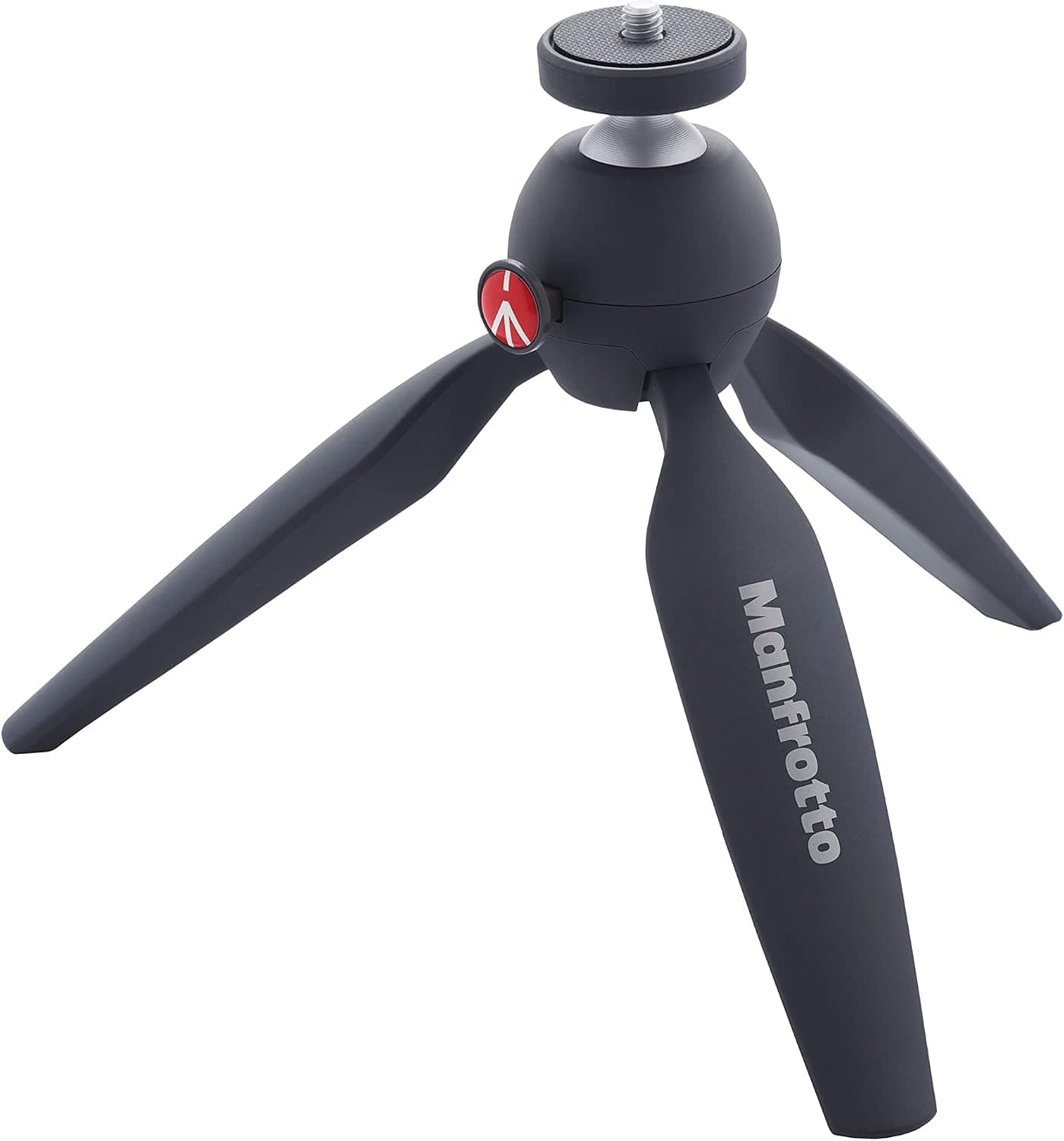
Manfrotto PIXI Mini Tripod
Vloggers and compact-camera users who want a tabletop and grip in one.
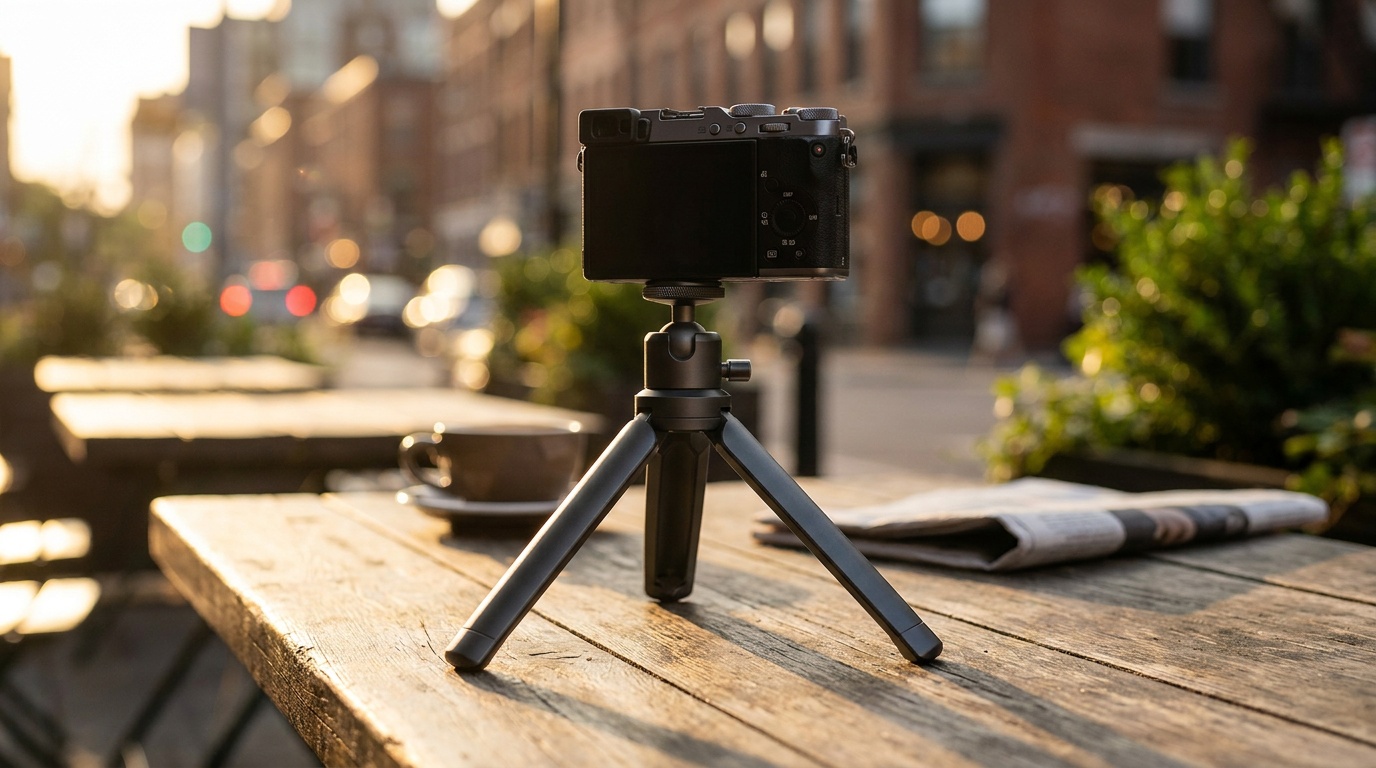
Check price at AmazonThe Manfrotto PIXI is the budget pick and the rigid one. There are no wrappable legs, just a solid three-leg casting with a push-button ball head that adjusts fast and locks cleanly for light loads. Fold the legs together and it becomes a comfortable handheld vlogging grip, which is how many owners use it most. It costs about as much as a spare battery, holds a compact camera or a phone with a mount solidly, and fits in a jacket pocket. Keep it under its 1 kg limit; it will not hold a mirrorless body with a heavy zoom.
The GorillaPod 5K Kit, rated for 5 kg with thicker legs and a metal ball head, was the load pick for gripped bodies and bright zooms, but it is currently unavailable on Amazon. If your camera needs more than the 3K's 3 kg, use a compact full-size tripod instead; flexible legs are not the right support past that point.
Research pick
Joby GorillaPod 1K Kit
Vloggers and creators using compact mirrorless or action cameras.
Check price at AmazonThe GorillaPod 1K Kit is the light pick for compact cameras, small mirrorless bodies with a pancake lens, and action cameras. At around 200 grams with a quick-release ball head included, it disappears into any bag, and for these loads the legs hold their pose without complaint. Respect the 1 kg ceiling: mount anything heavier and the legs flex visibly. For creators who shoot on a compact or an action camera and want one support for selfie-stick angles, tabletop clips, and railing wraps, this is the sensible bottom rung.
Common mistakes
The first mistake is loading flexible legs at their exact rating. A GorillaPod at its stated limit holds for a moment, then the joints creep and the horizon tilts mid-exposure; buy the class above your rig, same as with a ball head. The second is treating a mini tripod as a full-size replacement: at 13 to 30 cm of working height, every frame is a low-angle frame unless you find a wall, ledge, or railing to raise it. The third is wrapping the legs around something smooth and vertical, like a polished pole, and trusting friction alone; flexible legs grip texture and geometry, not gloss, so test the hold with a hand under the camera before you let go.
A mini tripod pairs naturally with a travel kit: see best travel tripods for the full-height option that shares bag space with it, and our travel photography guide for the shooting side of working light.
Can a GorillaPod hold a mirrorless camera?
Yes, if you match the rating. The GorillaPod 3K handles a mirrorless body with a standard zoom, and the 5K covers heavier bodies and brighter lenses. The small 1K version is only for compacts and action cameras; a full mirrorless rig on it will droop as the leg joints flex.
Are mini tripods worth it if I already own a full-size tripod?
They solve a different problem. A full-size tripod delivers working height and maximum stability when you plan for it; a mini tripod is the support you actually have with you when you did not. For travel days, low-angle frames, and wrap-around positions on railings and posts, the small support gets shots the big one misses because it stayed home.
GorillaPod or a rigid tabletop tripod like the PIXI?
Choose by where you shoot. Flexible legs wrap around railings, poles, and branches, which makes them the pick for travel and outdoor work. A rigid tabletop tripod is stiffer for its size, cheaper, and doubles as a vlogging grip, which makes it the pick for desks, cafe tables, and handheld video. Plenty of shooters carry one of each, since together they weigh less than a single full-size head.
Compare picks
The short version
Use this to narrow the list before opening the detailed cards.
Scores weigh fit, owner sentiment, build, and value. Affiliate links do not change pick order. Methodology
Buying order
Start with the skip note. A good deal on the wrong camera is still the wrong camera.
Compare verdictsIf you already own lenses, check the system path before buying into a new mount.
Check systemsOnce the fit makes sense, compare current deals and retailer listings.
Check current deals
Vloggers and travelers who need a grip-anywhere support for compact rigs.
Use the retailer for the current price after the tradeoff makes sense. Confirm payload, plate type, height, folded size, and quick-release system.
Tradeoff: Short height limits framing
Use the retailer for the current price after the tradeoff makes sense. Confirm payload, plate type, height, folded size, and quick-release system.
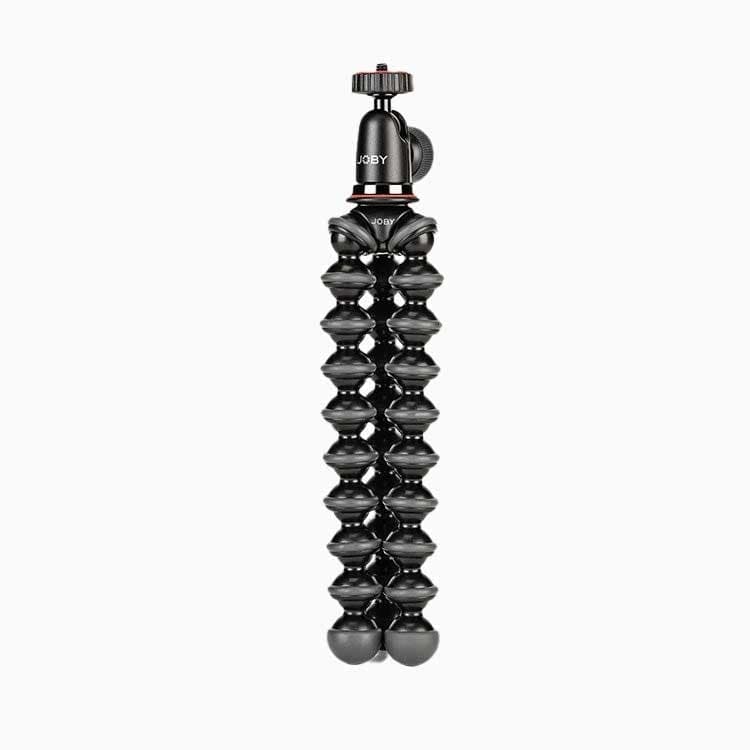
Vloggers and creators using compact mirrorless or action cameras.
Use the retailer for the current price after the tradeoff makes sense. Confirm payload, plate type, height, folded size, and quick-release system.
- Vloggers and travelers who need a grip-anywhere support for compact rigs.
- Wrappable legs grip almost anything
- Limited height on flat ground
Use the retailer for the current price after the tradeoff makes sense. Confirm payload, plate type, height, folded size, and quick-release system.
- Vloggers and compact-camera users who want a tabletop and grip in one.
- Doubles as a handheld grip
- Short height limits framing
Use the retailer for the current price after the tradeoff makes sense. Confirm payload, plate type, height, folded size, and quick-release system.
- Vloggers and creators using compact mirrorless or action cameras.
- Very light and pocketable
- Low load limit rules out larger lenses
Use the retailer for the current price after the tradeoff makes sense. Confirm payload, plate type, height, folded size, and quick-release system.
| Pick | Score | Price | Verdict | Action |
|---|---|---|---|---|
| Best FlexibleJoby GorillaPod 3K Kit | 8.4
| $120 - $140 | Vloggers and travelers who need a grip-anywhere support for compact rigs. Wins: Wrappable legs grip almost anything Skip: Limited height on flat ground | Check Amazon · $120 - $140 Use the retailer for the current price after the tradeoff makes sense. Confirm payload, plate type, height, folded size, and quick-release system. |
| Best BudgetManfrotto PIXI Mini Tripod | 8.1
| $25 - $40 | Vloggers and compact-camera users who want a tabletop and grip in one. Wins: Doubles as a handheld grip Skip: Short height limits framing | Check Amazon · $25 - $40 Use the retailer for the current price after the tradeoff makes sense. Confirm payload, plate type, height, folded size, and quick-release system. |
| PickJoby GorillaPod 1K Kit | 8.0
| $45 - $60 | Vloggers and creators using compact mirrorless or action cameras. Wins: Very light and pocketable Skip: Low load limit rules out larger lenses | Check Amazon · $45 - $60 Use the retailer for the current price after the tradeoff makes sense. Confirm payload, plate type, height, folded size, and quick-release system. |
Shoot kits
Buy around the job, not the spec sheet
Travel landscape
Travel landscape kit
$4,465
A light full-frame body, wide zoom, serious travel tripod, filters, and a bag that can handle rough days outside.
Light but not flimsy
Buy order: start with the first piece that makes the job possible, then add the support pieces that remove friction.
Camera: start here. If this piece does not make the shoot easier, the rest of the kit can wait.
Carry: add it after the core setup proves useful.
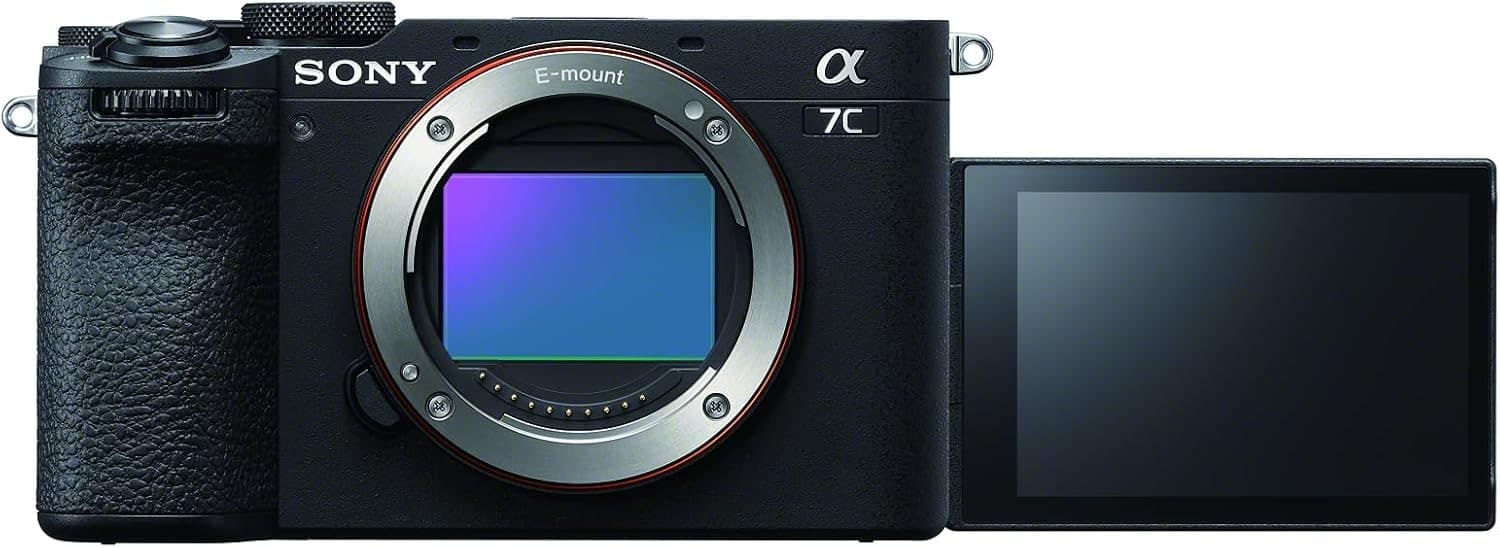
Sony a7C II
Full-frame files in a smaller body, with autofocus and stabilization that travel well.
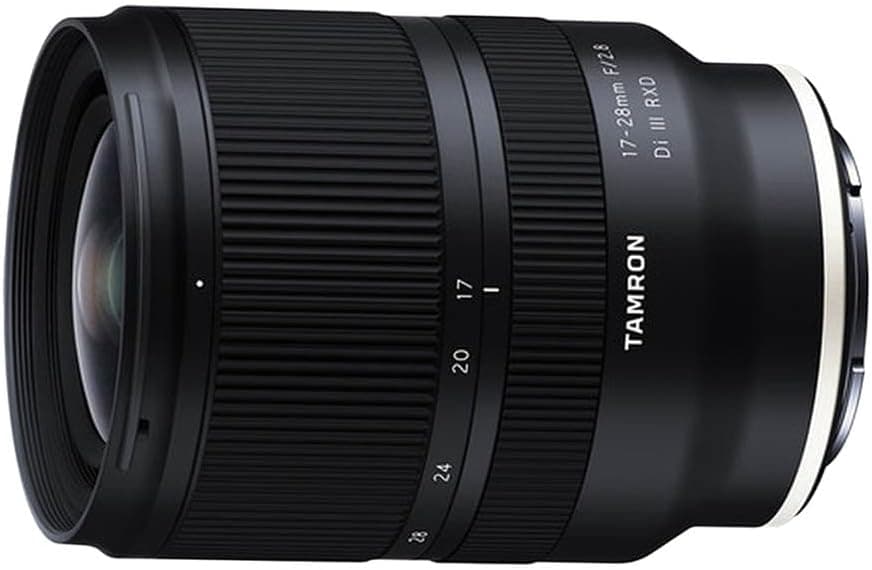
Tamron 17-28mm f/2.8 Di III RXD
Wide enough for landscapes and interiors without the size of a premium 16-35mm.
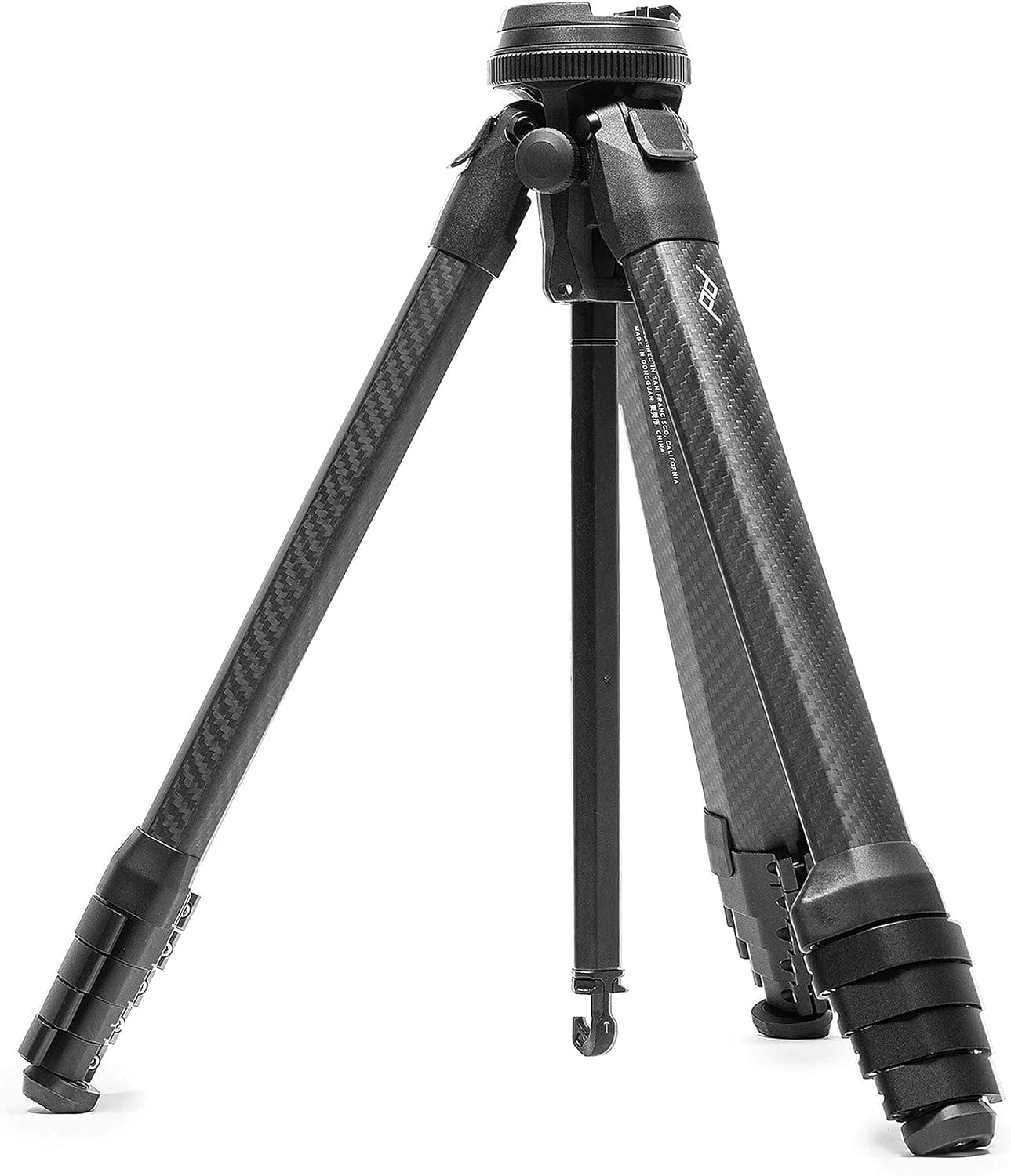
Peak Design Travel Tripod (Carbon)
The point of a travel tripod is bringing it. This one packs small and stays serious.
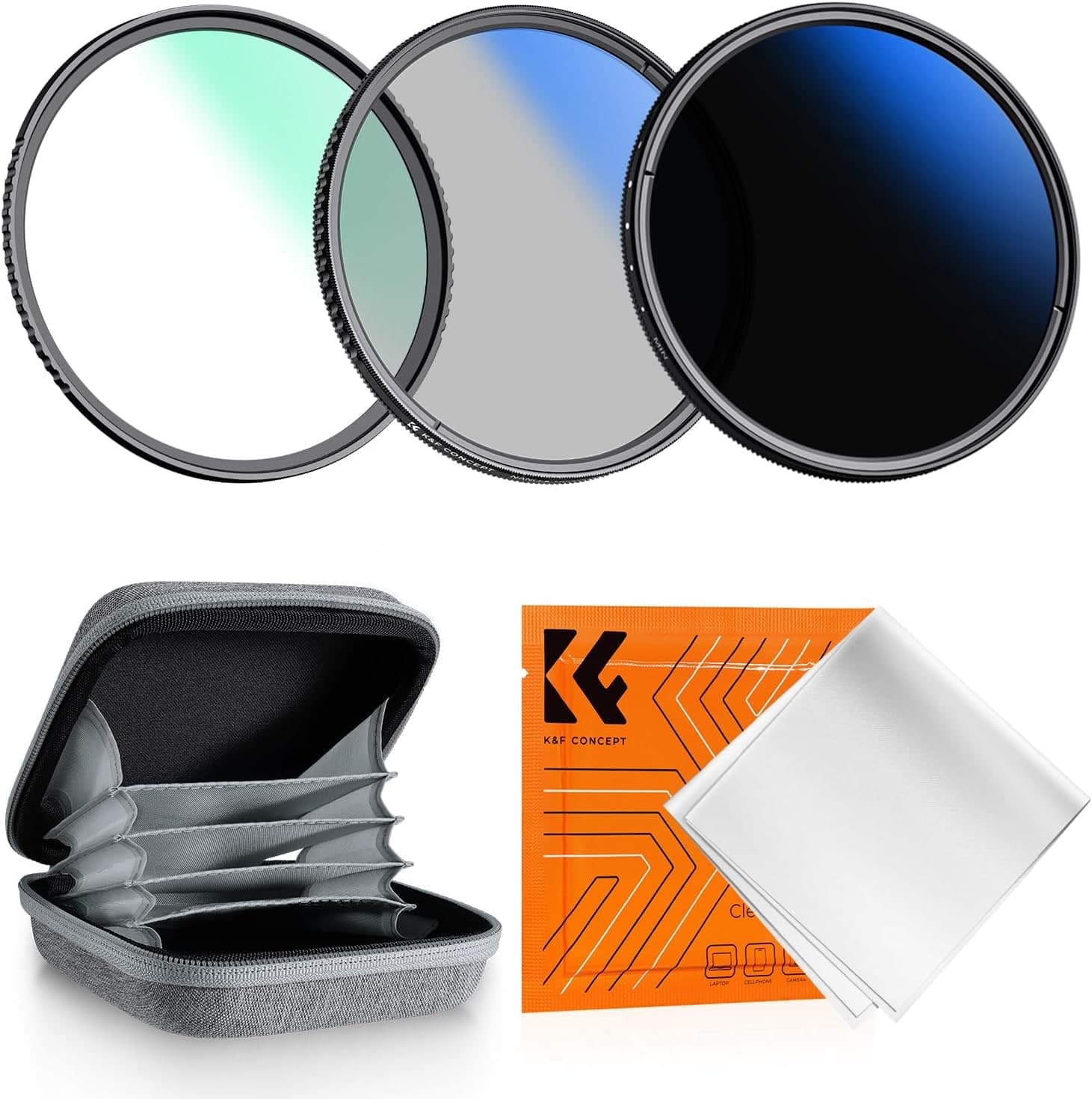
K&F Concept 77mm UV/CPL/ND2-400 Filter Kit
CPL and ND coverage for water, skies, reflections, and slower shutters.
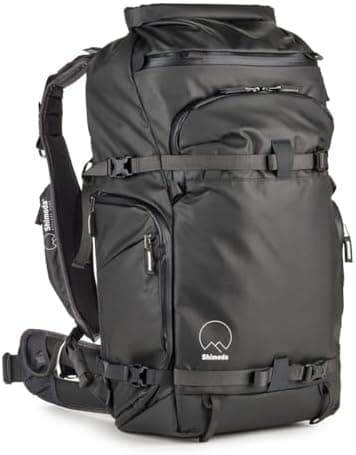
Shimoda Action X30 V2
A real harness matters once camera gear and outdoor layers share the same bag.
Prices are rough catalog totals. Retailer prices change, and you can swap pieces to fit your system.
Related Gear guides
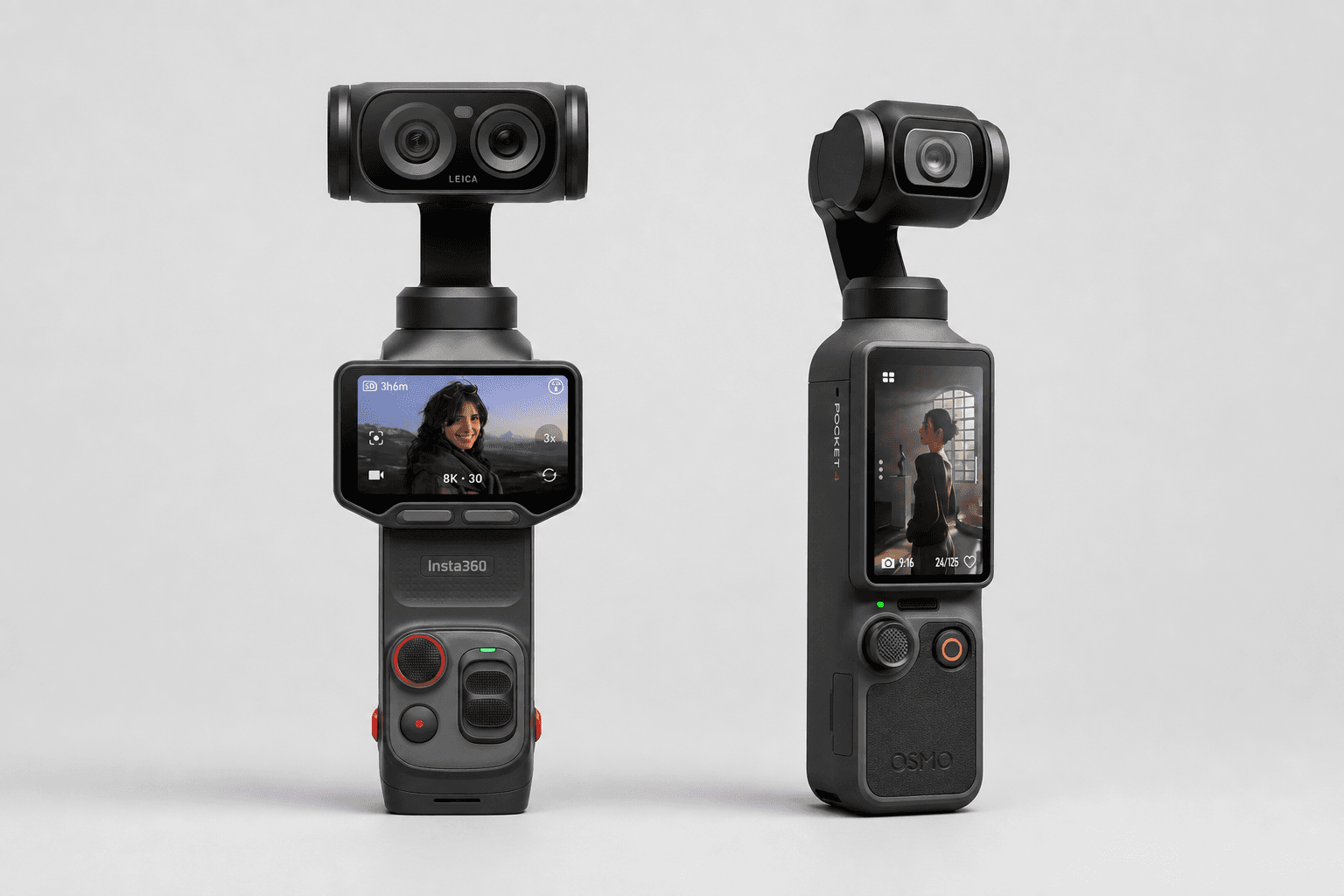
Insta360 Luna Ultra vs DJI Osmo Pocket 4: Which Pocket Gimbal Should You Buy?
Compare Luna Ultra and DJI Pocket 4 by lenses, video, Log formats, storage, U.S. availability, and the filming jobs each pocket gimbal handles best.
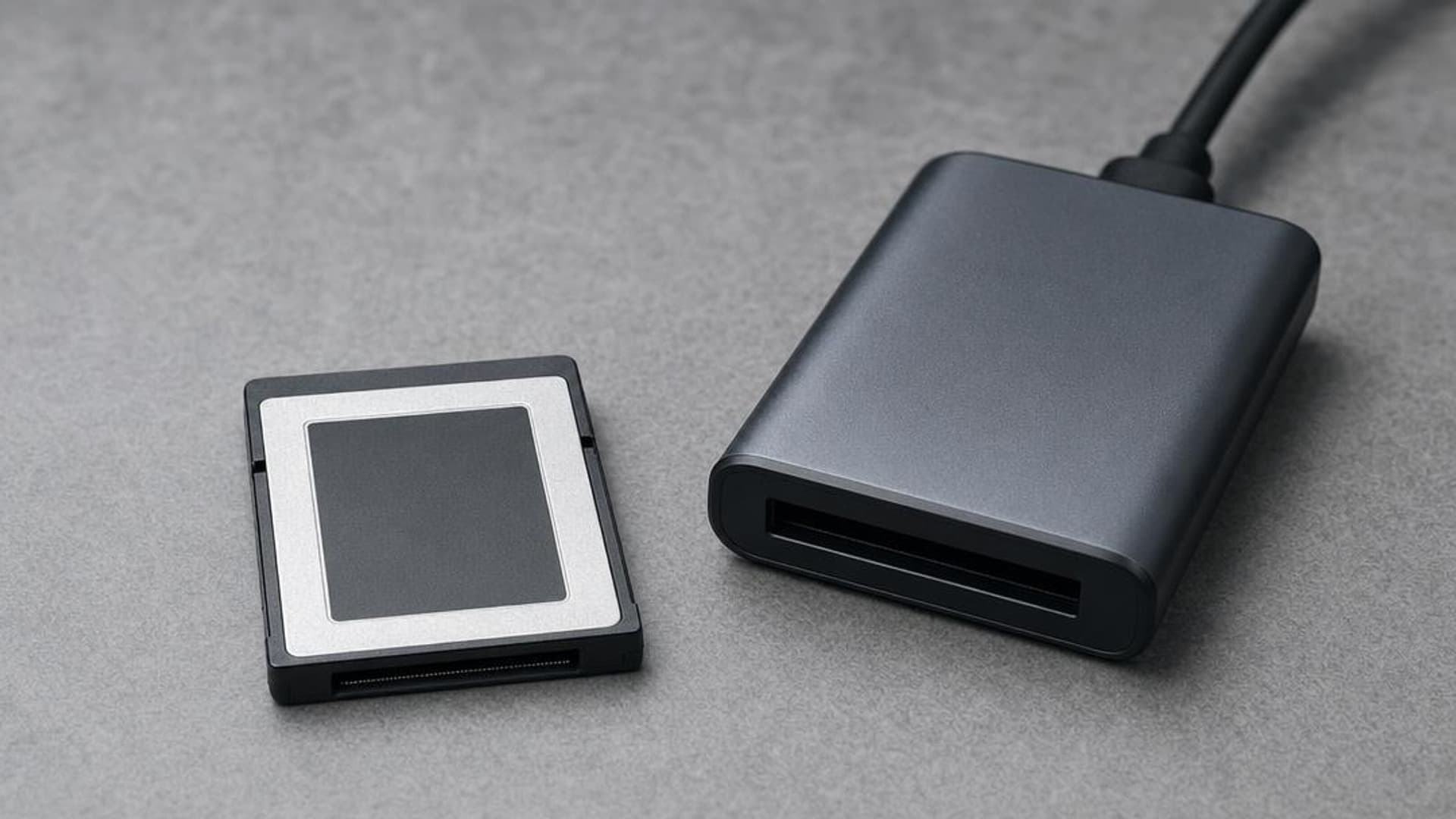
CFexpress 4.0 and VPG Explained: Buy the Card Your Camera Needs
CFexpress 4.0 doubles theoretical bandwidth, while VPG certifies sustained video writes. Learn Type A vs B, VPG classes, and when 4.0 is worth paying for.
Focal Length Explained: What 24mm, 50mm, 85mm, and 200mm Actually Do
What the millimeter number on a lens changes in the field: angle of view, compression, and working distance. When to reach for 24, 50, 85, or 200mm.
Canon EOS R50 V vs Sony ZV-E10 II: Which Beginner Vlogging Camera Should You Buy?
Canon EOS R50 V is the easier beginner creator kit. Sony ZV-E10 II is the deeper lens-system pick. Compare the practical tradeoffs.
Researched, not personally tested: picks compare specifications, available owner feedback, and established expert sources. As an Amazon Associate I earn from qualifying purchases. We may earn a commission from links here, at no extra cost to you. How we research →