We may earn a commission from links on this page, at no extra cost to you. Picks are researched, not sponsored.
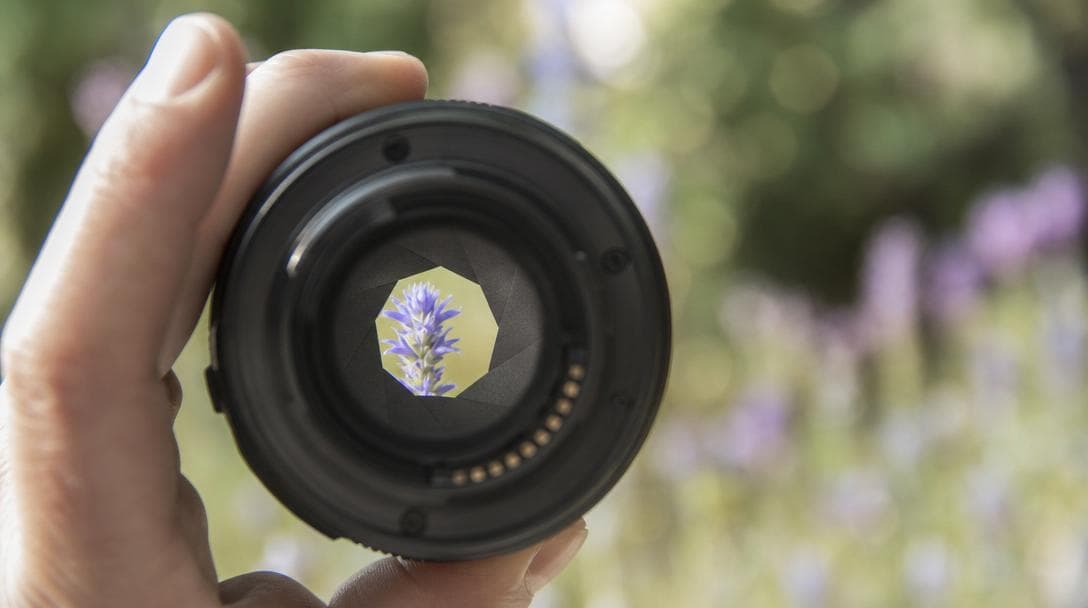
One of the most common beginner questions is whether aperture and f-stop are different things. They are not. Aperture is the physical opening inside the lens. The f-stop is that opening expressed as a ratio of the lens focal length to the opening's diameter. That ratio is why the numbers feel backwards.
Is aperture the same as f-stop?
Yes. Aperture is the adjustable hole inside the lens, formed by a ring of overlapping blades that open and close like the iris of an eye. F-stop (also written f-number) is simply the standard way of measuring that hole. When a photographer says "shoot at f/2.8," "open the aperture to 2.8," or "stop down to f/8," they are all adjusting the same mechanism. The only vocabulary worth adding: "wide open" means the lens's maximum aperture, and "stopping down" means choosing a narrower one.
Why does a smaller f-number mean more light?
Because the f-number is a ratio with the opening on the bottom, a bigger opening produces a smaller number. So f/1.8 is a wide opening that lets in a lot of light, and f/16 is a narrow opening that lets in much less. It feels upside down until you remember it is a fraction.
The math is worth seeing once. The f-number equals focal length divided by the diameter of the opening. On a 50mm lens, f/2 means the opening is 25mm across (50 divided by 2), while f/8 means it is about 6mm across (50 divided by 8). Divide by a bigger number, get a smaller hole. Once you see f/8 as the fraction 50/8, the backwards feeling goes away for good.
How does the f-stop scale work?
The standard full stops are f/1.4, f/2, f/2.8, f/4, f/5.6, f/8, f/11, f/16. Each step halves the light of the one before it. That matters because it connects directly to the exposure triangle: close down one stop of aperture and you can open up one stop of shutter speed to match.
The sequence looks arbitrary but is not: each number is the previous one multiplied by about 1.4 (the square root of 2), because light passes through the area of the opening, and halving an area only shrinks its diameter by that factor. You do not need to compute anything in the field; just know that each named stop is a halving, so f/2.8 passes four times the light of f/5.6 (two stops). Your camera also offers third-stop increments in between (f/1.8, f/2, f/2.2...), which is why f/1.8 lenses exist: f/1.8 sits a third of a stop wider than f/2.
How does aperture control depth of field?
Aperture also controls depth of field, which is how much of the scene is in sharp focus front to back. A wide aperture (f/1.8) gives a shallow depth of field: your subject is sharp and the background melts away. A narrow aperture (f/11) keeps more of the scene sharp, which is what you want for a landscape or a real estate interior.

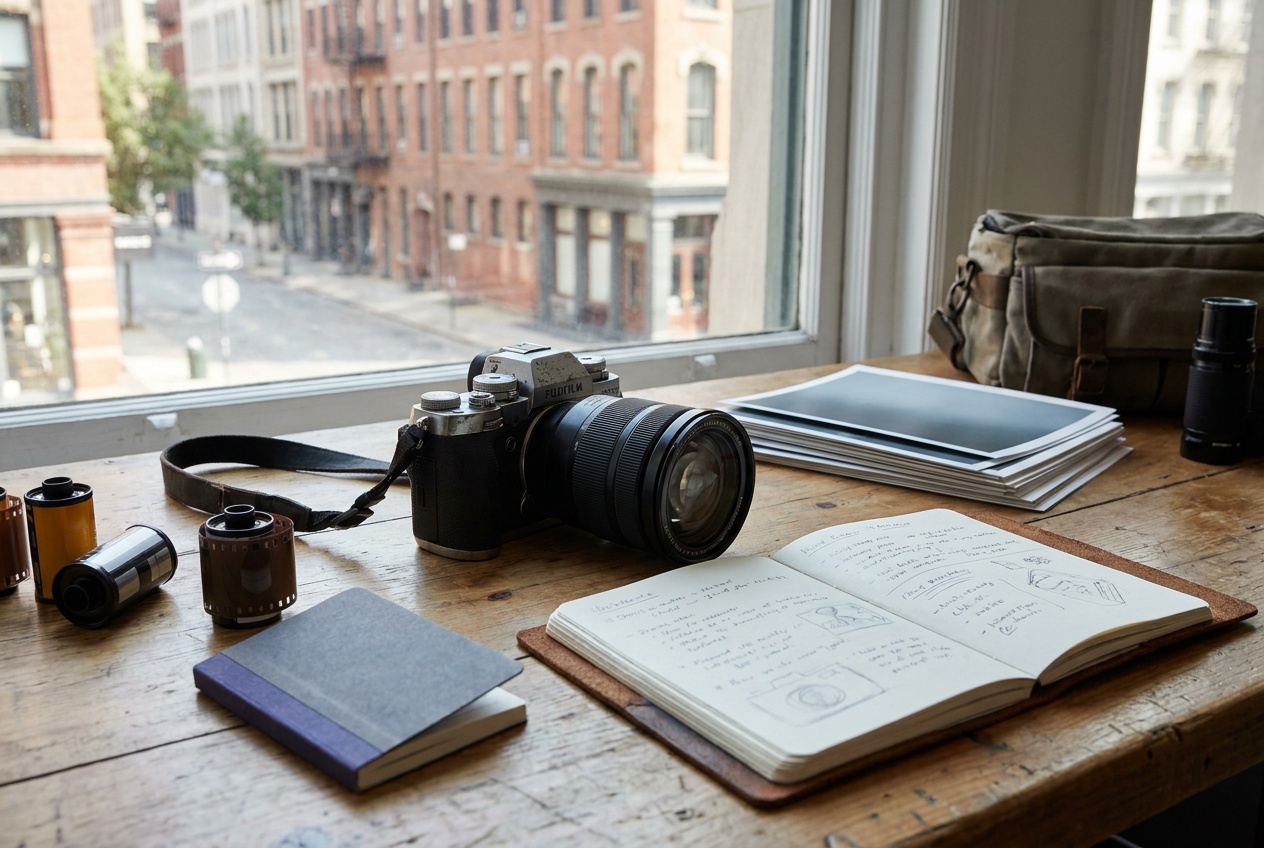
Aperture is the biggest lever on depth of field, but not the only one. Focus distance and focal length matter just as much: the closer you focus and the longer the lens, the thinner the sharp zone gets at any given f-stop. A headshot at f/1.8 from one meter away can have a sharp zone of barely two centimeters, enough to put one eye in focus and the other slightly out. That is why portrait shooters focus on the nearest eye, and why some stop down to f/2.8 or f/4 for two-person shots. The full mechanics are in understanding depth of field, and the practical recipe is in how to get a blurry background. The quality of that blur, the smooth rendering of out-of-focus highlights, has its own name and its own article: bokeh explained.
What aperture should you use for each type of photo?
There is no single correct f-stop, but there are well-established starting points for each kind of shot.
| f-stop | Depth of field | Typical use |
|---|---|---|
| f/1.4-f/1.8 | Razor thin | Single-person portraits, low light, maximum background blur |
| f/2.8 | Shallow | Events, indoor sports, environmental portraits |
| f/4 | Moderate | Travel, walking-around shots, small groups |
| f/5.6-f/8 | Deep | Group photos, street scenes, most lenses' sharpest range |
| f/8-f/11 | Very deep | Landscapes, architecture, real estate interiors |
| f/16 | Maximum | Front-to-back sharpness with a foreground inches away; costs some sharpness to diffraction |
Two of those rows earn a note. The f/5.6 to f/8 band is the workhorse: it is deep enough that focus errors are forgiving, and it is where most lenses resolve their finest detail. And the f/8 to f/11 landscape band pairs naturally with a technique called hyperfocal focusing, which places the focus point to maximize front-to-back sharpness; hyperfocal distance explains it. For the genre where wide apertures do the most work, see the portrait photography guide.
What is a fast lens?
A "fast" lens is one with a wide maximum aperture like f/1.4 or f/2.8. It can shoot in less light and blur backgrounds more. A "slow" lens tops out around f/4 or f/5.6. Fast lenses cost more and weigh more, which is part of the what lens should you buy decision.
The word "fast" comes from the shutter side of the triangle: a lens that passes more light lets you use a faster shutter speed in the same scene. A common trap here is variable-aperture zoom lenses, marked something like 18-55mm f/3.5-5.6. That marking means the maximum aperture shrinks as you zoom: f/3.5 at 18mm but only f/5.6 at 55mm, more than a full stop slower at the long end. Constant-aperture zooms (a 24-70mm f/2.8) hold their maximum across the range, and their price reflects it.
What are the most common aperture mistakes?
The first mistake is shooting everything wide open because you paid for f/1.8. At close portrait distances the sharp zone at f/1.8 is centimeters deep, so a slightly moved subject or a small focus miss leaves the eyes soft. Wide open is a tool for specific shots, not a default.
The second mistake is the reverse: stopping down to f/16 or f/22 for "maximum sharpness." Past roughly f/11 on most cameras, diffraction (light bending around the small opening) softens fine detail across the whole frame. If you do not need the extreme depth, f/8 will out-resolve f/22 on almost any lens.
The third mistake is forgetting the exposure cost. Stopping down from f/2.8 to f/8 removes three stops of light, and the shutter or ISO must pay for it. Photographers who chase depth of field indoors often end up with 1/15 shutter speeds and blurry frames; check what the other two settings are doing every time you change the aperture.
The fourth mistake is expecting aperture alone to produce a blurry background. If the subject stands against a wall, even f/1.4 will not melt it. Blur comes from the combination of wide aperture, close subject, and distant background; move your subject away from the backdrop first.
Where to go next
Aperture is one of three levers, and it only clicks fully once you see it trade against the other two in the exposure triangle. Then go make the concept physical: how to get a blurry background turns this article into a ten-minute exercise.
What aperture should I use for portraits?
A wide aperture like f/1.8 to f/2.8 blurs the background and makes your subject stand out. Just watch focus: at f/1.8 the sharp zone is thin, so focus on the eyes.
What aperture is sharpest?
Most lenses are sharpest a couple of stops down from wide open, often around f/5.6 to f/8. Very narrow apertures like f/16 lose a little sharpness to diffraction.
What does the f in f-stop stand for?
Focal length. The f-number is the lens focal length divided by the diameter of the aperture opening, so f/2 on a 50mm lens means the opening is 25mm across. That ratio is why smaller numbers mean bigger openings.
Is a lower f-stop always better?
No. A lower f-stop gives you more light and more background blur, but also a thinner zone of sharp focus and usually a softer image than the same lens stopped down. Landscapes, groups, and architecture generally look better at f/5.6 to f/11 than at f/1.8.
Practice this
Turn the guide into a working setup
Keep going
Next useful steps
Pick one. Each link continues the same job without starting the research over.
Shoot kits
Buy around the job, not the spec sheet
Beginner photo
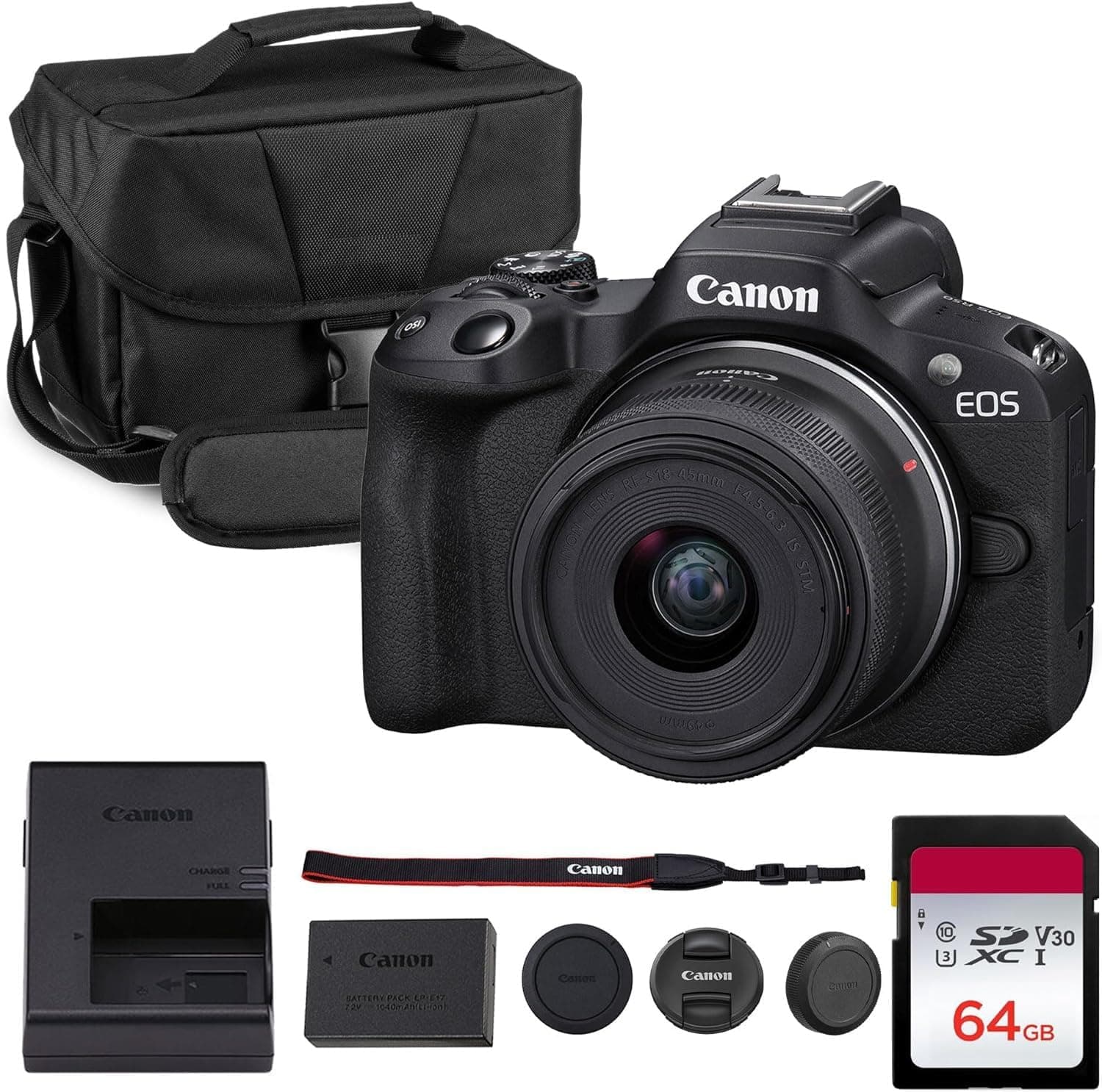
First real camera kit
$1,068
An affordable body, a sharp prime, a reliable card, and a small carry setup that does not turn learning into a hauling problem.
Best learning kit
Buy order: start with the first piece that makes the job possible, then add the support pieces that remove friction.
Camera: start here. If this piece does not make the shoot easier, the rest of the kit can wait.
Carry: add it after the core setup proves useful.
Canon EOS R50
Small, approachable, and good enough to learn exposure, autofocus, and lens choice properly.
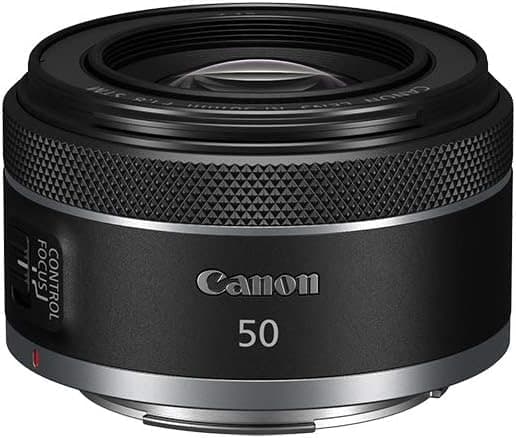
Canon RF 50mm f/1.8 STM
Cheap, bright, and useful for portraits, detail shots, and learning depth of field.
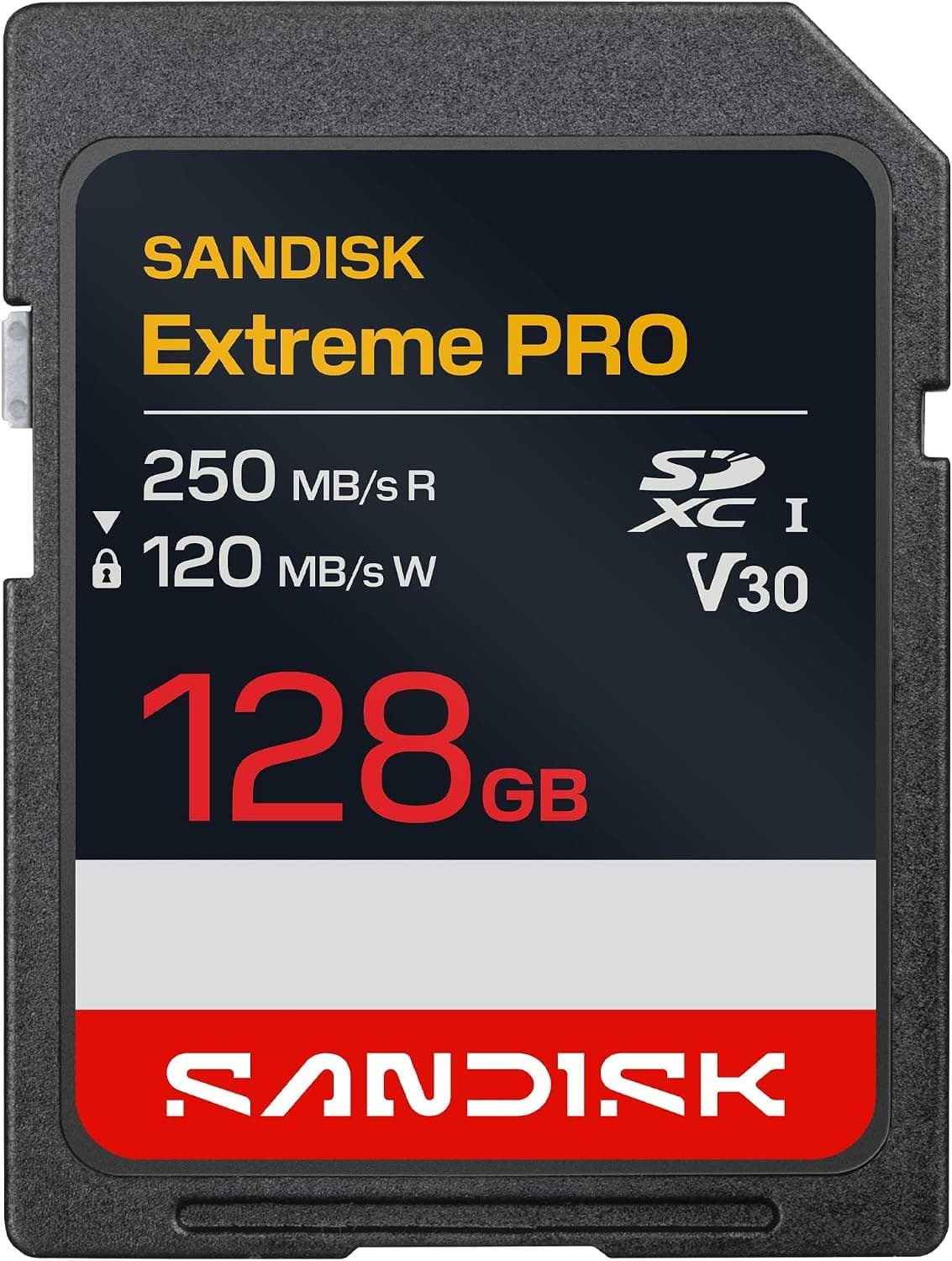
SanDisk Extreme Pro SDXC 128GB
Fast enough for normal stills and video without making storage the exciting purchase.
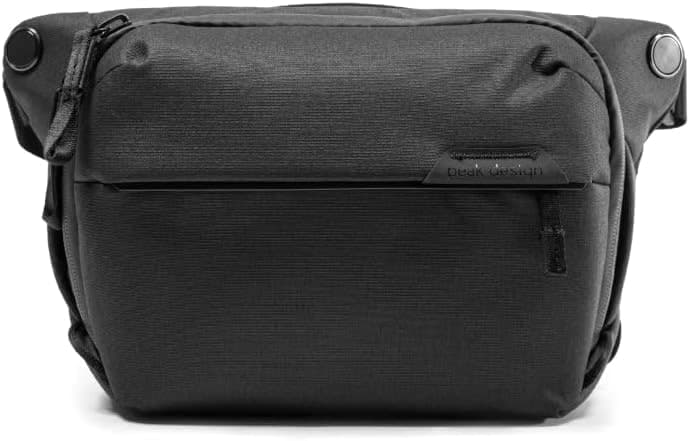
Peak Design Everyday Sling 6L V2
Room for a small body and lens without dragging a full backpack everywhere.
Prices are rough catalog totals. Retailer prices change, and you can swap pieces to fit your system.
Related Learn guides

Content Credentials and C2PA Explained for Photographers
Content Credentials record a photo's signed provenance and edits. Learn what C2PA proves, what it cannot prove, and how capture-to-export workflows work.
Open Gate Video Explained: When 3:2 Is Worth It
Open Gate records a taller sensor area for flexible 16:9, 9:16, and square crops. See when it helps, what it costs, and how to frame it correctly.
Pre-Capture Photography Explained: Get the Frame Before the Click
Pre-Capture buffers photos before the shutter is fully pressed. Learn how it works, which settings change, and when RAW, flash, or focus may be limited.
RAW vs JPEG: Which File Format Should You Shoot?
RAW keeps all your sensor data for maximum editing freedom; JPEG is smaller and ready to share. Here is how they differ and when each one is the right call.
Researched, not personally tested: picks compare specifications, available owner feedback, and established expert sources. As an Amazon Associate I earn from qualifying purchases. We may earn a commission from links here, at no extra cost to you. How we research →