
We may earn a commission from links on this page, at no extra cost to you. Picks are researched, not sponsored.
What this means in real life
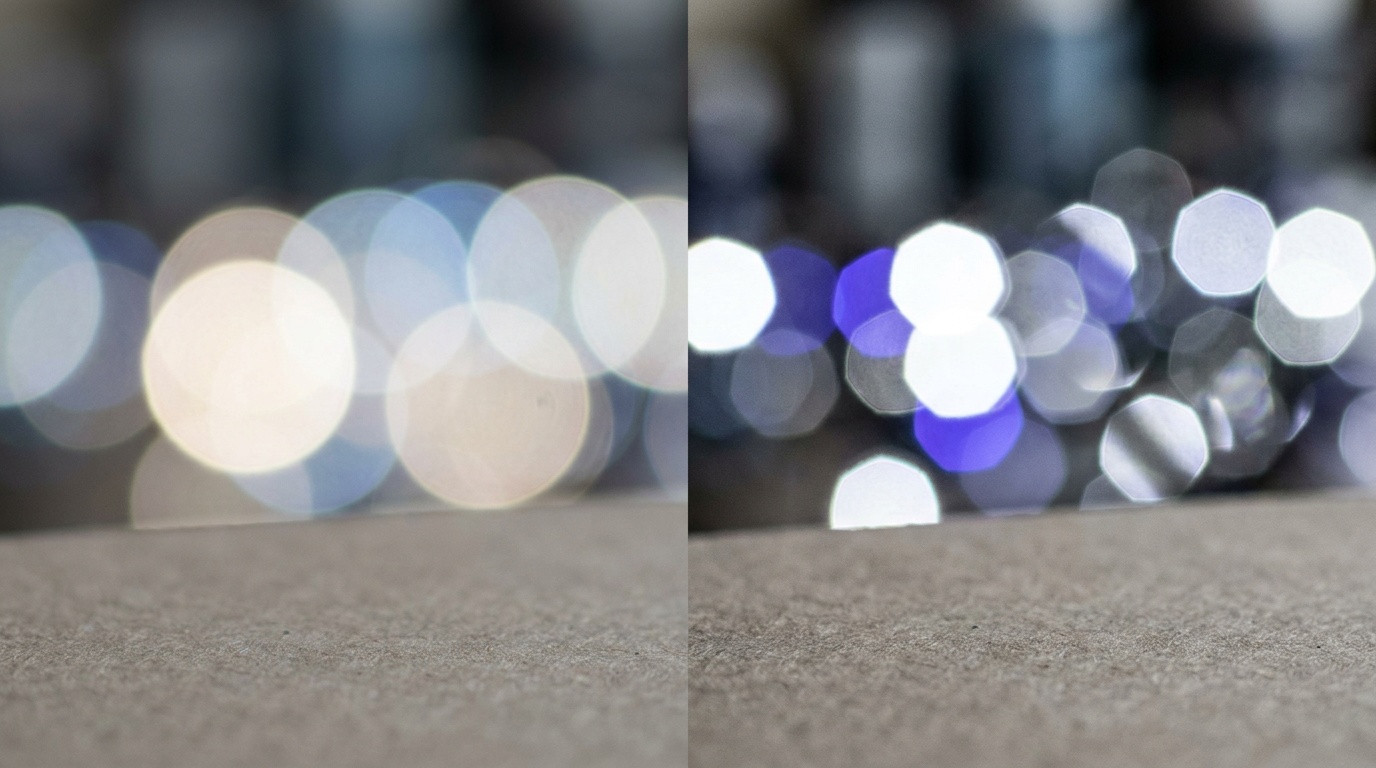
People use "bokeh" two ways. Loosely, it means a blurred background. More precisely, it means the character of that blur: whether out-of-focus points of light render as smooth round discs or harsh, busy, edgy shapes. Two lenses can blur a background by the same amount and still look very different, one creamy and calm, the other nervous and distracting. So bokeh is a quality word, not a quantity word. The amount of blur is set by your aperture, focal length, and distances; the quality of that blur is set largely by the lens design.
What controls the amount of blur
Four things stack up to give you a strongly blurred background. A wide aperture (a small f-number like f/1.8 or f/2.8) is the biggest lever, because it shrinks the depth of field so only your subject is sharp. A longer focal length compresses and magnifies the background, exaggerating the blur. A close subject distance throws everything behind it further out of focus. And a background that is far behind the subject blurs more than one right against it. Stack all four, a wide aperture, a longer lens, a close subject, and a distant background, and you get the strongest separation.

The settings
Open up and put distance between subject and background.
The wide aperture is doing the heavy lifting here, which is the aperture control taken toward its limit, sitting inside the exposure triangle. Because a wide aperture also lets in a lot of light, you keep ISO low and use a fast shutter, and in bright sun you may need to stop down slightly or add an ND filter to avoid overexposing.
How the four levers stack, in numbers
The amount of blur is not subtle once you stack the levers, so it helps to see them ranked. A 50mm at f/1.8 with the subject a few feet from a distant wall already throws the background well out of focus. Swap to an 85mm at the same f/1.8 and the longer focal length magnifies that blur noticeably, which is why 85mm and 135mm are the portrait favorites. Distance matters just as much as glass: a subject one foot from the camera with the wall thirty feet back blurs far harder than the same subject ten feet out with the wall right behind them. As a rough order of strength, aperture and subject-to-background distance do the most work, focal length amplifies it, and subject-to-camera distance fine-tunes it. A practical separation readout is 85mm, f/1.8, subject 6 ft from the lens, background 20-plus ft behind, ISO 100.
What makes bokeh look good
Quality is mostly the lens. Out-of-focus highlights take the shape of the aperture opening, so a lens with more, rounder aperture blades renders them as smooth circles rather than hard polygons. Smooth, well-corrected lenses give calm, melting backgrounds; some lenses instead produce busy outlined discs (called onion-ring or cats-eye bokeh) that draw the eye away from the subject. Fast primes are prized for this, which is why the prime lenses like a 50mm f/1.8 or 85mm f/1.8 are the classic portrait-bokeh tools. This is the core craft of portrait photography: clean subject separation that keeps attention on the face.
Two terms come up when bokeh goes wrong. Toward the edges of the frame, round highlights can squash into lemon or eye shapes, called cats-eye bokeh, caused by optical vignetting and most visible wide open. And inside each disc you can sometimes see concentric rings, called onion-ring bokeh, a byproduct of how some aspherical elements are ground. A lens with more aperture blades, and rounded ones, holds the highlights circular even as you stop down, which is why blade count shows up in lens reviews.

Common mistakes
Chasing maximum blur and missing focus is the big one, because a wafer-thin depth of field at f/1.4 punishes any focus error, and a sharp background beats a blurry subject every time. Putting the subject right against a wall gives you no separation no matter how wide you shoot, so move them away from the background. Using a wide-angle lens up close distorts the subject and blurs less than a longer lens would. And overexposing in bright light is easy at wide apertures; watch the highlights and stop down or filter the light if needed.
What is the difference between bokeh and depth of field?
Depth of field is how much of the scene is in focus, a measurable amount. Bokeh is the visual quality of the parts that are out of focus, how smooth and pleasing the blur looks. A wide aperture gives you shallow depth of field; the lens's design determines whether the resulting blur is creamy or busy.
What lens gives the best bokeh?
Fast prime lenses with wide apertures, like a 50mm f/1.8 or an 85mm f/1.8, are the classic choices. The wide aperture creates strong blur, and a good aperture design renders smooth, round highlights. Longer focal lengths exaggerate the effect further.
Can I get bokeh with a kit zoom lens?
You can get some, but it is limited. Kit zooms usually have narrower maximum apertures (around f/5.6 at the long end), so the blur is milder. Zoom to the longest focal length, open to the widest aperture available, get close to your subject, and keep the background far away to maximize what you have.
Keep going
Next useful steps
Pick one. Each link continues the same job without starting the research over.
Related Learn guides

Content Credentials and C2PA Explained for Photographers
Content Credentials record a photo's signed provenance and edits. Learn what C2PA proves, what it cannot prove, and how capture-to-export workflows work.

Open Gate Video Explained: When 3:2 Is Worth It
Open Gate records a taller sensor area for flexible 16:9, 9:16, and square crops. See when it helps, what it costs, and how to frame it correctly.
Pre-Capture Photography Explained: Get the Frame Before the Click
Pre-Capture buffers photos before the shutter is fully pressed. Learn how it works, which settings change, and when RAW, flash, or focus may be limited.

RAW vs JPEG: Which File Format Should You Shoot?
RAW keeps all your sensor data for maximum editing freedom; JPEG is smaller and ready to share. Here is how they differ and when each one is the right call.
Researched, not personally tested: picks compare specifications, available owner feedback, and established expert sources. As an Amazon Associate I earn from qualifying purchases. We may earn a commission from links here, at no extra cost to you. How we research →