We may earn a commission from links on this page, at no extra cost to you. Picks are researched, not sponsored.
The problem
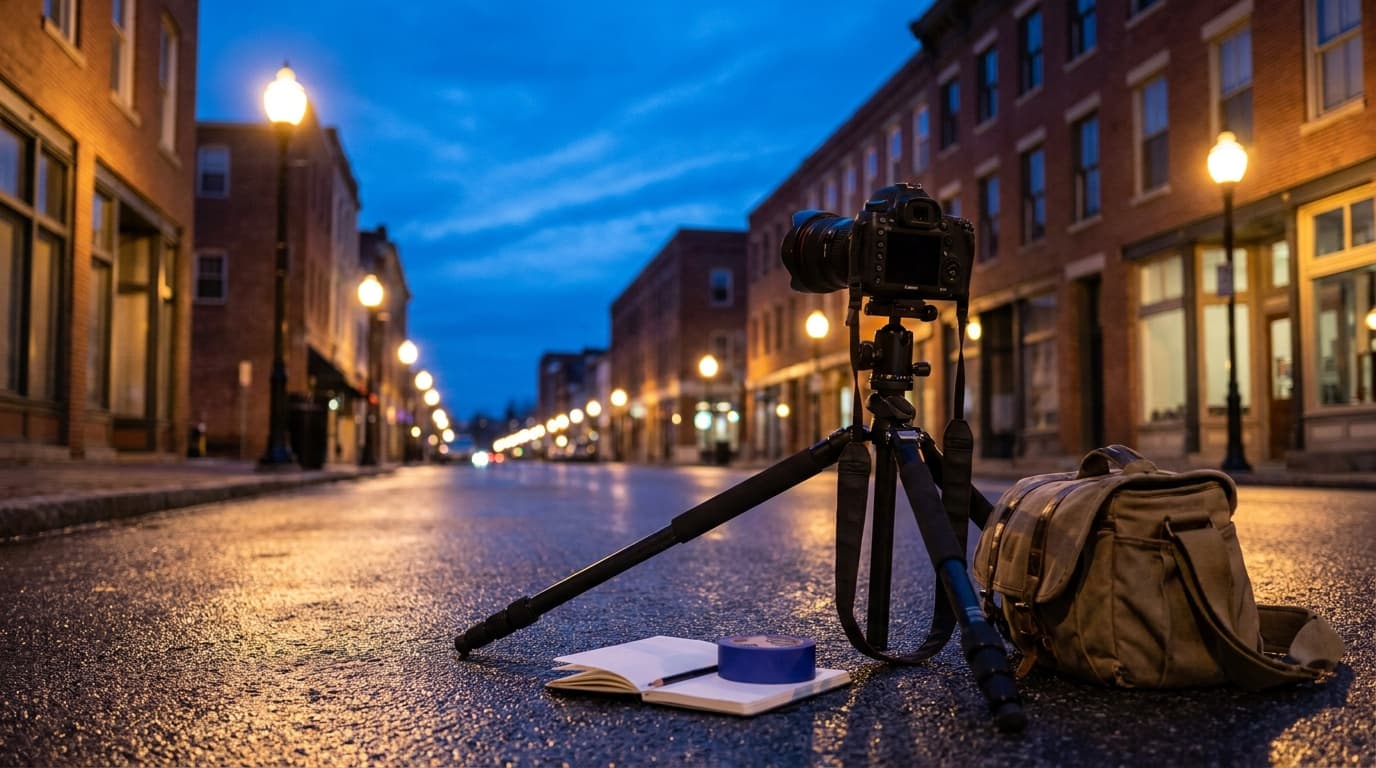
Night is low light taken to its extreme. There is not enough light to freeze a scene at a handheld shutter speed without cranking ISO so high the image turns to noise. Autofocus hunts because it cannot find contrast in the dark. And the scene itself is high contrast in a new way: bright point sources like streetlights and signs sit in a sea of near-black, so the meter has almost nothing reliable to read. Handheld instincts fail here, which is why night photography feels harder than it should.
The settings
The trick is to stop fighting the darkness and let time do the work. On a tripod, a static night scene lands around:
On a tripod, time replaces ISO: a long exposure gathers light cleanly while keeping the file low-noise. Handheld, you have no choice but to trade noise for a usable shutter speed. The two approaches are almost opposite, so decide which one you are in before you set anything. Switch to manual focus or focus on a bright light, since autofocus struggles in the dark.
Interactive exposure demo. Enable JavaScript to drag the exposure for this light.
The fix
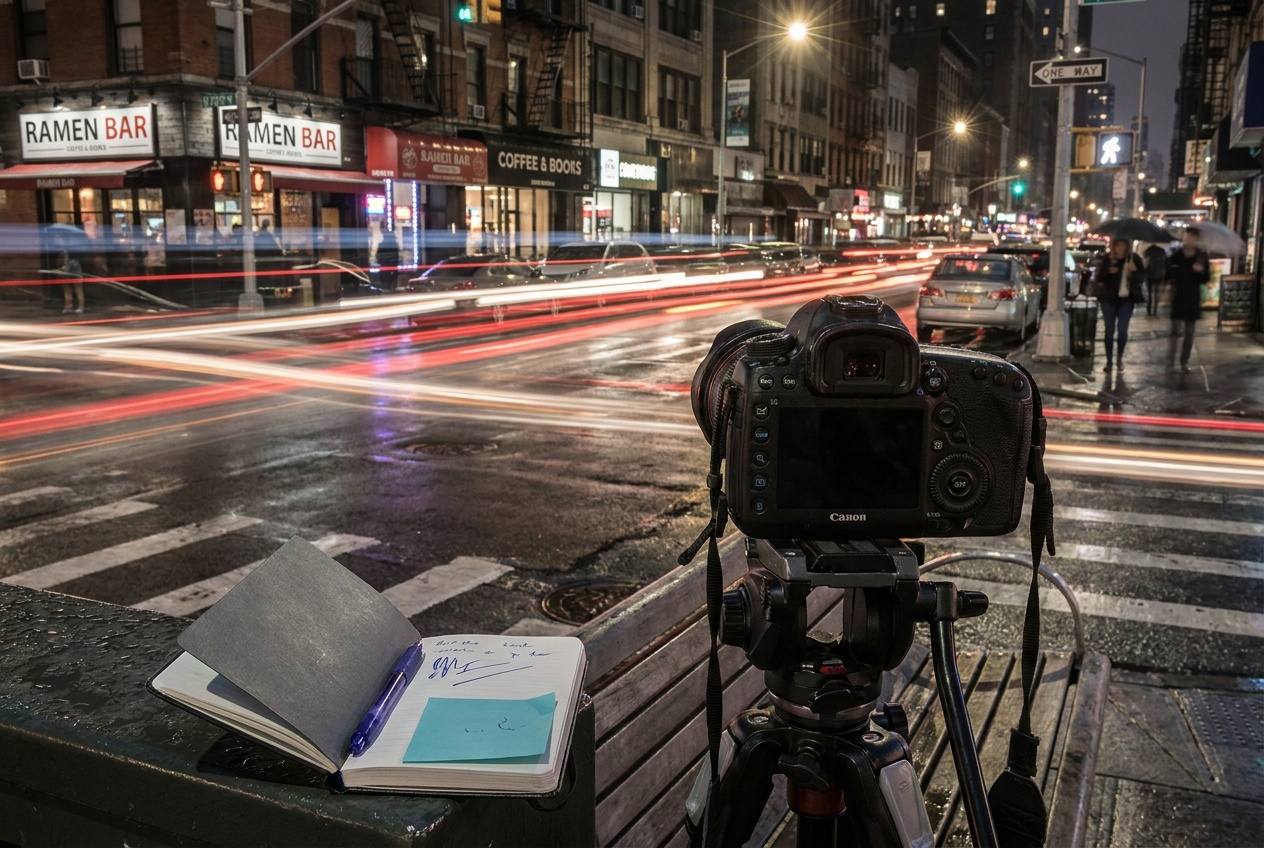
The single biggest fix for night work is support. A tripod, or even a wall or railing to set the camera on, makes the long exposures behind clean, sharp night scenes possible. Use a two-second timer or a remote so pressing the shutter does not shake the camera. Shoot raw to hold onto the deep shadows and the bright lights at once. And look for the blue hour, the window just after sunset, when there is still some color in the sky to separate buildings from black and your exposures stay shorter.
The gear that helps
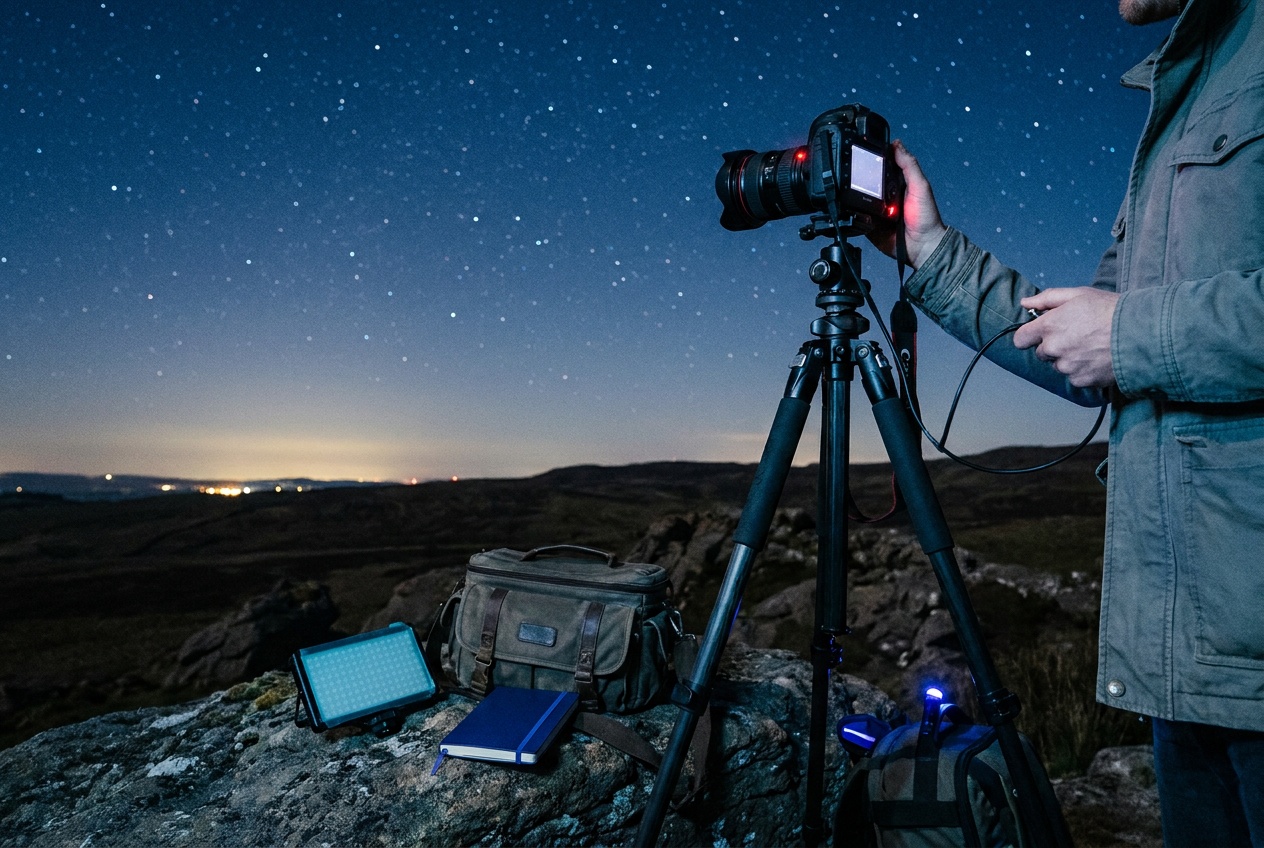
Two things define night results: stability and a camera that handles high ISO well. A body with strong low-light performance buys you cleaner handheld frames, which the camera buying guide gets into. A fast lens that opens to f/1.8 or f/2.8 gathers far more light for the handheld case, covered in the prime vs zoom guide. A tripod is the cheapest upgrade that changes the most.
Where this fits
Twilight and night exteriors are a selling point in real estate photography, where a dusk shot with warm windows glowing makes a listing stand out, and a tripod plus a long exposure is exactly how those are made. The logic is still the exposure triangle, just with the shutter doing far more of the work than usual.
What settings should I use for night photography?
On a tripod, use a low ISO like 100, a moderate aperture like f/8, and a long shutter speed of several seconds to gather light cleanly. Handheld, open the aperture wide and raise ISO to keep a usable shutter speed, accepting more noise. The presence of a tripod decides which approach you take.
Why are my night photos blurry or noisy?
Blurry usually means the shutter was too slow to hold by hand; the fix is a tripod and a long exposure. Noisy usually means ISO was pushed very high to keep a fast shutter; the fix is again a tripod, which lets you lower ISO and let time gather the light instead.
Practice this
Turn the guide into a working setup
Related Learn guides
Content Credentials and C2PA Explained for Photographers
Content Credentials record a photo's signed provenance and edits. Learn what C2PA proves, what it cannot prove, and how capture-to-export workflows work.
Open Gate Video Explained: When 3:2 Is Worth It
Open Gate records a taller sensor area for flexible 16:9, 9:16, and square crops. See when it helps, what it costs, and how to frame it correctly.
Pre-Capture Photography Explained: Get the Frame Before the Click
Pre-Capture buffers photos before the shutter is fully pressed. Learn how it works, which settings change, and when RAW, flash, or focus may be limited.
RAW vs JPEG: Which File Format Should You Shoot?
RAW keeps all your sensor data for maximum editing freedom; JPEG is smaller and ready to share. Here is how they differ and when each one is the right call.
Researched, not personally tested: picks compare specifications, available owner feedback, and established expert sources. As an Amazon Associate I earn from qualifying purchases. We may earn a commission from links here, at no extra cost to you. How we research →