We may earn a commission from links on this page, at no extra cost to you. Picks are researched, not sponsored.
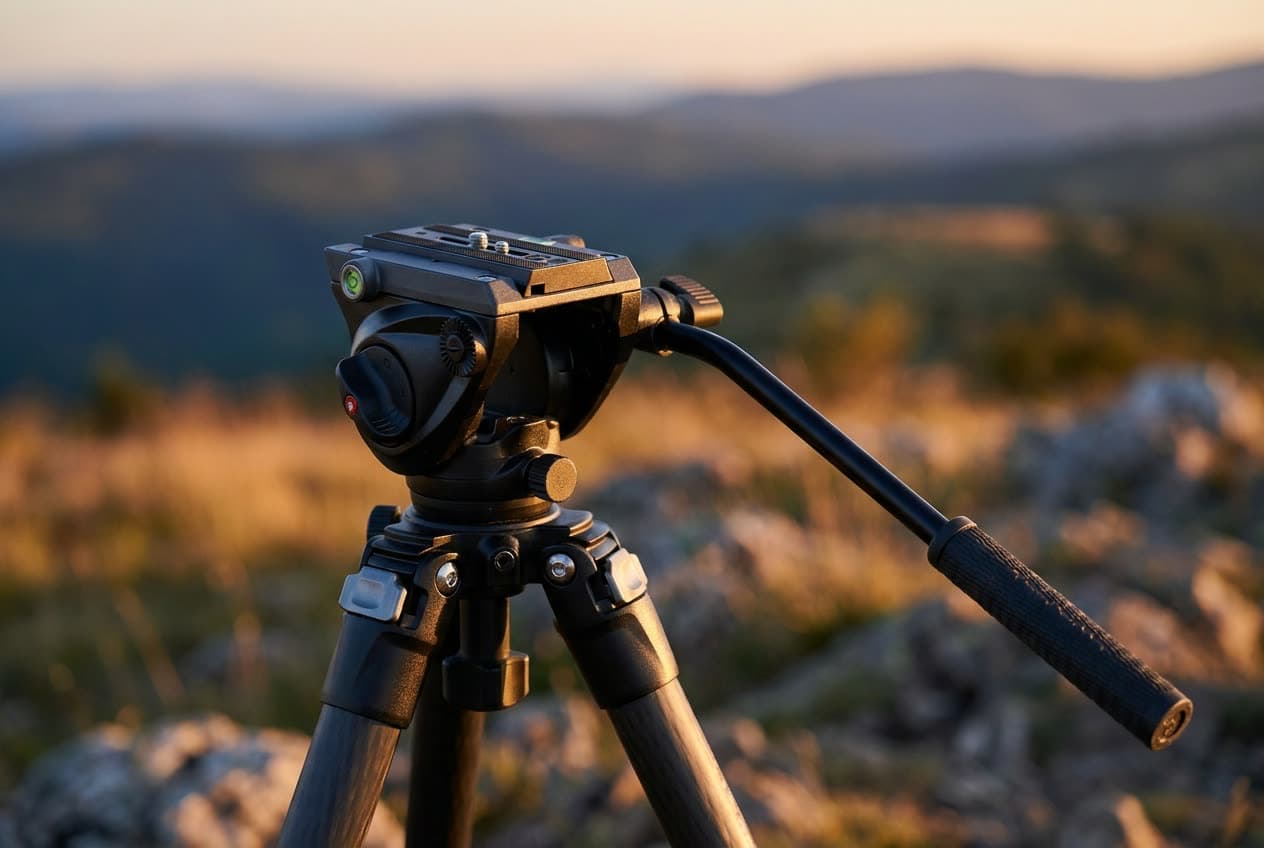
A fluid video head is what turns jerky tripod pans into smooth, cinematic motion. Inside, a fluid mechanism resists the movement of the pan and tilt so your camera glides instead of jumps. It is the single accessory that most improves handheld-looking video on a tripod, and it sits between your camera and your tripod legs.
If you are still choosing legs, our best tripods guide covers the support a head mounts to, and the exposure triangle covers the camera settings for the same shots.
How do the picks compare?
| Head | Payload | Drag | Counterbalance | Weight and base | Price |
|---|---|---|---|---|---|
| Manfrotto MVH500AH | 5 kg | Fixed fluid | Spring, fixed | 930 g, flat base | Varies by seller |
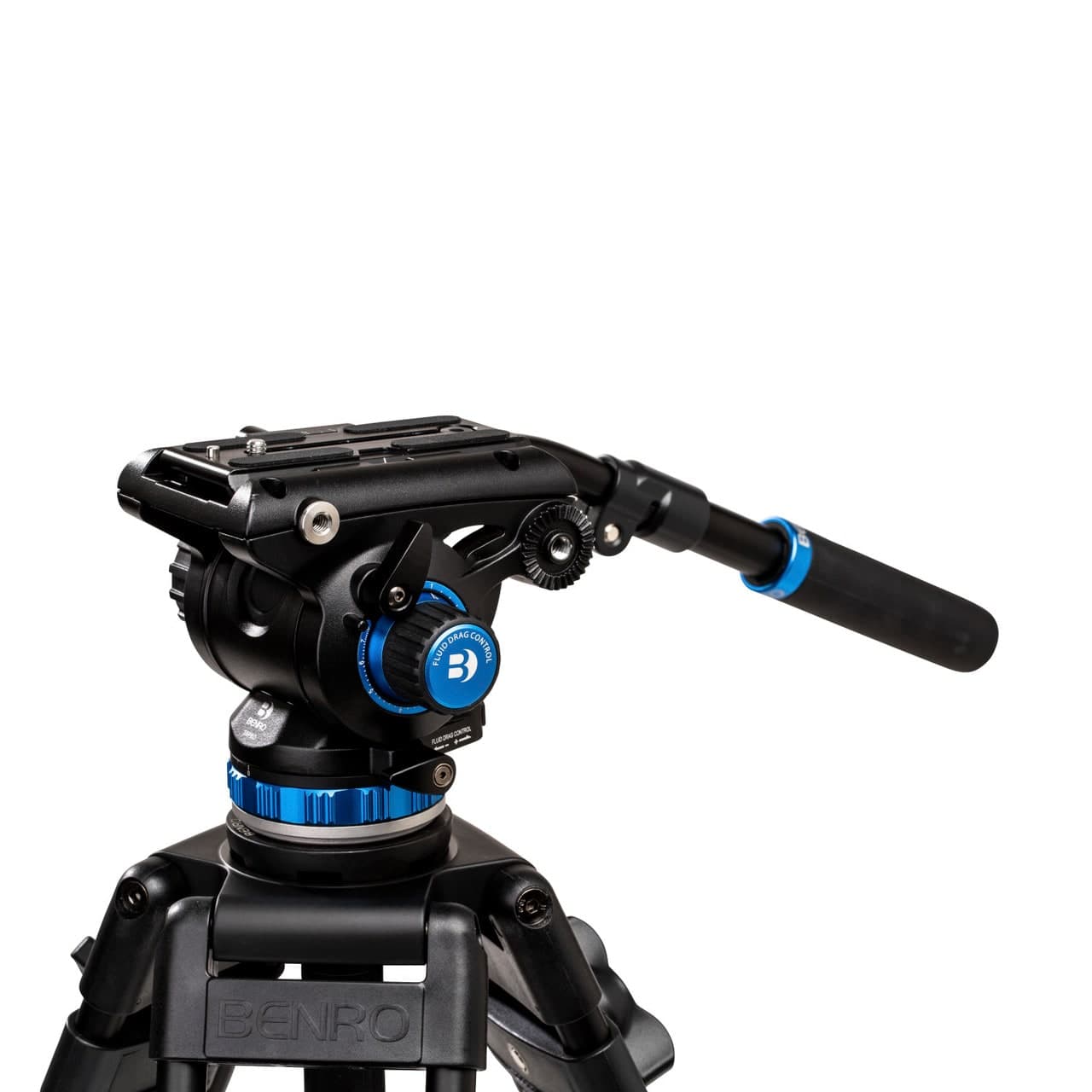
| Benro S6Pro | 6 kg | Continuous pan and tilt | 6 steps (0 to 5) | 1.63 kg, 65 mm flat base | $264.95 |
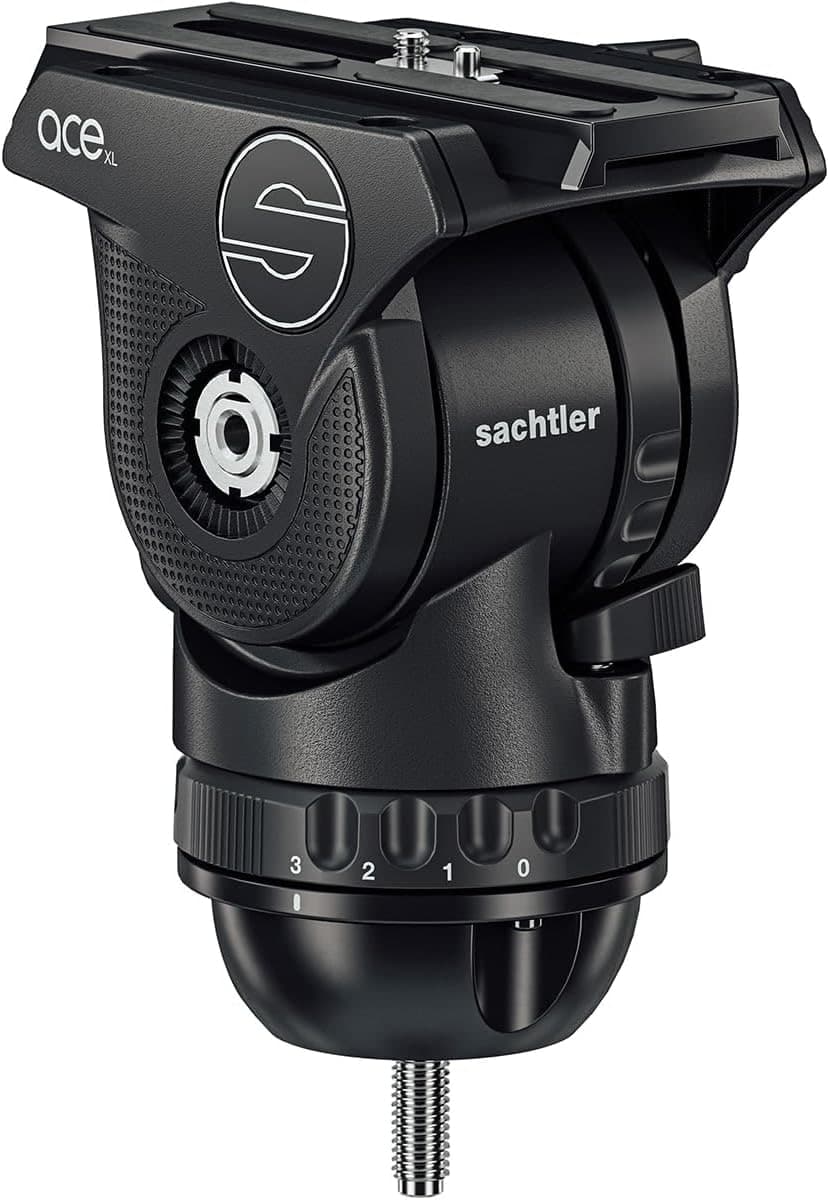
| Sachtler Ace XL Mk II | 8 kg | 3 + 0 steps | 9 steps | 1.7 kg, 75 mm bowl | About $499 to $722 |
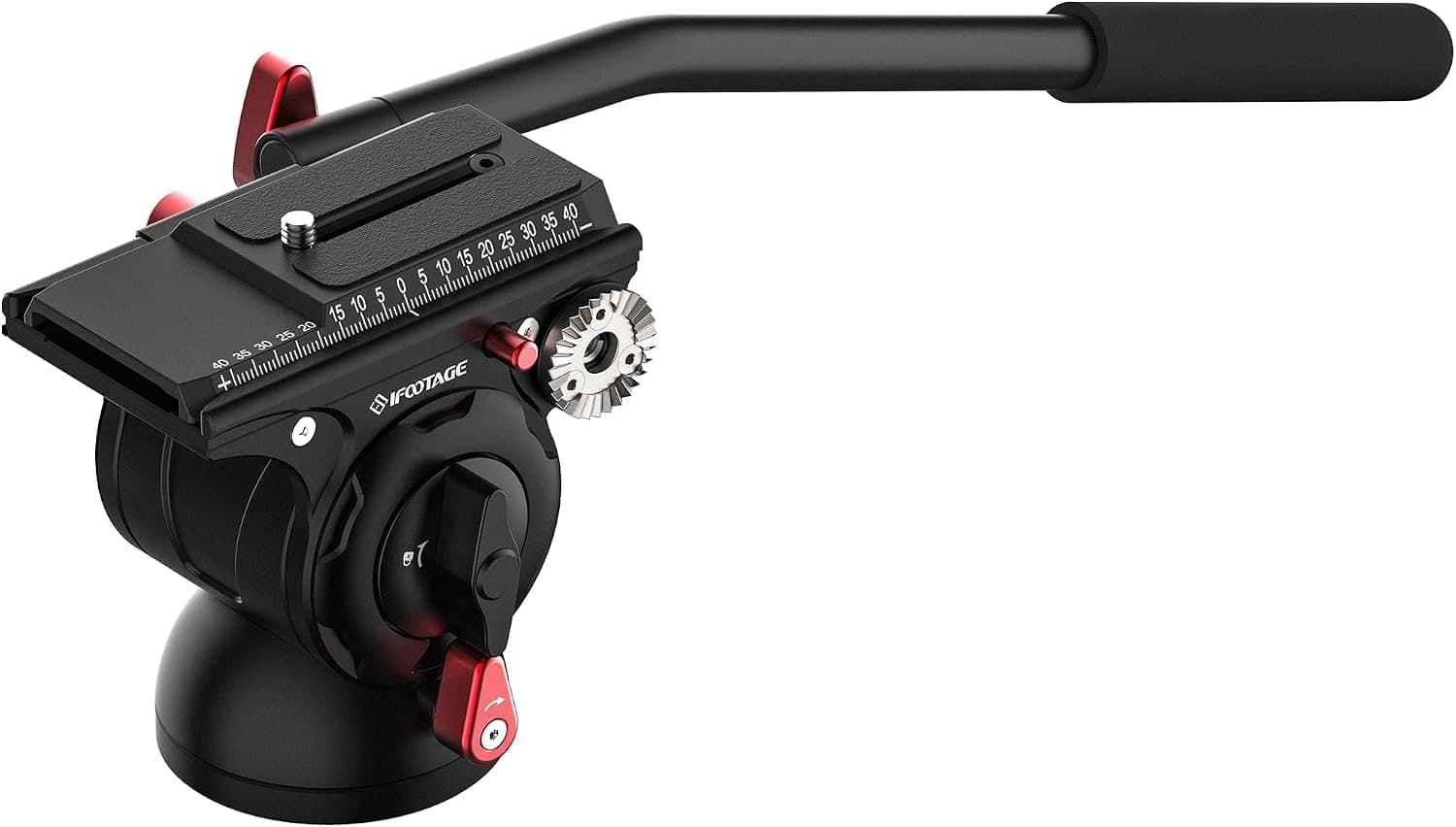
| iFootage Komodo K5S | 5 kg | Fluid, not listed as adjustable | Built-in spring | 0.82 kg | $148.99 |
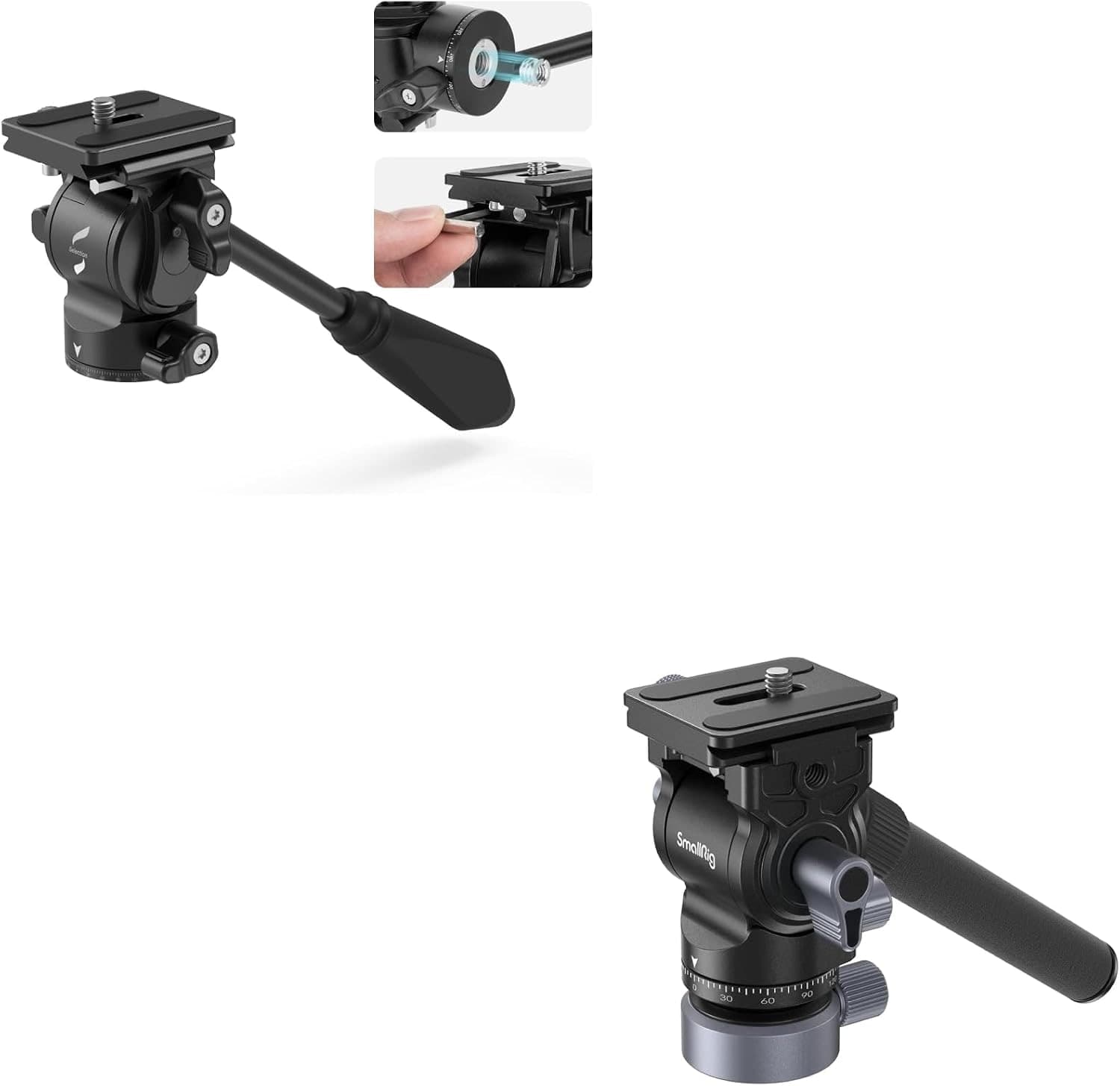
| SmallRig CH20 (bundle) | 4 kg | Fluid | Not listed | 350 g head, bowl leveling base | $113.98 |
Sources: Manfrotto MVH500AH specifications, Benro S6Pro specifications, Sachtler Ace XL Mk II and Newsshooter on its $499 sale price, and the iFootage and SmallRig listings. Prices are Amazon U.S., checked September 26, 2026, except where noted.
How to choose
Start with payload. A fluid head is rated for a maximum camera weight, and it works best when your rig sits near the middle of that range. Add up your camera, lens, and any monitor or mic, then choose a head with comfortable headroom so the drag and counterbalance work properly.
Then think about drag. Fixed-drag heads, common at the entry level, have one preset resistance that is fine for casual work. Adjustable-drag heads let you dial the resistance up for slow, deliberate pans or down for fast moves, which matters once you shoot a variety of shots. Stepped drag, on professional heads, gives repeatable settings you can return to exactly.
After that, look at counterbalance. This feature offsets the weight of your camera so it does not tip forward when you let go, which keeps tilts smooth and prevents the rig from flopping. A continuous or multi-step counterbalance is a real upgrade for heavier setups. Last, check the base and plate. A flat base is standard for photo tripods, a bowl base lets you level quickly on uneven ground, and a plate that matches your other gear, like Arca or Manfrotto, saves you swapping hardware.
The picks
Best Value
Manfrotto MVH500AH
Mirrorless shooters who want their first proper video head.
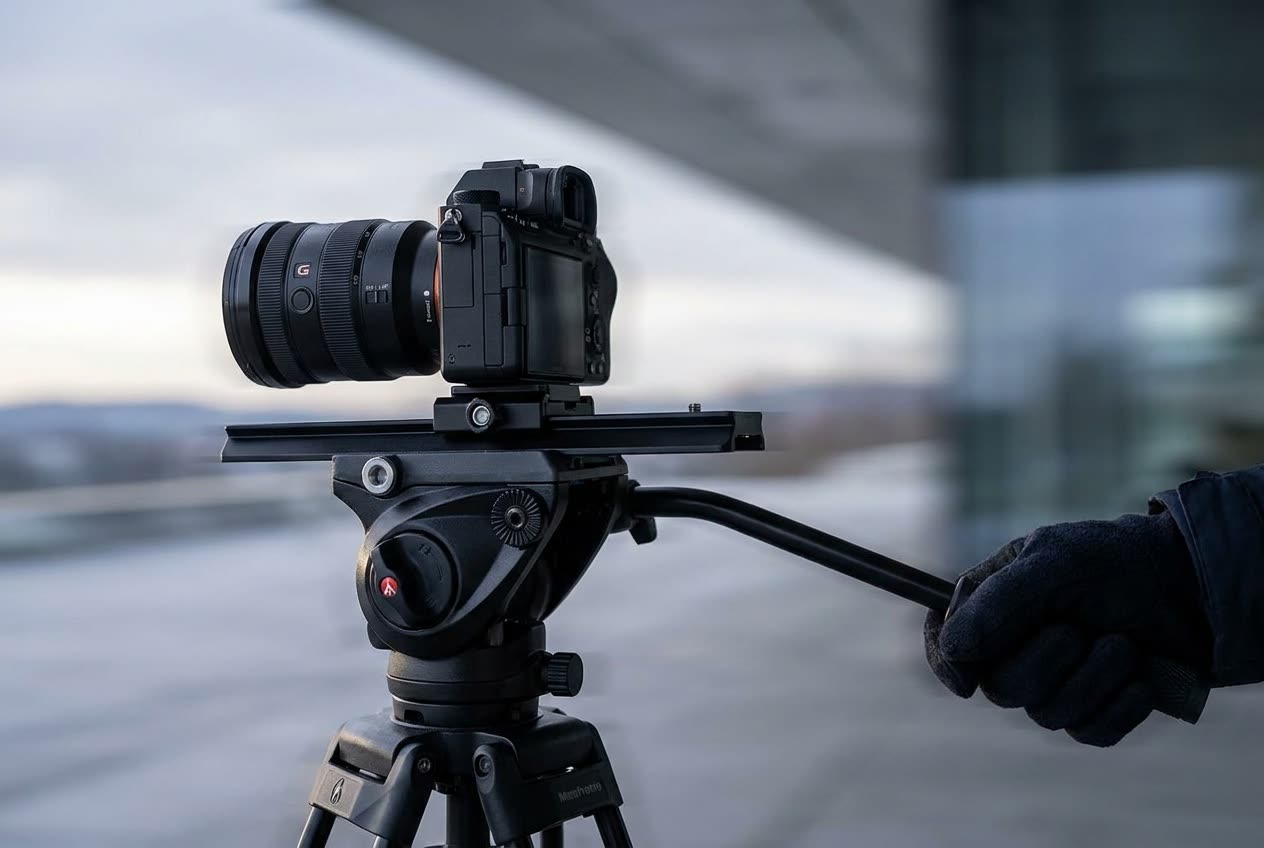
Check price at AmazonThe Manfrotto MVH500AH is the value benchmark and the standard first fluid head for mirrorless shooters, with more than 1,700 Amazon ratings. It has smooth fixed drag, a long sliding plate that makes balancing easy, and a 5 kg payload in a 930 g head that handles most mirrorless rigs. The drag is not adjustable and it is light for big builds, but for the price it is the obvious starting point.
Best Adjustable Drag
Benro S6Pro
Shooters who want adjustable drag without paying pro prices.
Check price at AmazonThe Benro S6Pro is the pick when you want adjustable drag without a professional price. Benro lists continuous pan and tilt drag, a 6-step counterbalance (0 to 5), a 6 kg payload, and a 65 mm flat base, at 1.63 kg. At about $265 on Amazon it costs roughly twice the Manfrotto, and the drag is less refined than a Sachtler, but being able to slow a pan for a long lens is the upgrade most people feel first.
Best Professional
Sachtler Ace XL Mk II
Working shooters with heavier rigs who need repeatable moves.
Check price at AmazonThe Sachtler Ace XL Mk II is the professional pick. Sachtler lists 3 + 0 stepped drag, 9 counterbalance steps, a 104 mm plate slide range, and an illuminated level bubble, rated up to 8 kg at 1.7 kg. Stepped drag means you can return to exactly the same resistance on every take, which matters on paid shoots. It uses a 75 mm bowl, so pair it with bowl-cup legs or an adapter. Amazon shows it through other sellers, and it has sold for between about $499 and $722.
Best for Monopods
iFootage Komodo K5S
Shooters who move between a monopod and tripod with a mirrorless rig.
Check price at AmazonThe iFootage Komodo K5S is the pick for monopod and tripod shooters. iFootage rates it for 5 kg at just 0.82 kg, with a built-in balance spring, separate pan and tilt locks, a +90 to -83 degree tilt range, and a safety pin that stops the plate sliding out. It costs about $149, close to the Manfrotto, and its listing does not describe adjustable drag, so choose it for the weight and monopod use rather than for finer control.
Best Compact
SmallRig CH20 Head and Leveling Base Bundle
Travelers and vloggers who need quick leveling with a light camera.
Check price at AmazonThe SmallRig CH20 with leveling base is the compact pick. The 350g head supports up to 4kg, and the integrated bowl lets you level the camera without adjusting every tripod leg. The available Amazon bundle pairs the CH20 with a quick-release head, so check the included pieces before ordering. It remains a light-rig option, not a substitute for adjustable drag on a heavy cinema build.
Common mistakes
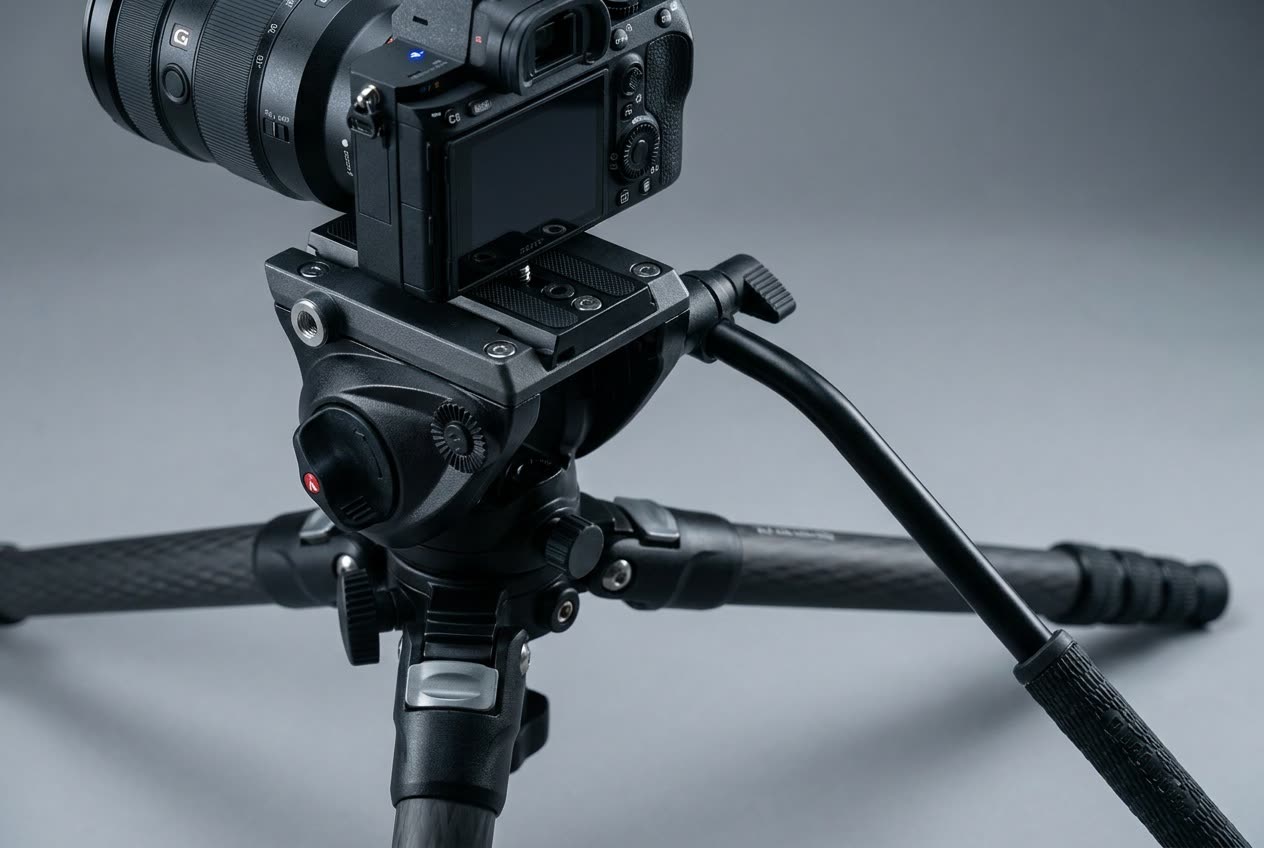
The most common one is overloading or underloading the head. A rig that exceeds the payload tips and pans roughly, and one far below it can feel stiff, so aim for the middle of the rated range. The second is putting a fluid head on flimsy legs; a smooth head on a wobbly tripod still gives you shaky footage, so the legs matter as much as the head. The third is ignoring counterbalance: without it, the camera tips forward on tilts, and your moves never settle.
For the legs underneath, see our best travel tripods guide.
What does a fluid head actually do?
A fluid head uses an internal fluid-damped mechanism to resist the motion of your pans and tilts, which smooths them out so the camera glides instead of jerking. It is the part of your support system most responsible for cinematic-looking tripod motion. A photo ball head cannot do this, which is why video shooters use a dedicated fluid head.
Do I need adjustable drag or is fixed drag fine?
Fixed drag is fine for casual or beginner work where most of your pans are at a similar speed. Adjustable drag becomes worth it once you shoot a range of moves, because you can increase resistance for slow, deliberate pans and lower it for fast ones. If you only film occasional video, a smooth fixed-drag head like the MVH500AH is plenty.
What is counterbalance and why does it matter?
Counterbalance offsets the weight of your camera so it does not tip forward when you let go of the handle, especially during tilts. Without it, a front-heavy rig flops down and your tilts never settle smoothly. A continuous or multi-step counterbalance lets you match the feature to your exact rig weight, which is a meaningful upgrade for heavier setups.
Compare picks
The short version
Use this to narrow the list before opening the detailed cards.
Scores weigh fit, owner sentiment, build, and value. Affiliate links do not change pick order. Methodology
Buying order
Start with the skip note. A good deal on the wrong camera is still the wrong camera.
Compare verdictsIf you already own lenses, check the system path before buying into a new mount.
Check systemsOnce the fit makes sense, compare current deals and retailer listings.
Check current deals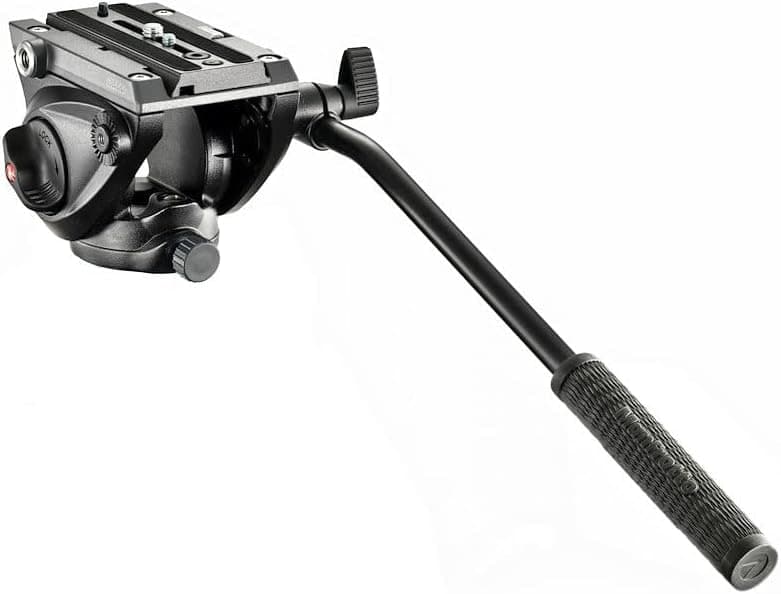
Mirrorless shooters who want their first proper video head.
Use the retailer for the current price after the tradeoff makes sense. Confirm payload, plate type, height, folded size, and quick-release system.
9.1/10 Aperture Score
Use the retailer for the current price after the tradeoff makes sense. Confirm payload, plate type, height, folded size, and quick-release system.
$100 - $130
Use the retailer for the current price after the tradeoff makes sense. Confirm payload, plate type, height, folded size, and quick-release system.
Shooters who move between a monopod and tripod with a mirrorless rig.
Use the retailer for the current price after the tradeoff makes sense. Confirm payload, plate type, height, folded size, and quick-release system.
Price ladder
The useful range here runs from $116 to $722. Start with the ceiling that matches the assignment.
- Mirrorless shooters who want their first proper video head.
- Smooth fluid drag
- Drag is not adjustable
Use the retailer for the current price after the tradeoff makes sense. Confirm payload, plate type, height, folded size, and quick-release system.
- Shooters who want adjustable drag without paying pro prices.
- Continuous adjustable drag
- Drag less refined than premium heads
Use the retailer for the current price after the tradeoff makes sense. Confirm payload, plate type, height, folded size, and quick-release system.
- Working shooters with heavier rigs who need repeatable moves.
- Repeatable stepped drag
- Costs four to five times an entry head
Use the retailer for the current price after the tradeoff makes sense. Confirm payload, plate type, height, folded size, and quick-release system.
- Shooters who move between a monopod and tripod with a mirrorless rig.
- Light for a 5 kg head
- No stepped or adjustable drag listed
Use the retailer for the current price after the tradeoff makes sense. Confirm payload, plate type, height, folded size, and quick-release system.
- Travelers and vloggers who need quick leveling with a light camera.
- Fast leveling
- Bundle includes two head components
Use the retailer for the current price after the tradeoff makes sense. Confirm payload, plate type, height, folded size, and quick-release system.
| Pick | Score | Price | Verdict | Action |
|---|---|---|---|---|
| Best ValueManfrotto MVH500AH | 8.6
| $119 - $159 | Mirrorless shooters who want their first proper video head. Wins: Smooth fluid drag Skip: Drag is not adjustable | Check Amazon · $119 - $159 Use the retailer for the current price after the tradeoff makes sense. Confirm payload, plate type, height, folded size, and quick-release system. |
 Best Adjustable DragBenro S6Pro Best Adjustable DragBenro S6Pro | 8.5
| $249 - $279 | Shooters who want adjustable drag without paying pro prices. Wins: Continuous adjustable drag Skip: Drag less refined than premium heads | Check Amazon · $249 - $279 Use the retailer for the current price after the tradeoff makes sense. Confirm payload, plate type, height, folded size, and quick-release system. |
| Best ProfessionalSachtler Ace XL Mk II | 9.1
| $499 - $722 | Working shooters with heavier rigs who need repeatable moves. Wins: Repeatable stepped drag Skip: Costs four to five times an entry head | Check Amazon · $499 - $722 Use the retailer for the current price after the tradeoff makes sense. Confirm payload, plate type, height, folded size, and quick-release system. |
| Best for MonopodsiFootage Komodo K5S | 8.6
| $135 - $160 | Shooters who move between a monopod and tripod with a mirrorless rig. Wins: Light for a 5 kg head Skip: No stepped or adjustable drag listed | Check Amazon · $135 - $160 Use the retailer for the current price after the tradeoff makes sense. Confirm payload, plate type, height, folded size, and quick-release system. |
| Best CompactSmallRig CH20 Head and Leveling Base Bundle | 8.3
| $100 - $130 | Travelers and vloggers who need quick leveling with a light camera. Wins: Fast leveling Skip: Bundle includes two head components | Check Amazon · $100 - $130 Use the retailer for the current price after the tradeoff makes sense. Confirm payload, plate type, height, folded size, and quick-release system. |
Keep going
Next useful steps
Pick one. Each link continues the same job without starting the research over.
Shoot kits
Buy around the job, not the spec sheet
Video rig
Run-and-gun video rig
$4,201
A compact cinema body, fast normal zoom, cage, monitor, gimbal, shotgun mic, and battery for paid video work.
Best upgrade path from creator kit
Buy order: start with the first piece that makes the job possible, then add the support pieces that remove friction.
Camera: start here. If this piece does not make the shoot easier, the rest of the kit can wait.
Power: add it after the core setup proves useful.
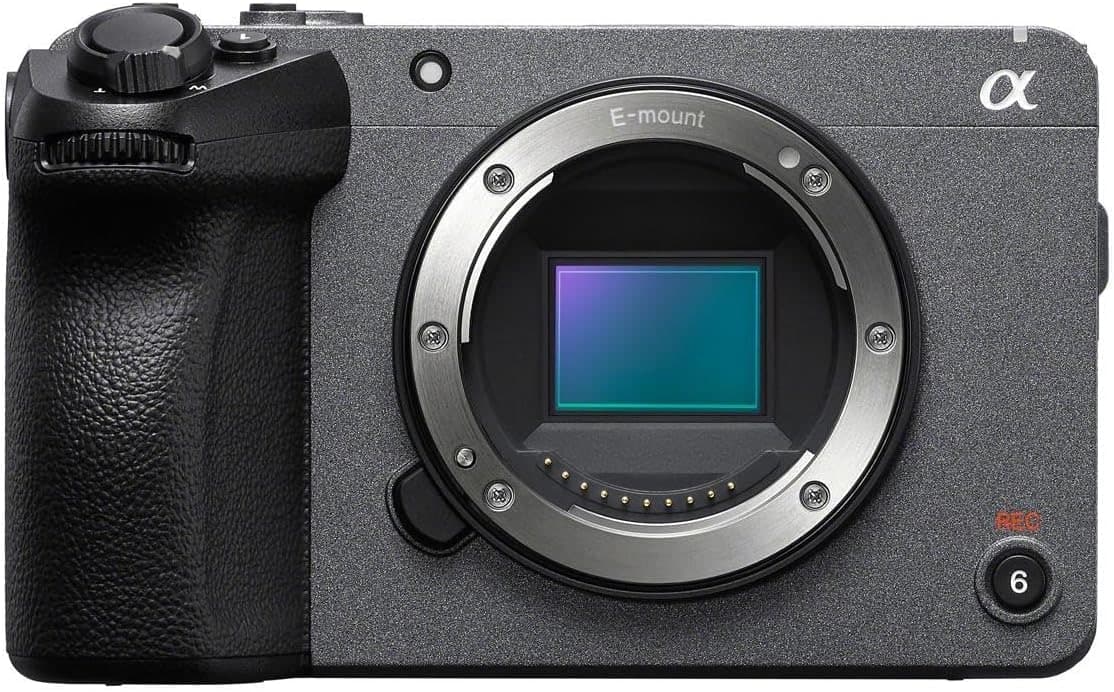
Sony FX30
Cinema-line controls, active cooling, reliable autofocus, and files that grade well without full-frame cost.
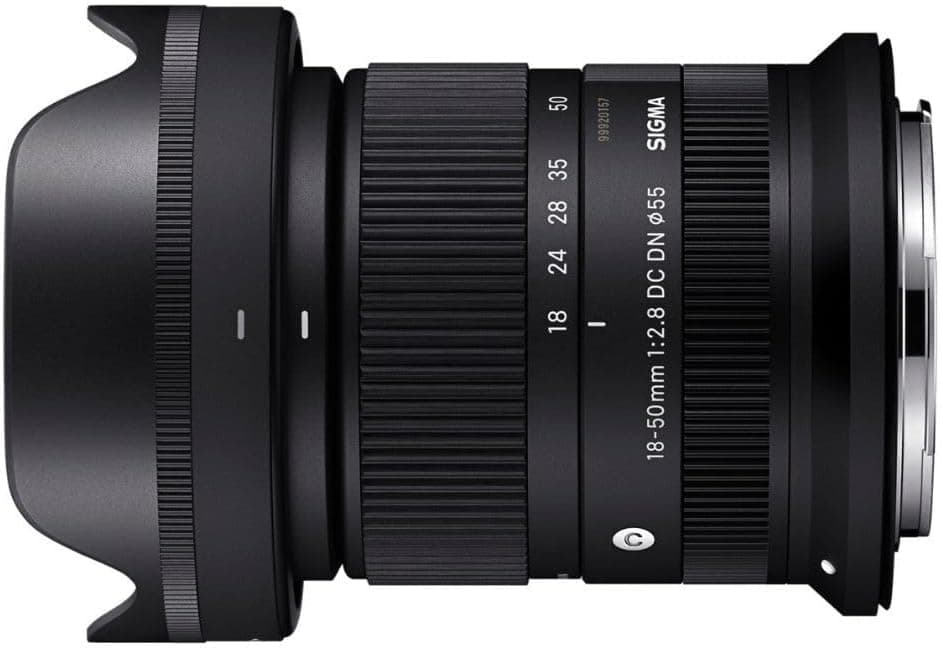
Sigma 18-50mm f/2.8 DC DN Contemporary
A small constant-aperture zoom that keeps an APS-C rig light enough to carry and balance.
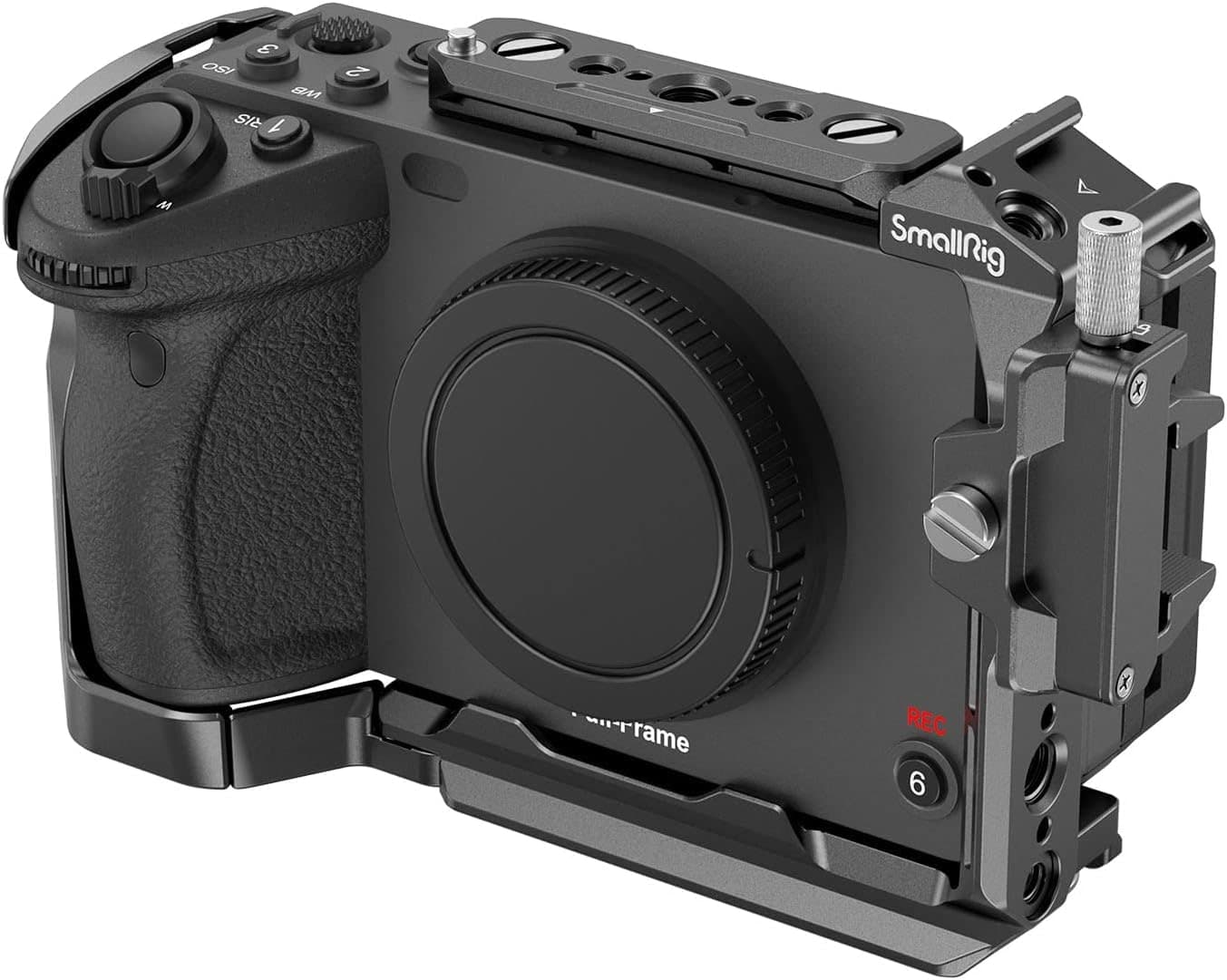
SmallRig Cage for Sony FX3 and FX30
Adds proper mounting points for handles, monitors, mics, and cables without relying on the camera body.
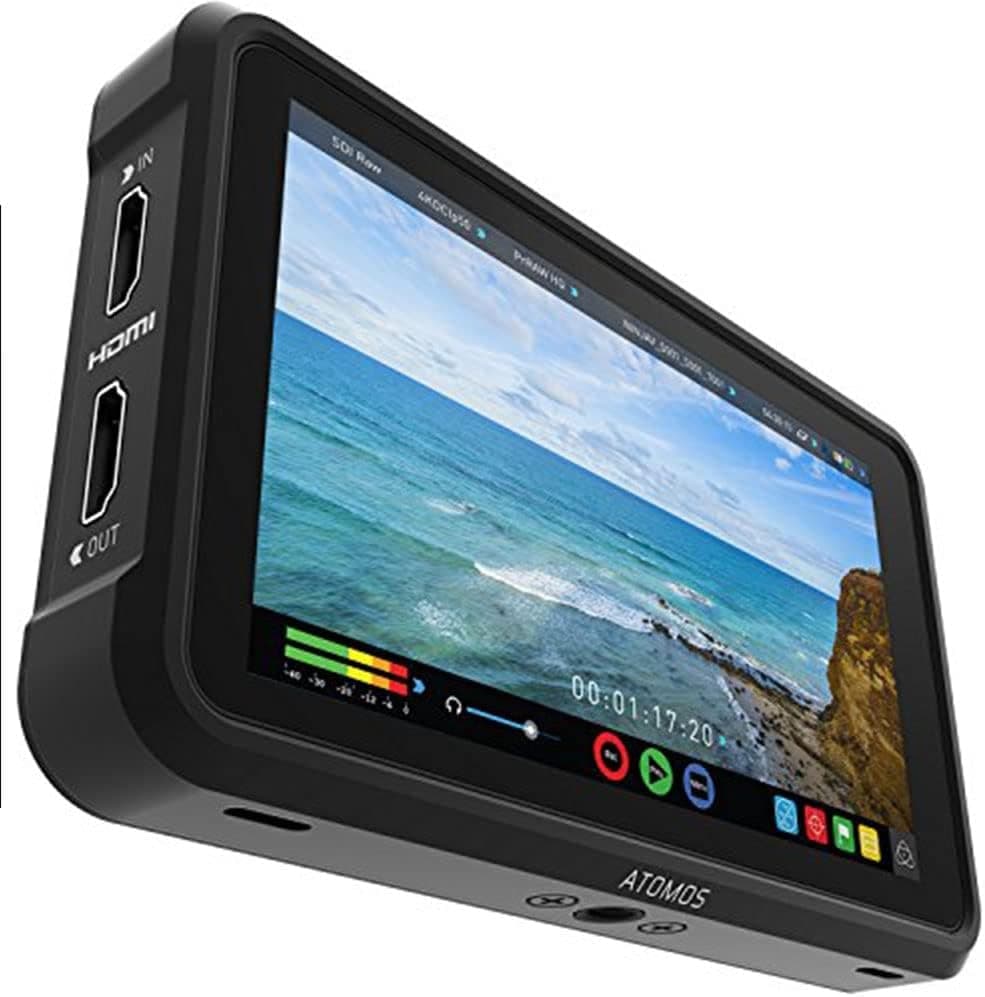
Atomos Ninja V
A bright five-inch screen for focus, exposure tools, LUT preview, and cleaner client monitoring.
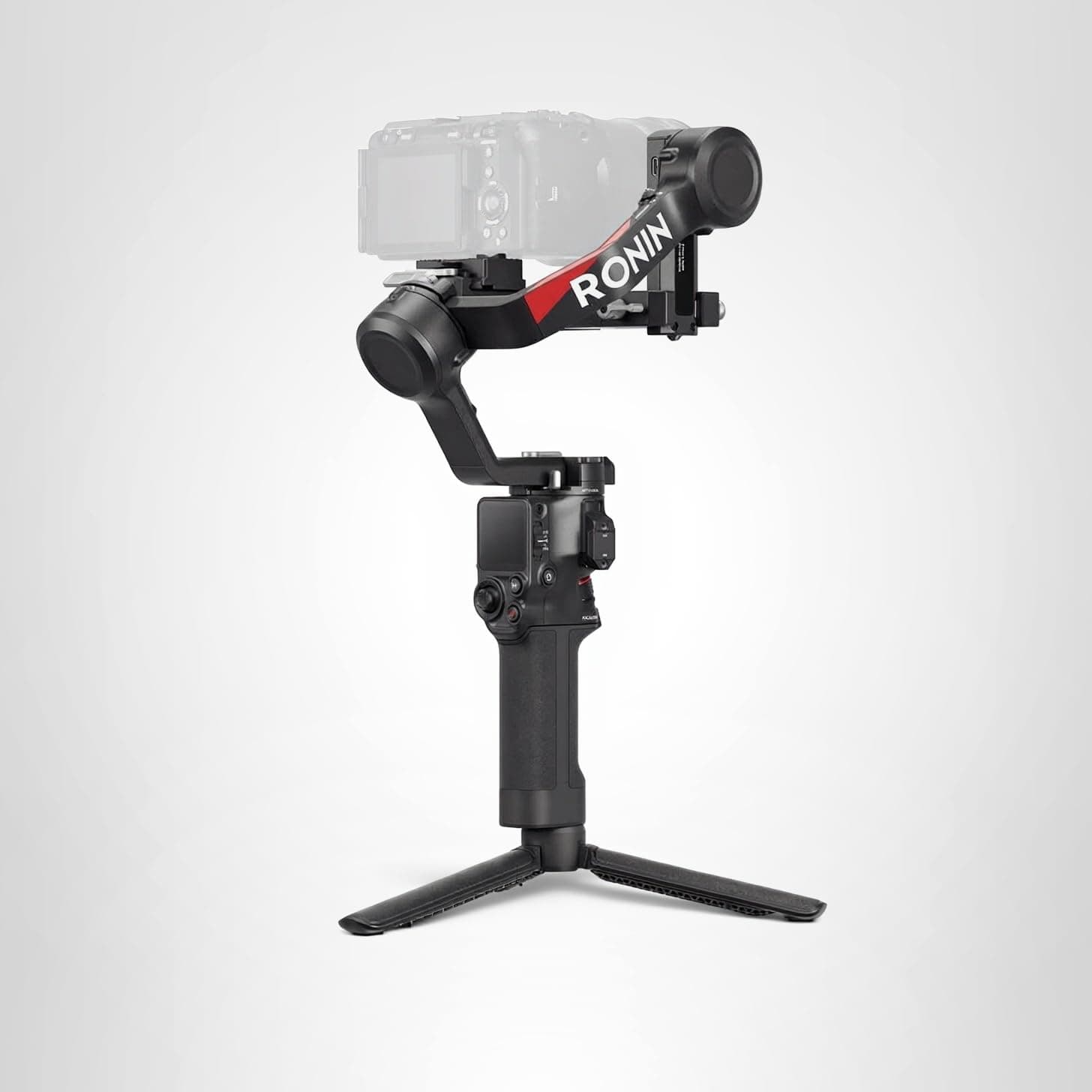
DJI RS 4
The gimbal tier that can handle a built-out mirrorless or compact cinema rig without becoming huge.
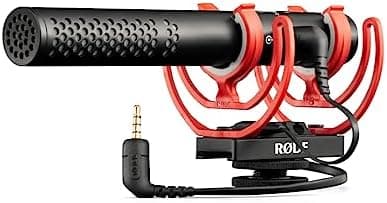
Rode VideoMic NTG
A flexible on-camera shotgun that also works as a small USB mic for quick voiceover or desk work.
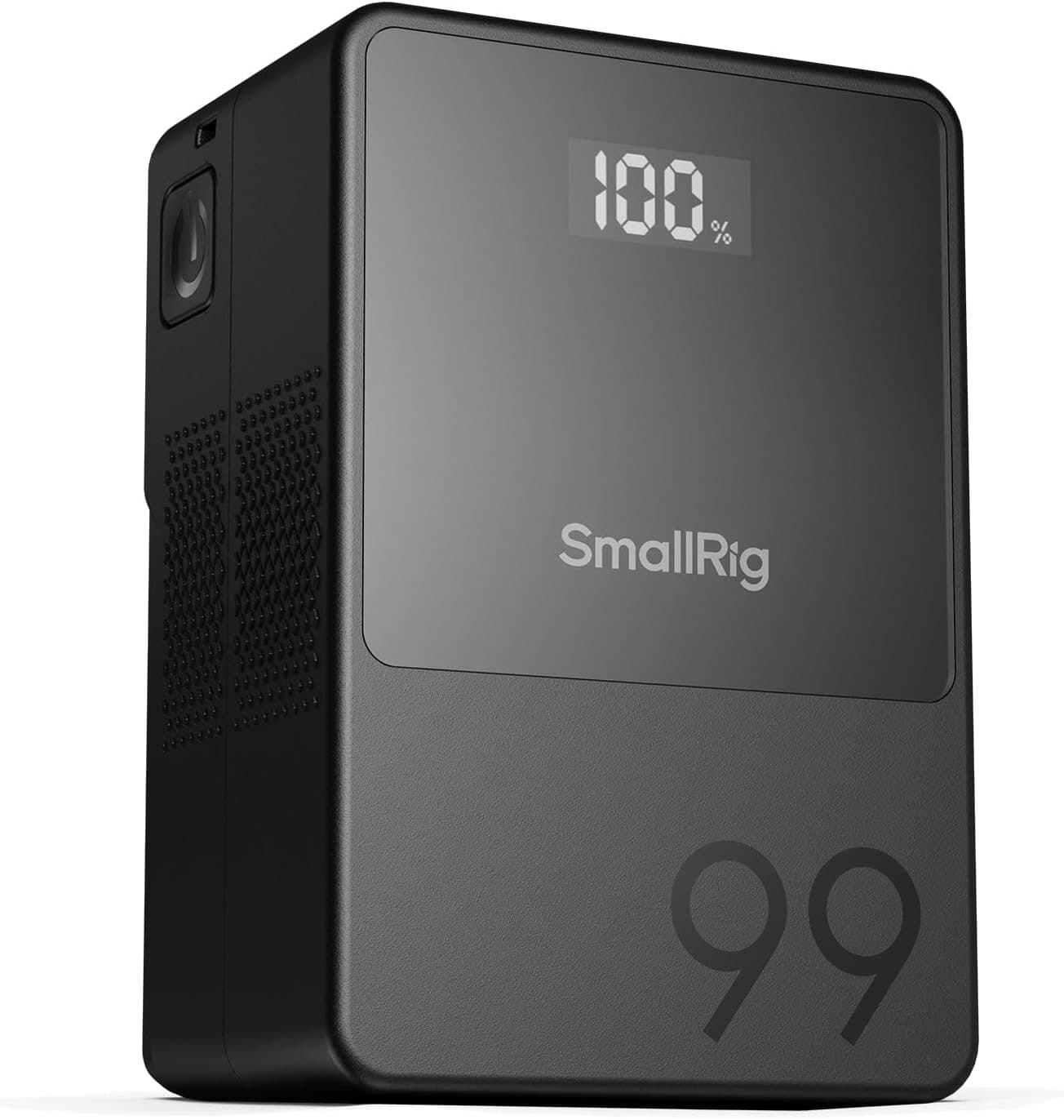
SmallRig VB99
A compact V-mount that can run monitors, lights, or cinema bodies without turning the rig into a brick.
Prices are rough catalog totals. Retailer prices change, and you can swap pieces to fit your system.
Related Gear guides
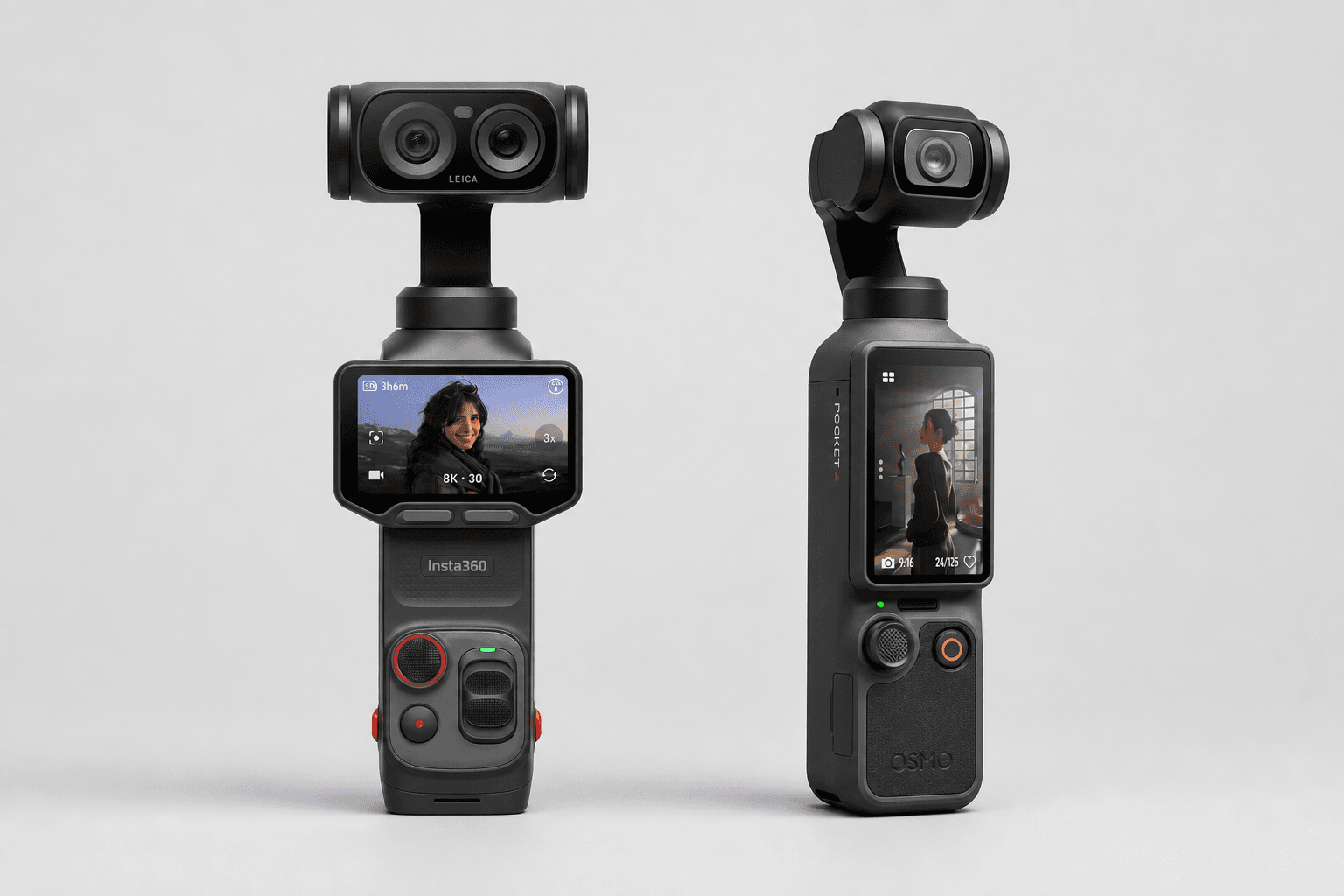
Insta360 Luna Ultra vs DJI Osmo Pocket 4: Which Pocket Gimbal Should You Buy?
Compare Luna Ultra and DJI Pocket 4 by lenses, video, Log formats, storage, U.S. availability, and the filming jobs each pocket gimbal handles best.
CFexpress 4.0 and VPG Explained: Buy the Card Your Camera Needs
CFexpress 4.0 doubles theoretical bandwidth, while VPG certifies sustained video writes. Learn Type A vs B, VPG classes, and when 4.0 is worth paying for.
Focal Length Explained: What 24mm, 50mm, 85mm, and 200mm Actually Do
What the millimeter number on a lens changes in the field: angle of view, compression, and working distance. When to reach for 24, 50, 85, or 200mm.
Canon EOS R50 V vs Sony ZV-E10 II: Which Beginner Vlogging Camera Should You Buy?
Canon EOS R50 V is the easier beginner creator kit. Sony ZV-E10 II is the deeper lens-system pick. Compare the practical tradeoffs.
Researched, not personally tested: picks compare specifications, available owner feedback, and established expert sources. As an Amazon Associate I earn from qualifying purchases. We may earn a commission from links here, at no extra cost to you. How we research →