We may earn a commission from links on this page, at no extra cost to you. Picks are researched, not sponsored.
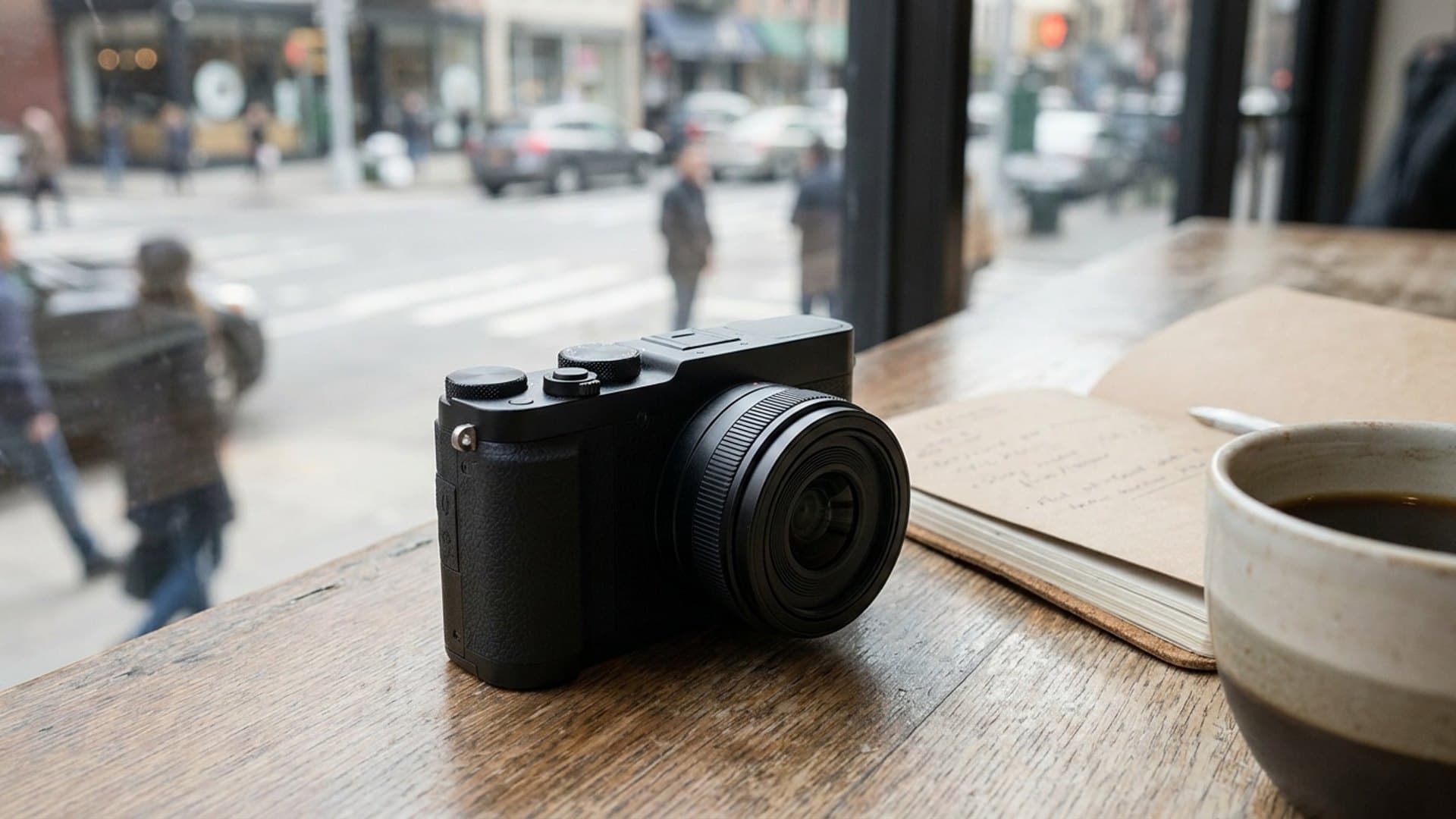
A compact camera earns its place only if it does something your phone cannot. The ones worth buying in 2026 do at least one of three things: a much larger sensor (APS-C) for cleaner low light and real background blur, an optical zoom with a brighter lens than a phone's telephoto, or toughness that a phone cannot match. Everything on this list clears that bar.
If you are deciding between a compact and an interchangeable-lens body, our best cameras for beginners guide covers the starter bodies, and the exposure triangle explains why a bigger sensor buys you shutter speed and ISO headroom in dim light.
How do the picks compare?
| Camera | Sensor | Lens (35 mm equivalent) | Stabilization | Price band | Best for |
|---|---|---|---|---|---|
| Ricoh GR IV | 25.7 MP APS-C | 28 mm f/2.8 | 5-axis sensor shift | About $1,597 | Pocket street and everyday |
| Fujifilm X100VI | 40.2 MP APS-C | 35 mm f/2 | Up to 6 stops | $2,000-$2,150 | Premium travel with a viewfinder |
| Ricoh GR IIIx | 24.2 MP APS-C | 40 mm f/2.8 | 3-axis, up to 4 stops | About $1,247 | A tighter, more natural view |
| Canon PowerShot G7 X Mark III | 20.1 MP 1-inch stacked | 24-100 mm f/1.8-2.8 | Optical IS | Canon lists $879.99 | A bright zoom in a pocket |
| Sony ZV-1 II | 20 MP 1-inch stacked | 18-50 mm f/1.8-4 | Digital only | $950-$1,050 | Vlogging and selfie video |
| OM System TG-7 | 12 MP 1/2.33-inch | 25-100 mm f/2-4.9 | Built in | $500-$550 | Snorkeling, rain, and drops |
Sources: Ricoh GR IV specifications, Fujifilm X100VI, Ricoh GR IIIx, Canon PowerShot G7 X Mark III, and OM System Tough TG-7. Amazon prices checked October 18, 2026.
How to choose
Start with the sensor, because it decides how far the camera pulls ahead of a phone. An APS-C compact like the GR IV or X100VI has a sensor many times the area of a phone's main camera, which shows up as cleaner files at ISO 3200 and up and genuine background blur at f/2 or f/2.8. A 1-inch compact sits in between: still a clear step up in dim rooms, with the bonus of a zoom.
Then decide whether you need a zoom. The APS-C compacts all use a single fixed focal length, which keeps them small and sharp but means you zoom with your feet. If you photograph kids at a park, travel days, or anything where you cannot step closer, the G7 X Mark III's 24-100 mm range is the more useful tool even though its sensor is smaller.
Last, be honest about video and abuse. Vloggers want a flip screen, a good built-in mic, and a wide field of view at arm's length, which is what the ZV-1 II is built around. If the camera is going in a pool, a kayak, or a ski pocket, only the waterproof TG-7 belongs on the shortlist.
The picks
Research pick
Ricoh GR IV
Street and everyday shooters who want APS-C quality that fits in a pocket.
Check price at AmazonThe Ricoh GR IV is the best compact camera for most people who want a real upgrade over a phone. Ricoh's specifications list a 25.7 MP APS-C sensor, an 18.3 mm f/2.8 lens (about 28 mm equivalent), 5-axis sensor-shift shake reduction, and roughly 53 GB of built-in memory on top of the microSD slot, all at about 262 g with battery and card. It is the rare camera with a large sensor that slips into a jeans pocket, which is why street photographers carry it daily. There is no viewfinder, video stops at Full HD 60p, and the single focal length is a creative constraint, so it suits people who shoot stills first. For the style that suits it best, see the street photography guide.
Best Premium Compact
Fujifilm X100VI
Street and travel photographers who want one high-quality fixed-lens camera.
Check price at AmazonThe Fujifilm X100VI is the premium pick. Fujifilm lists a 40.2 MP X-Trans CMOS 5 HR sensor, a fixed 23 mm f/2 lens (35 mm equivalent), in-body stabilization rated up to 6 stops, a hybrid optical and electronic viewfinder, and 6.2K 30p video. The viewfinder and the physical shutter, ISO, and aperture dials make it feel like a classic rangefinder, and the 40 MP files crop well when you need a tighter frame. It is larger than the GR and costs more, and demand has made it hard to find at list price, but as a single camera for travel it is hard to beat. The travel photography guide covers how to work with one fixed lens on a trip.
Best for Street
Ricoh GR IIIx
Street photographers who want pocketable APS-C quality.
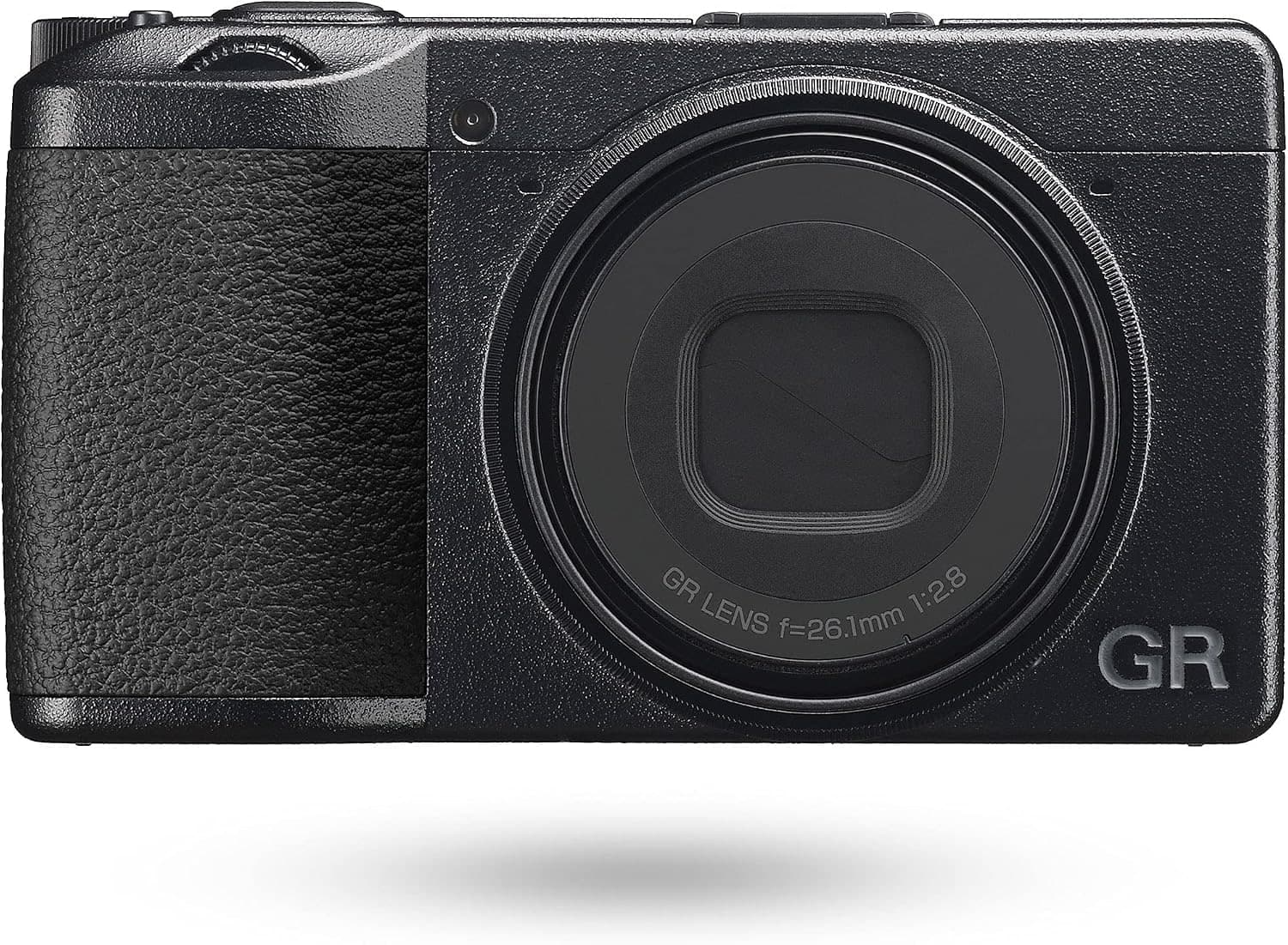
Check price at AmazonThe Ricoh GR IIIx is the GR for people who find 28 mm too wide. Ricoh lists a 24.2 MP APS-C sensor and a 26.1 mm f/2.8 lens, about 40 mm equivalent, with 3-axis shake reduction rated up to 4 stops, at about 262 g. The 40 mm view is closer to how your eye frames a scene, which makes it a natural choice for portraits of people you are with and for food and detail shots. It is the previous generation of the GR body and lacks the GR IV's newer stabilization and large internal memory, but it costs less.
Research pick
Canon PowerShot G7 X Mark III
Vloggers and everyday shooters who want a flexible zoom compact.
Check price at AmazonThe Canon PowerShot G7 X Mark III is the zoom pick. Canon lists a 20.1 MP 1-inch stacked sensor, a 4.2x optical zoom covering 24-100 mm equivalent at f/1.8-2.8 with optical image stabilization, and 4K 30p video with live streaming to YouTube. That bright lens keeps shutter speeds usable indoors through most of the zoom range, which a phone's small telephoto camera cannot do. It has no viewfinder and 4K crops the frame, and stock comes and goes, so compare the price on the listing with Canon's own $879.99 before you buy.
Research pick
Sony ZV-1 II
Vloggers who want a pocketable upgrade from a smartphone.
Check price at AmazonThe Sony ZV-1 II is the vlogging compact. It pairs a 20 MP 1-inch stacked sensor with an 18-50 mm equivalent f/1.8-4 zoom, which is wide enough to frame yourself and your background at arm's length, plus a fully articulating screen and a directional built-in mic. It has no in-body stabilization and no viewfinder, and fast pans show rolling shutter, so it is a talking-to-camera tool more than a stills camera. For more options in this category, see the best vlogging cameras guide.
Research pick
OM System Tough TG-7
Adventurers who need a tough, waterproof camera for the field.
Check price at AmazonThe OM System TG-7 is the tough pick. OM System rates it waterproof to 15 m, shockproof from 2.1 m, crushproof to 100 kg, and freezeproof to -10°C, with a 25-100 mm equivalent f/2-4.9 lens and 4K 30p video. Its 12 MP 1/2.33-inch sensor is phone-sized, so it does not beat a flagship phone on image quality; you buy it because you can drop it, rinse it, and take it snorkeling without a housing. For technique in the water, read the underwater photography guide.
Common mistakes
The most common mistake is buying a small-sensor compact to replace a recent phone. A 1/2.3-inch point-and-shoot rarely beats a current phone's processing, so either go to a 1-inch sensor or larger, or buy for a feature a phone lacks, like waterproofing. The second is ignoring the fixed lens: a 28 mm GR is wonderful for streets and rooms but frustrating at a kid's soccer game, so match the focal length to what you shoot most. The third is paying a heavy markup during shortages; popular compacts like the X100VI and G7 X Mark III go in and out of stock, and third-party listings can run well above list price.
Is a compact camera better than a phone in 2026?
It depends on the sensor. APS-C compacts like the Ricoh GR IV and Fujifilm X100VI have far larger sensors than any phone, which gives cleaner low-light files and real background blur. 1-inch compacts are a smaller but still visible step up, especially with a bright optical zoom. Small-sensor point-and-shoots usually are not better than a current flagship phone unless you need toughness or a long zoom.
Should I get a compact or a mirrorless camera?
Get a compact if you will only carry a camera that fits a pocket; the best camera is the one you bring. Get a mirrorless body if you want to change lenses for portraits, wildlife, or sports. A mirrorless camera with a small prime can be nearly as portable, but it will not slip into a pocket the way a GR does. Our best mirrorless cameras guide covers that side.
Why do premium compacts cost so much?
You are paying for a large sensor, a sharp fixed lens designed for it, and stabilization in a very small body, which is harder to build than a larger camera. Limited production and high demand also push street prices above list for models like the X100VI. If price matters most, the GR IIIx and G7 X Mark III cost less, and a used compact can be a good buy if you inspect it first with our used camera checker.
Compare picks
The short version
Use this to narrow the list before opening the detailed cards.
Scores weigh fit, owner sentiment, build, and value. Affiliate links do not change pick order. Methodology
Buying order
Start with the skip note. A good deal on the wrong camera is still the wrong camera.
Compare verdictsIf you already own lenses, check the system path before buying into a new mount.
Check systemsOnce the fit makes sense, compare current deals and retailer listings.
Check current dealsCamera system shortcut
If you already own one of these systems, keep the comparison inside that ecosystem before checking out.
Autofocus hybrid kits
Simple camera paths
APS-C travel kits
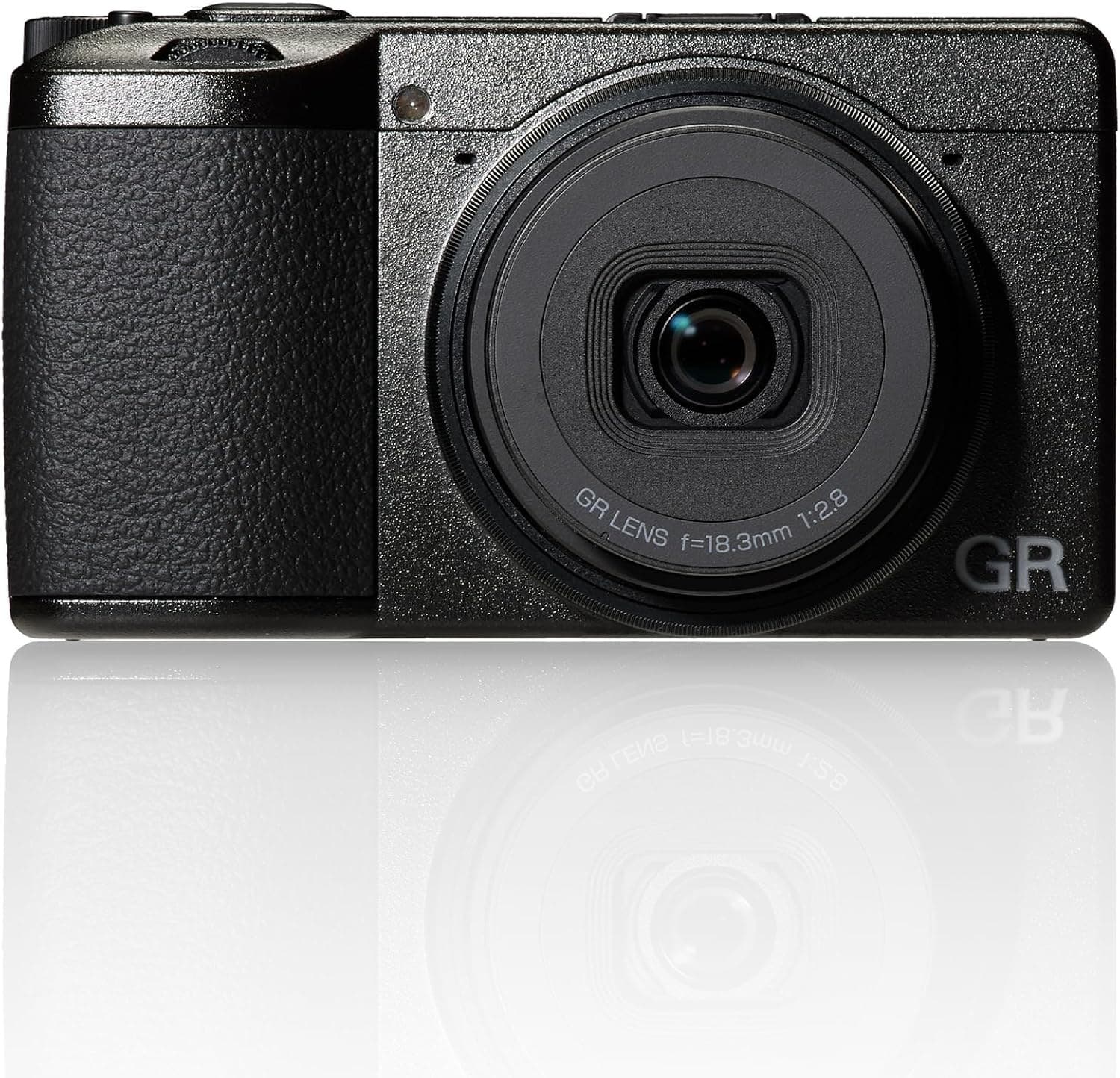
Street and everyday shooters who want APS-C quality that fits in a pocket.
Use the retailer for the current price after the tradeoff makes sense. Confirm lens mount, sensor format, battery, charger, and kit contents.
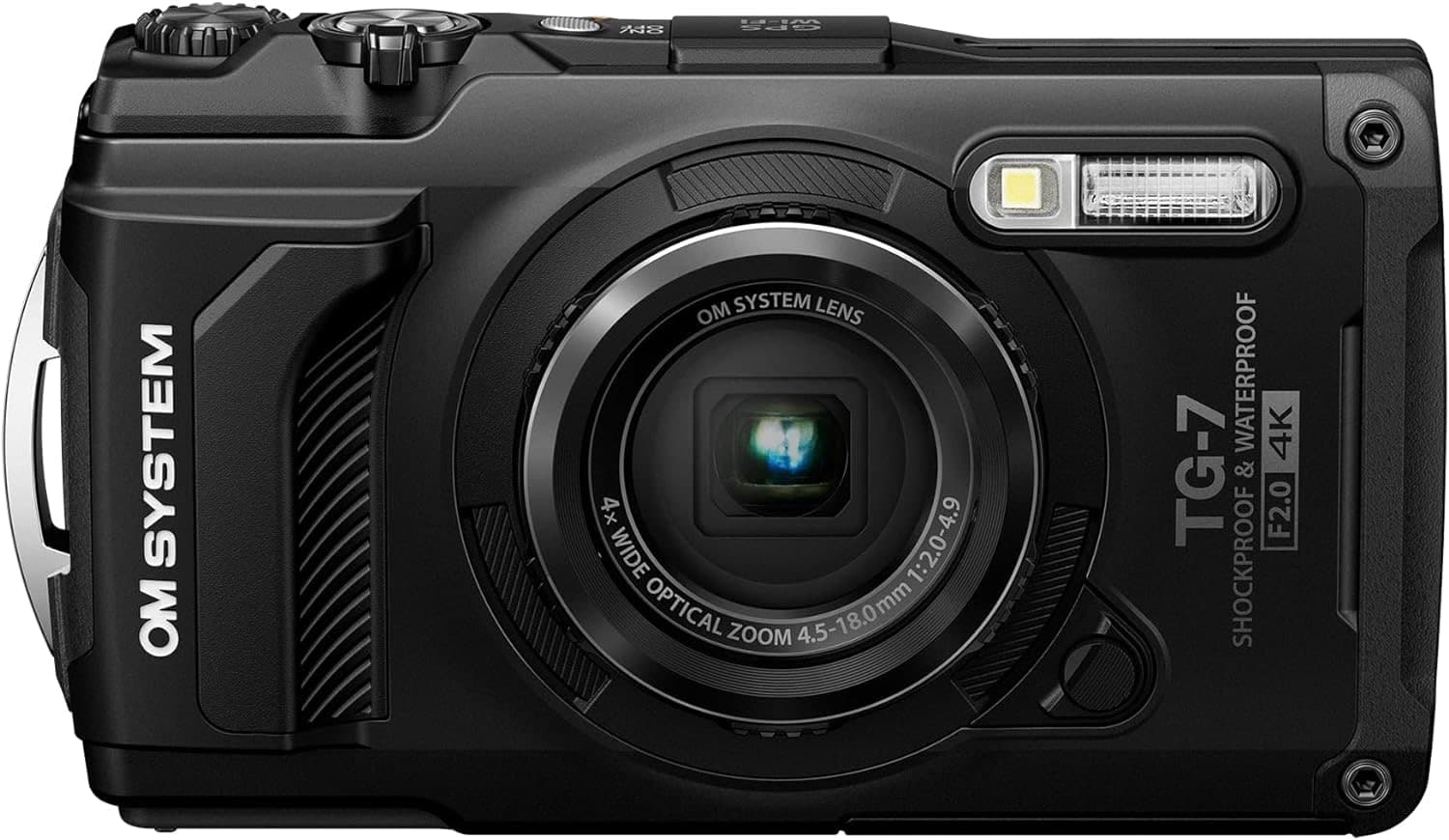
Tradeoff: Small sensor limits image quality in low light
Use the retailer for the current price after the tradeoff makes sense. Confirm lens mount, sensor format, battery, charger, and kit contents.
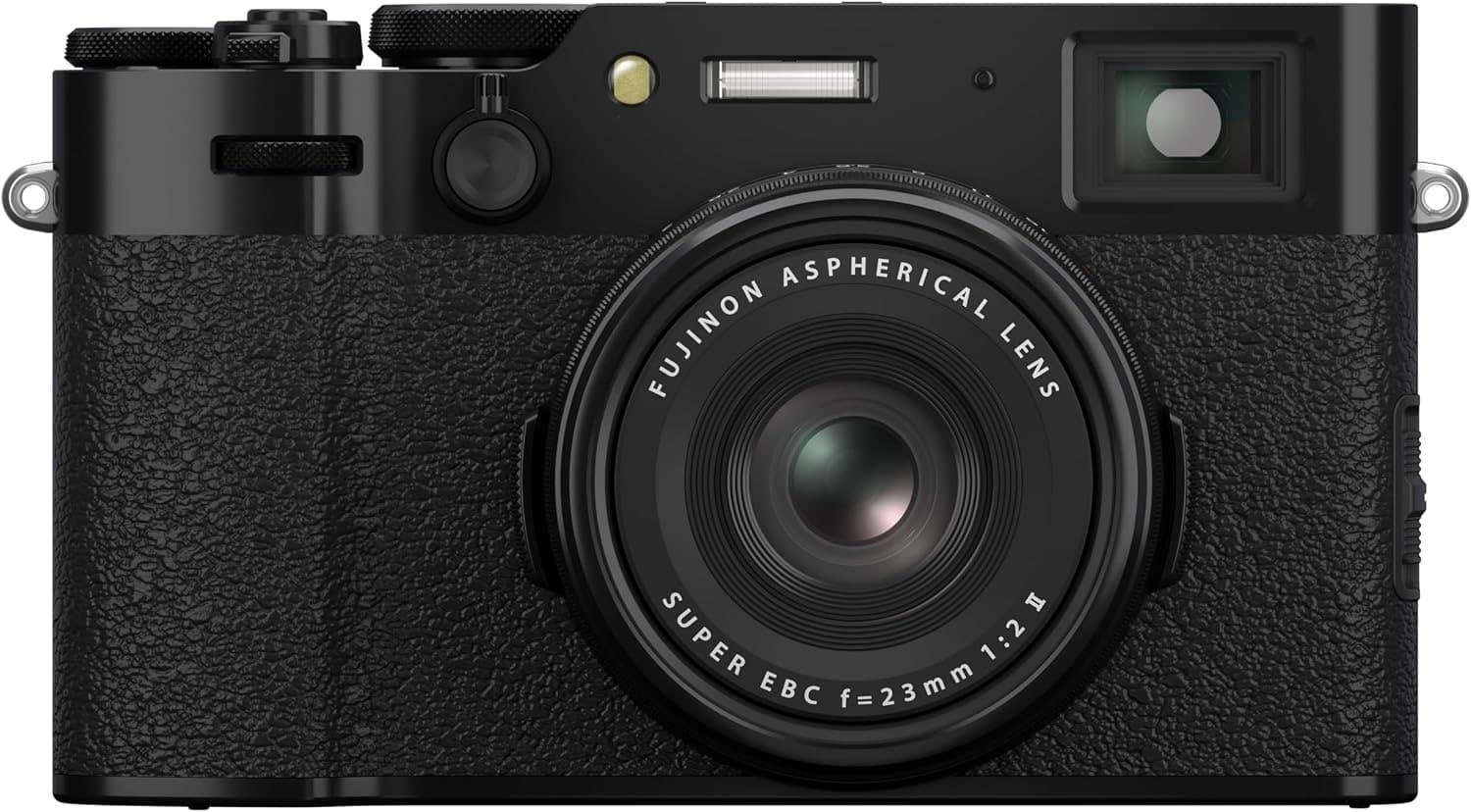
9.1/10 Aperture Score
Use the retailer for the current price after the tradeoff makes sense. Confirm mount, focal length, filter size, and autofocus compatibility.
Street photographers who want pocketable APS-C quality.
Use the retailer for the current price after the tradeoff makes sense. Confirm mount, focal length, filter size, and autofocus compatibility.
Price ladder
The useful range here runs from $525 to $2,075. Start with the ceiling that matches the assignment.
- Street and everyday shooters who want APS-C quality that fits in a pocket.
- APS-C sensor in a true pocket body
- No viewfinder
Use the retailer for the current price after the tradeoff makes sense. Confirm lens mount, sensor format, battery, charger, and kit contents.
- Street and travel photographers who want one high-quality fixed-lens camera.
- High image quality in a pocketable body
- Fixed 35mm-equivalent lens limits framing
Use the retailer for the current price after the tradeoff makes sense. Confirm mount, focal length, filter size, and autofocus compatibility.
- Street photographers who want pocketable APS-C quality.
- APS-C image quality in a pocketable body
- Fixed 40mm lens with no zoom
Use the retailer for the current price after the tradeoff makes sense. Confirm mount, focal length, filter size, and autofocus compatibility.
- Vloggers and everyday shooters who want a flexible zoom compact.
- Versatile 24-100mm zoom range
- No viewfinder
Use the retailer for the current price after the tradeoff makes sense. Confirm mount, focal length, filter size, and autofocus compatibility.
- Vloggers who want a pocketable upgrade from a smartphone.
- Wide 18mm-equivalent lens good for selfie video
- No in-body stabilization
Use the retailer for the current price after the tradeoff makes sense. Confirm mount, focal length, filter size, and autofocus compatibility.
- Adventurers who need a tough, waterproof camera for the field.
- Waterproof and shockproof without a housing
- Small sensor limits image quality in low light
Use the retailer for the current price after the tradeoff makes sense. Confirm lens mount, sensor format, battery, charger, and kit contents.
| Pick | Score | Price | Verdict | Action |
|---|---|---|---|---|
| PickRicoh GR IV | 8.7
| $1,550 - $1,650 | Street and everyday shooters who want APS-C quality that fits in a pocket. Wins: APS-C sensor in a true pocket body Skip: No viewfinder | Check Amazon · $1,550 - $1,650 Use the retailer for the current price after the tradeoff makes sense. Confirm lens mount, sensor format, battery, charger, and kit contents. |
| Best Premium CompactFujifilm X100VI | 9.1
| $2,000 - $2,150 | Street and travel photographers who want one high-quality fixed-lens camera. Wins: High image quality in a pocketable body Skip: Fixed 35mm-equivalent lens limits framing | Check Amazon · $2,000 - $2,150 Use the retailer for the current price after the tradeoff makes sense. Confirm mount, focal length, filter size, and autofocus compatibility. |
| Best for StreetRicoh GR IIIx | 8.4
| $1,240 - $1,400 | Street photographers who want pocketable APS-C quality. Wins: APS-C image quality in a pocketable body Skip: Fixed 40mm lens with no zoom | Check Amazon · $1,240 - $1,400 Use the retailer for the current price after the tradeoff makes sense. Confirm mount, focal length, filter size, and autofocus compatibility. |
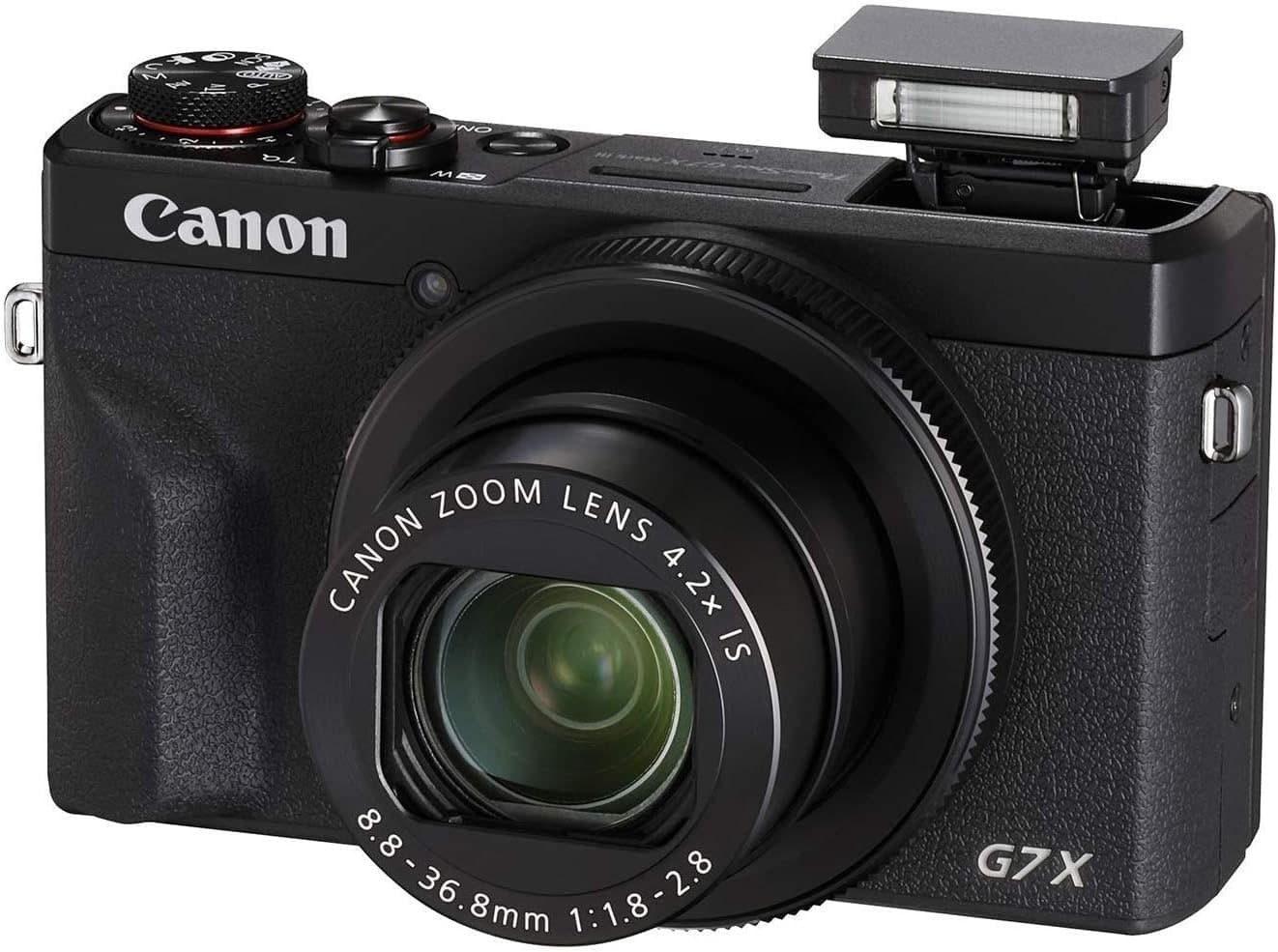 PickCanon PowerShot G7 X Mark III PickCanon PowerShot G7 X Mark III | 7.8
| Price varies by seller | Vloggers and everyday shooters who want a flexible zoom compact. Wins: Versatile 24-100mm zoom range Skip: No viewfinder | Check Amazon · Price varies by seller Use the retailer for the current price after the tradeoff makes sense. Confirm mount, focal length, filter size, and autofocus compatibility. |
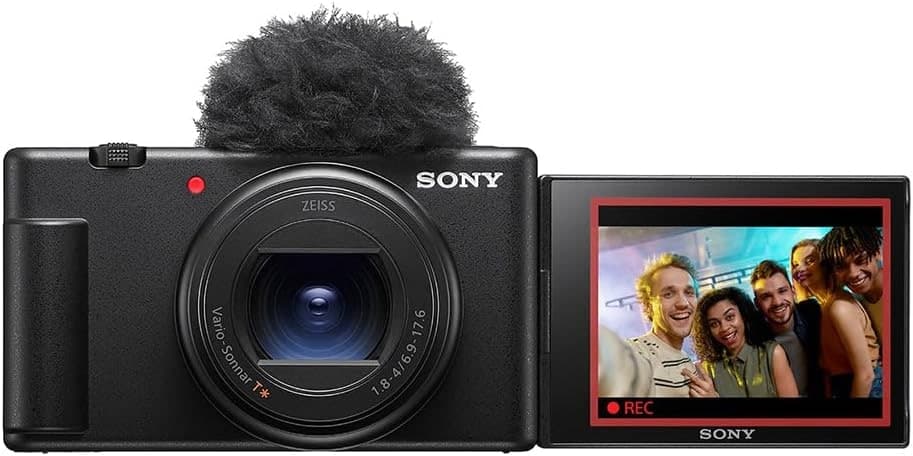 PickSony ZV-1 II PickSony ZV-1 II | 8.0
| $950 - $1,050 | Vloggers who want a pocketable upgrade from a smartphone. Wins: Wide 18mm-equivalent lens good for selfie video Skip: No in-body stabilization | Check Amazon · $950 - $1,050 Use the retailer for the current price after the tradeoff makes sense. Confirm mount, focal length, filter size, and autofocus compatibility. |
| PickOM System Tough TG-7 | 7.9
| $500 - $550 | Adventurers who need a tough, waterproof camera for the field. Wins: Waterproof and shockproof without a housing Skip: Small sensor limits image quality in low light | Check Amazon · $500 - $550 Use the retailer for the current price after the tradeoff makes sense. Confirm lens mount, sensor format, battery, charger, and kit contents. |
Keep going
Next useful steps
Pick one. Each link continues the same job without starting the research over.
Related Gear guides
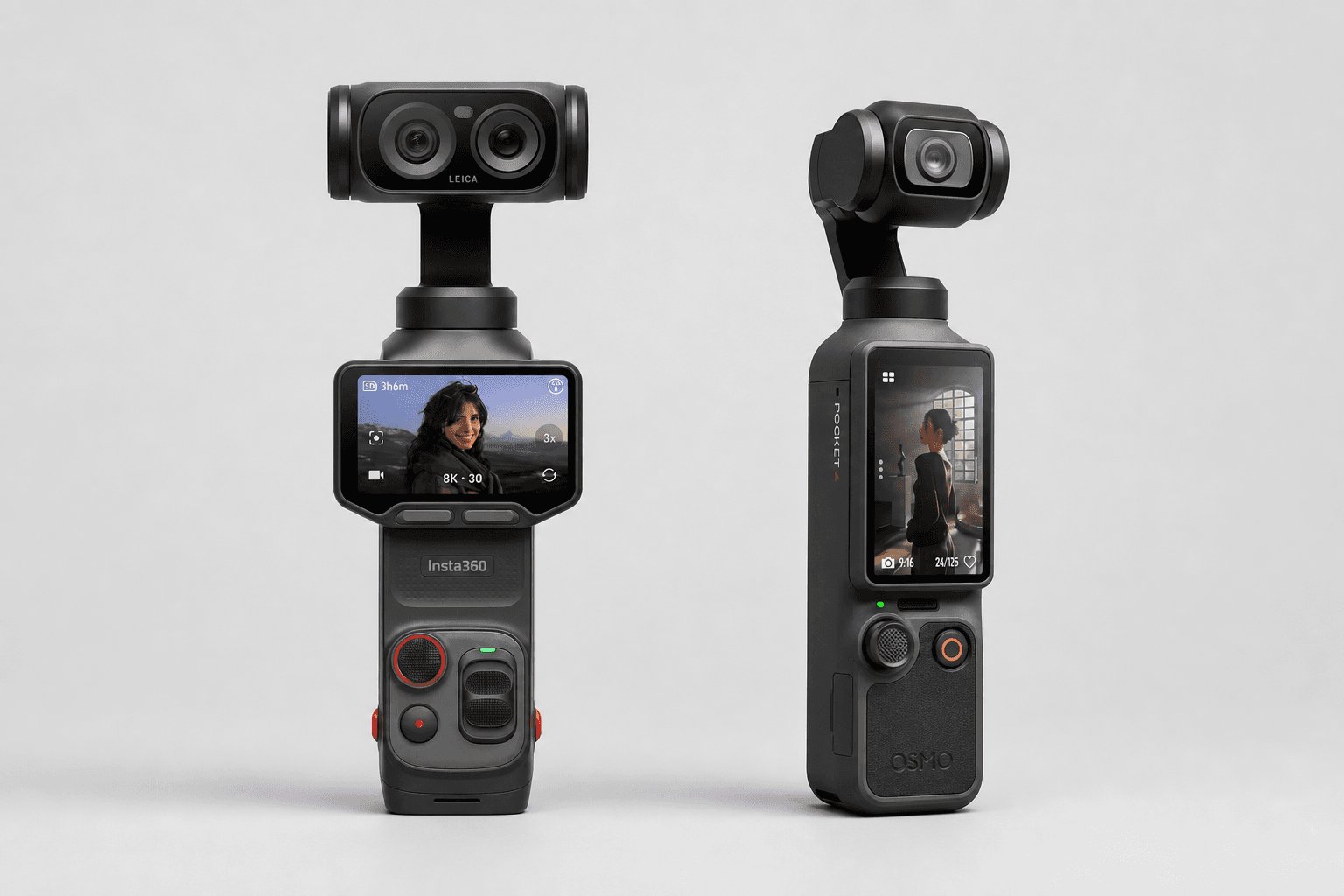
Insta360 Luna Ultra vs DJI Osmo Pocket 4: Which Pocket Gimbal Should You Buy?
Compare Luna Ultra and DJI Pocket 4 by lenses, video, Log formats, storage, U.S. availability, and the filming jobs each pocket gimbal handles best.
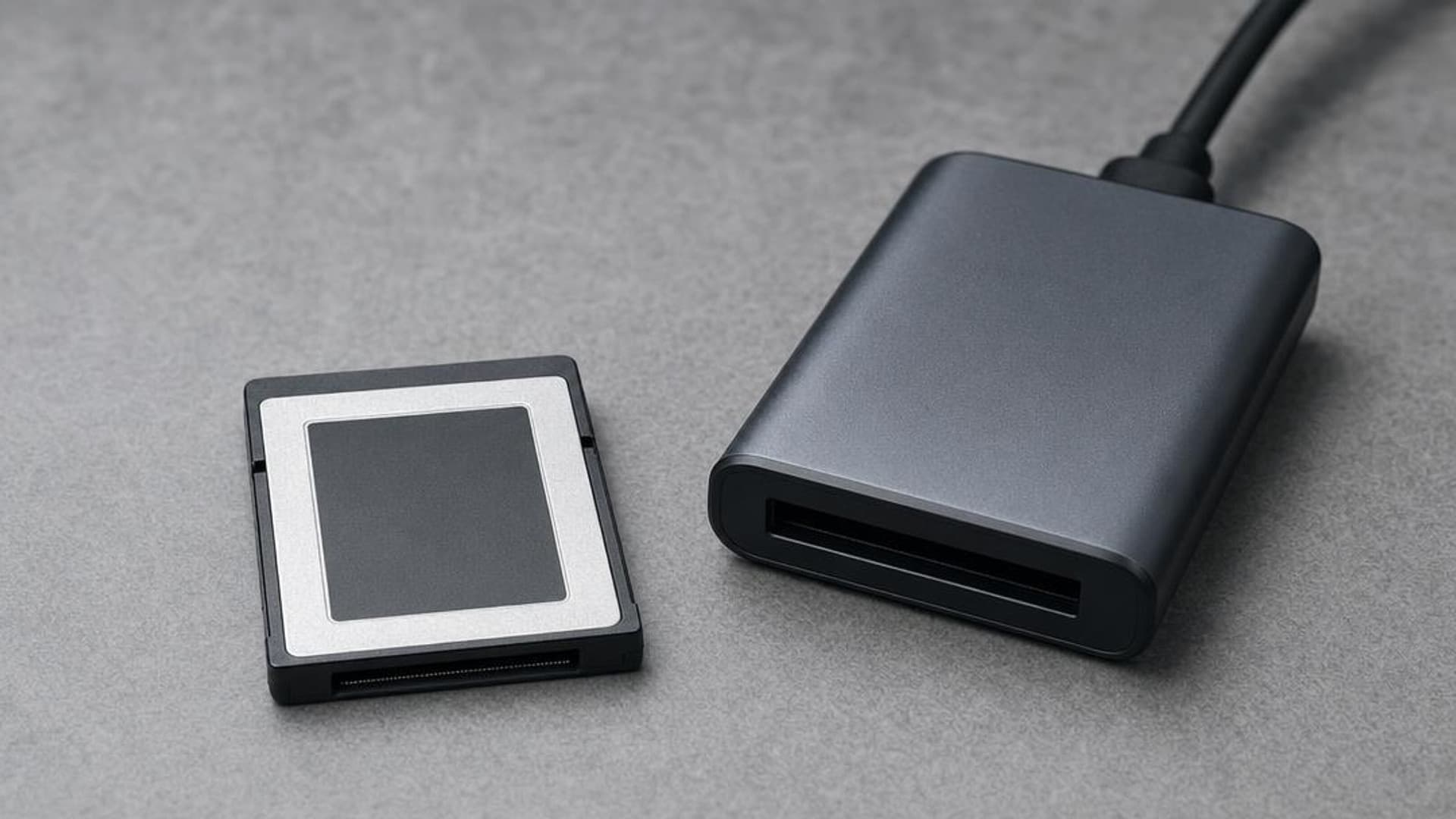
CFexpress 4.0 and VPG Explained: Buy the Card Your Camera Needs
CFexpress 4.0 doubles theoretical bandwidth, while VPG certifies sustained video writes. Learn Type A vs B, VPG classes, and when 4.0 is worth paying for.
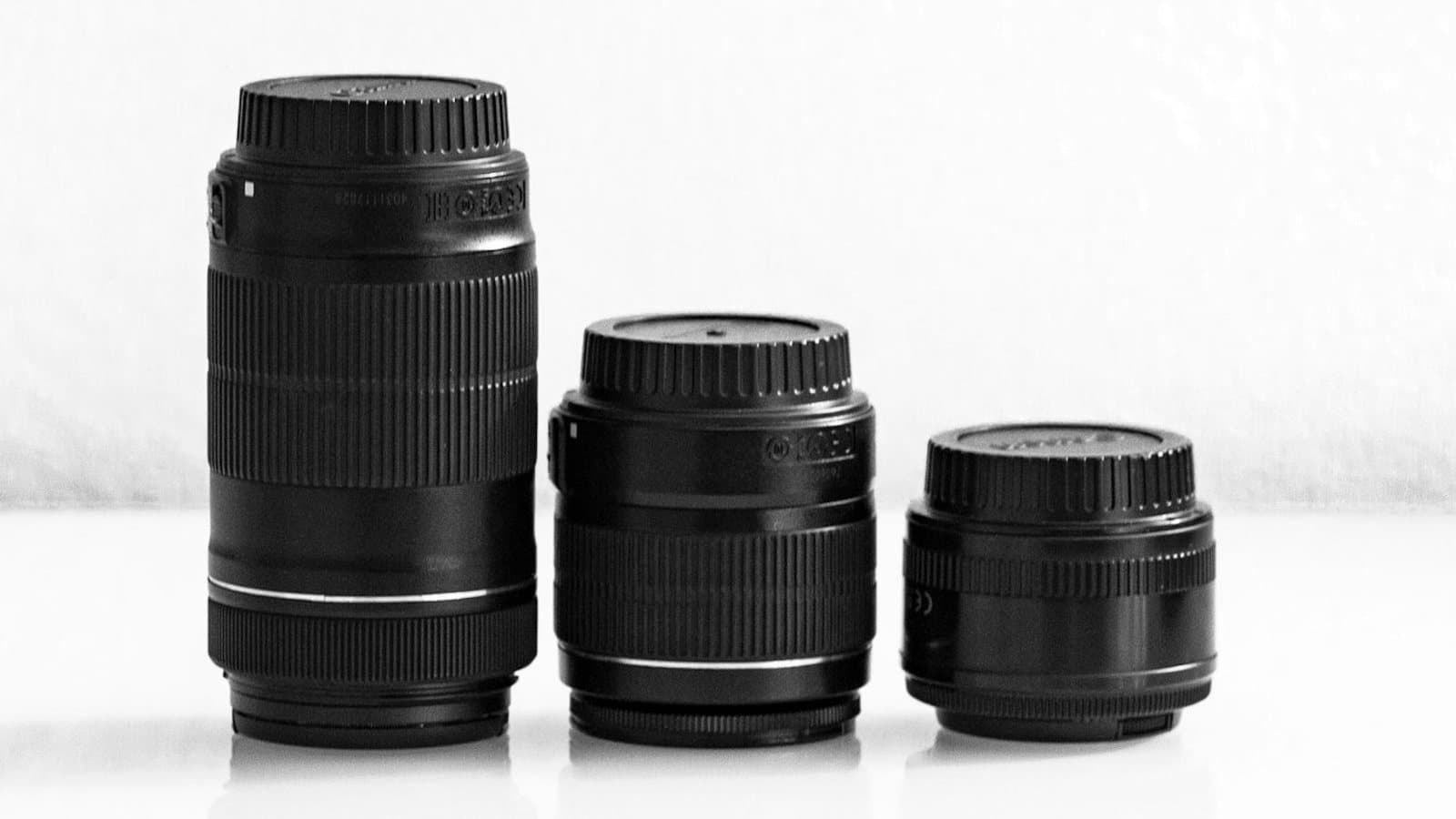
Focal Length Explained: What 24mm, 50mm, 85mm, and 200mm Actually Do
What the millimeter number on a lens changes in the field: angle of view, compression, and working distance. When to reach for 24, 50, 85, or 200mm.
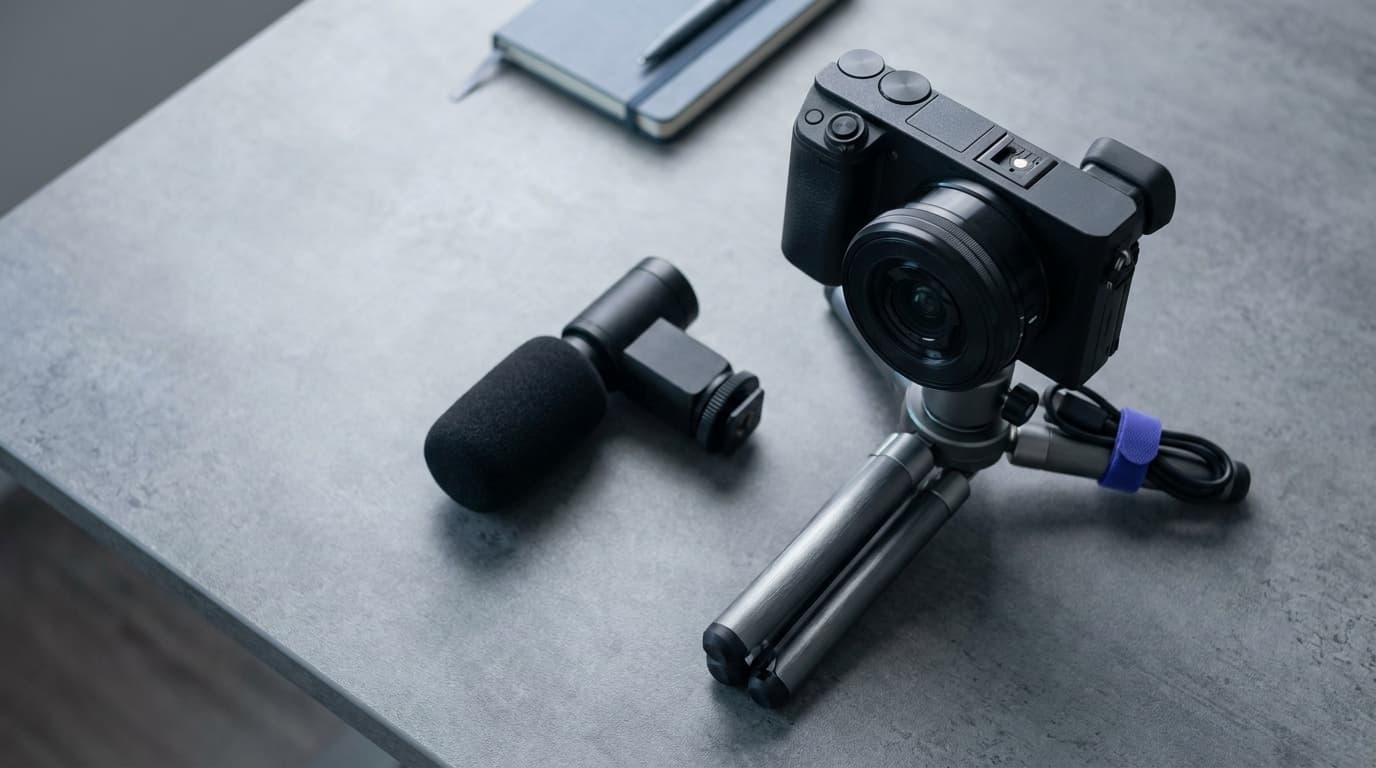
Canon EOS R50 V vs Sony ZV-E10 II: Which Beginner Vlogging Camera Should You Buy?
Canon EOS R50 V is the easier beginner creator kit. Sony ZV-E10 II is the deeper lens-system pick. Compare the practical tradeoffs.
Researched, not personally tested: picks compare specifications, available owner feedback, and established expert sources. As an Amazon Associate I earn from qualifying purchases. We may earn a commission from links here, at no extra cost to you. How we research →