We may earn a commission from links on this page, at no extra cost to you. Picks are researched, not sponsored.
What this means in real life
The single biggest factor in whether food looks delicious is the light, not the camera. Soft, directional light coming from the side rakes across the surface of a dish and brings out texture: the crumb of bread, the glisten of a sauce, the steam off a bowl. Light from directly above or from a built-in flash hits the food flat-on, killing texture and casting an ugly hard shadow. The second factor is freshness and styling, because food wilts and dries on camera fast. The settings themselves are simple once the light and the plate are right. Work near a window with the light coming from the side or slightly behind the dish.
The gear
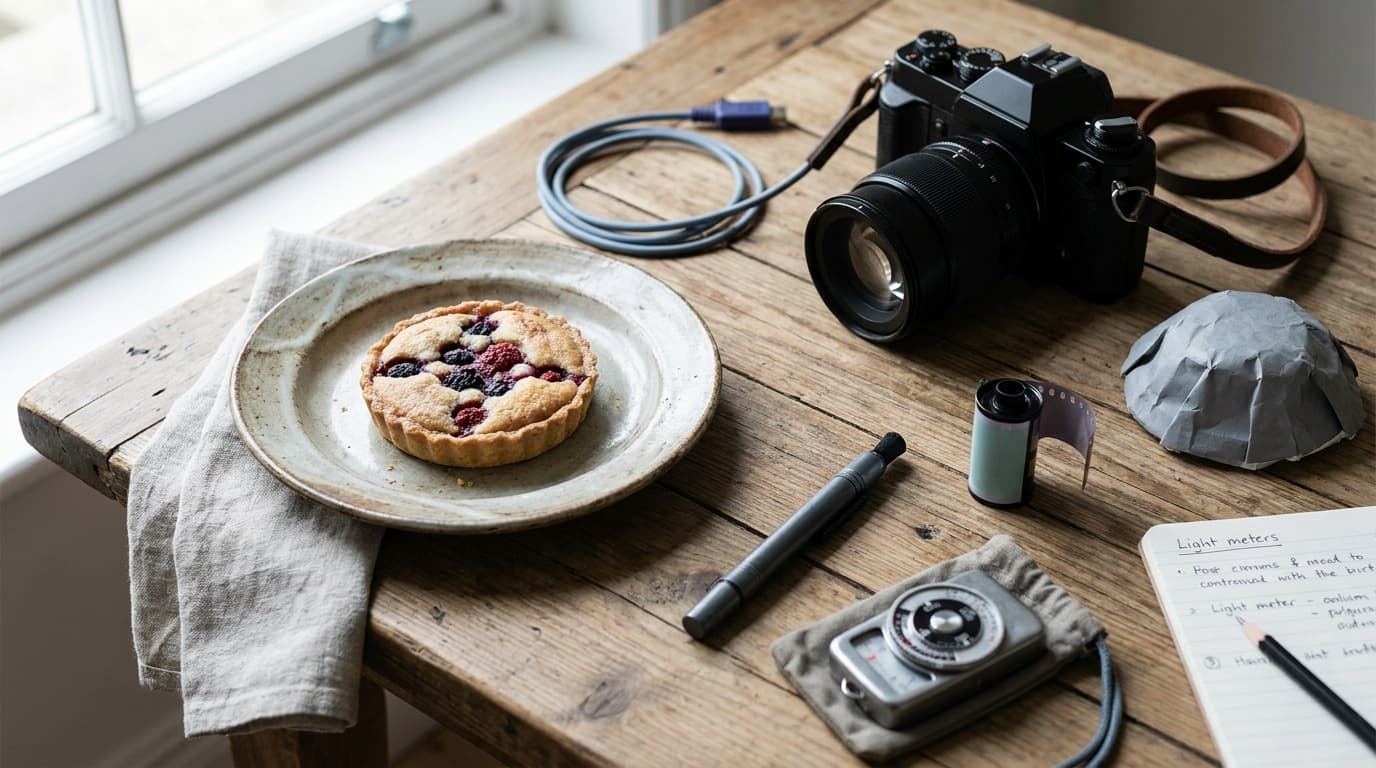
You do not need much. A window for light, a piece of white foam board or even a sheet of paper to bounce light back into the shadow side, and a clean surface and background. A tripod is genuinely useful here because food does not move, so you can lock the composition, work slowly, and use a slower shutter at base ISO for the cleanest file. A lens that opens to f/2.8 or f/4 gives you control over background blur, and a macro or short telephoto is handy for tight detail shots. Skip on-camera flash entirely. If you want the buying version, see the food photography camera, lens, and lighting picks.
The settings
Set up by the window, then adjust for how much of the dish you want sharp.
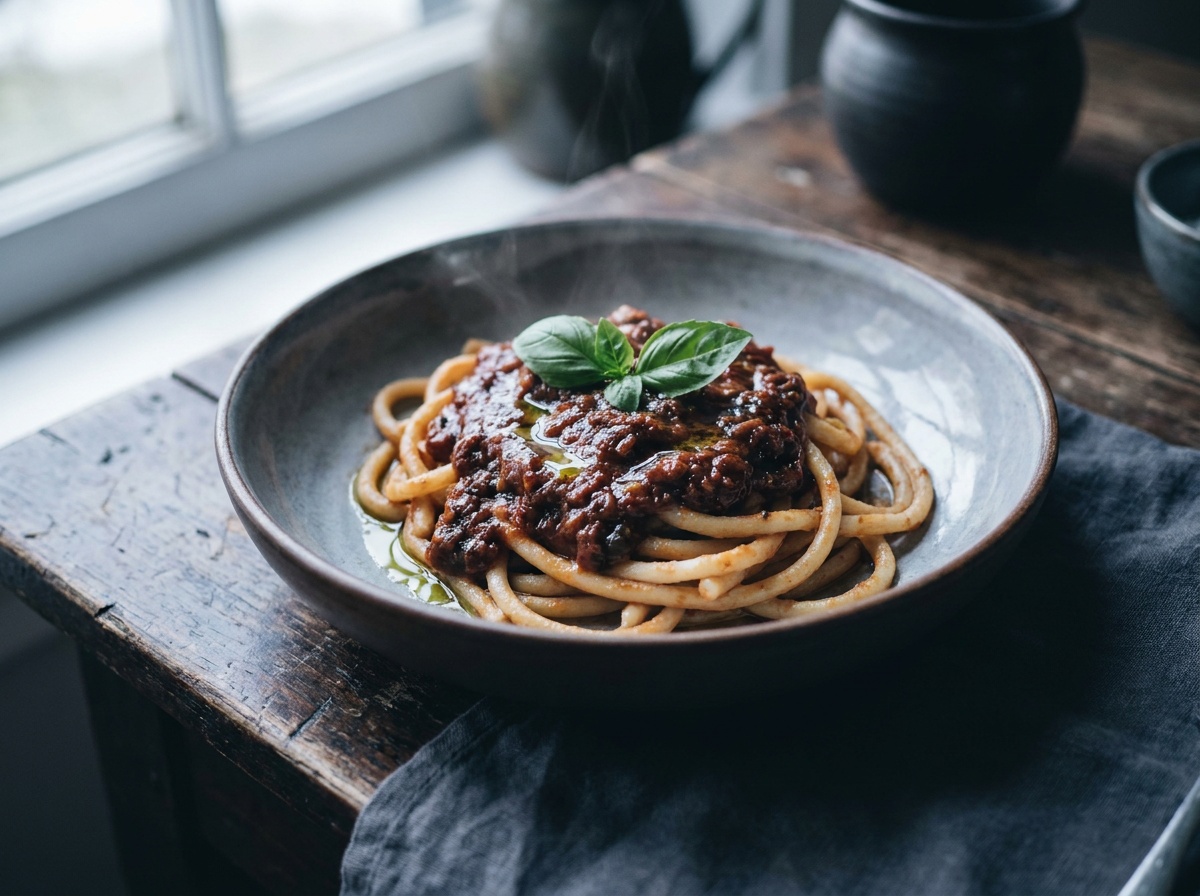
Aperture is your main creative choice. A wide aperture around f/2.8 to f/4 throws the background soft and isolates one bite or one glass, which suits a single dish. A narrower aperture like f/8 keeps a full table or a flat-lay readable edge to edge. One caution: shooting wide open at a steep angle can leave only a sliver of the plate sharp, so for a three-quarter shot of a tall dish, f/5.6 to f/8 usually keeps the whole front face in focus. Keep ISO low when you can, leaning on the tripod and the window light. Get the white balance right so the food looks its natural color, because a cold or yellow cast makes any dish look unappetizing. It all sits inside the exposure triangle.
Technique
Position the dish so the window light comes from the side or from behind it, then place a white card opposite the window to fill the shadows and keep them from going too dark. Focus on the most appealing part of the plate, the front edge of a stack, the yolk, the garnish, and let the rest fall away if you are shooting wide open. Shoot before the food cools and dries, because steam, gloss, and crispness fade within minutes. Style the plate deliberately: wipe drips, add a few props or ingredients around it for context, and leave some negative space. The careful, controlled approach overlaps heavily with product photography, where light shaping and styling are everything.
Composition
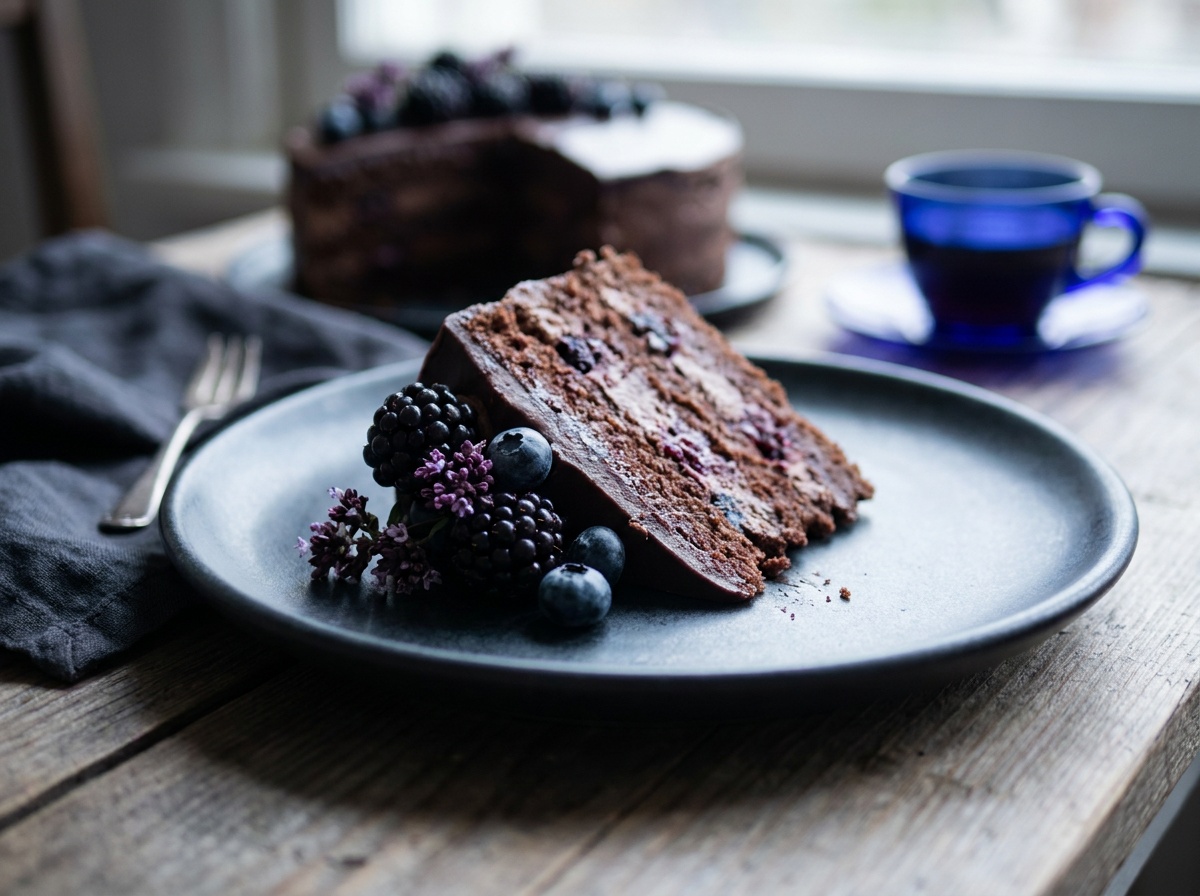
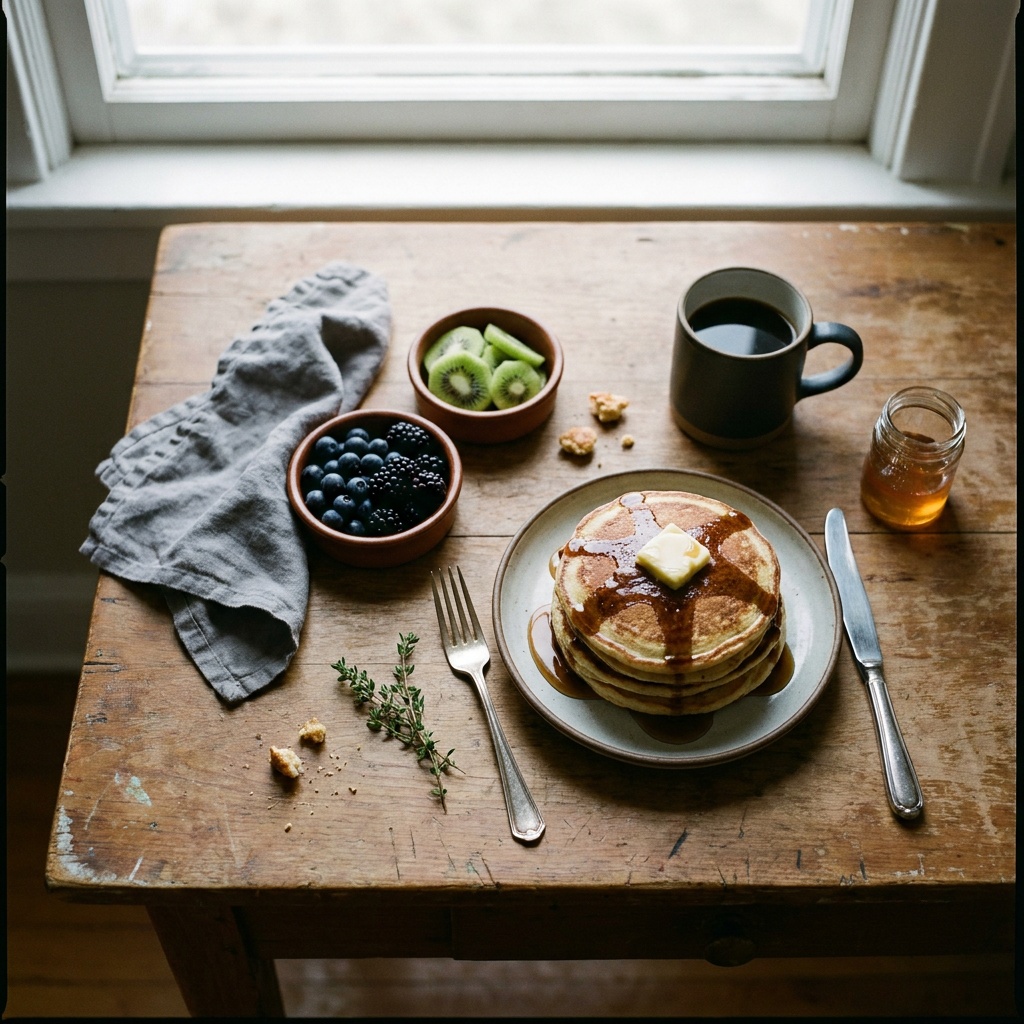
Two angles do most of the work. The flat-lay, shot straight down, suits spreads, bowls, and arrangements where the layout is the story. The three-quarter or eye-level angle suits tall food like burgers, layered cakes, and drinks, where height and depth matter. Use a clean, simple background that complements the food rather than competing with it, and bring in props, a napkin, cutlery, a few raw ingredients, to suggest a setting without cluttering the frame. Leave breathing room around the dish.
Common mistakes
Shooting under overhead kitchen or restaurant lights gives a flat, color-shifted result; move to a window. Using direct flash flattens the food and blows out highlights; bounce or use natural light instead. Getting the white balance wrong makes the dish look stale; set it deliberately. Shooting too slowly so the food wilts loses the freshness; style and shoot quickly. And a cluttered background pulls attention off the plate; keep it clean.
What is the best light for food photography?
Soft, directional natural light from a window, coming from the side or slightly behind the dish, with a white card bouncing light back into the shadows. Avoid overhead room lights and on-camera flash, which flatten the food and shift its color.
What aperture should I use for food?
Around f/4 to blur the background and isolate one element, or f/8 to keep a whole spread or flat-lay sharp front to back. Choose based on whether you want a single hero dish or a readable full scene.
Do I need a tripod for food photography?
It is not required but it helps a lot. Food does not move, so a tripod lets you compose slowly, keep the framing locked while you style, and use a slow shutter at base ISO for the cleanest, lowest-noise file.
Practice this
Turn the guide into a working setup
Keep going
Next useful steps
Pick one. Each link continues the same job without starting the research over.
Related Learn guides

Content Credentials and C2PA Explained for Photographers
Content Credentials record a photo's signed provenance and edits. Learn what C2PA proves, what it cannot prove, and how capture-to-export workflows work.
Open Gate Video Explained: When 3:2 Is Worth It
Open Gate records a taller sensor area for flexible 16:9, 9:16, and square crops. See when it helps, what it costs, and how to frame it correctly.
Pre-Capture Photography Explained: Get the Frame Before the Click
Pre-Capture buffers photos before the shutter is fully pressed. Learn how it works, which settings change, and when RAW, flash, or focus may be limited.
RAW vs JPEG: Which File Format Should You Shoot?
RAW keeps all your sensor data for maximum editing freedom; JPEG is smaller and ready to share. Here is how they differ and when each one is the right call.
Researched, not personally tested: picks compare specifications, available owner feedback, and established expert sources. As an Amazon Associate I earn from qualifying purchases. We may earn a commission from links here, at no extra cost to you. How we research →