We may earn a commission from links on this page, at no extra cost to you. Picks are researched, not sponsored.
What this means in real life
A garden in full sun at noon is one of the harder things to photograph well. The light is hard, the colors wash out, and the shadows go black. The same garden in the soft light of early morning, or under a thin overcast, almost photographs itself. So the first move is not a setting, it is timing: shoot when the light is kind.
The second move is to decide what the photo is about. A whole flower bed is usually a mess of competing color. One bloom, sharp against a soft background, reads instantly. Photography is subtraction more than addition, and a garden gives you plenty to subtract.
Light: soft beats bright
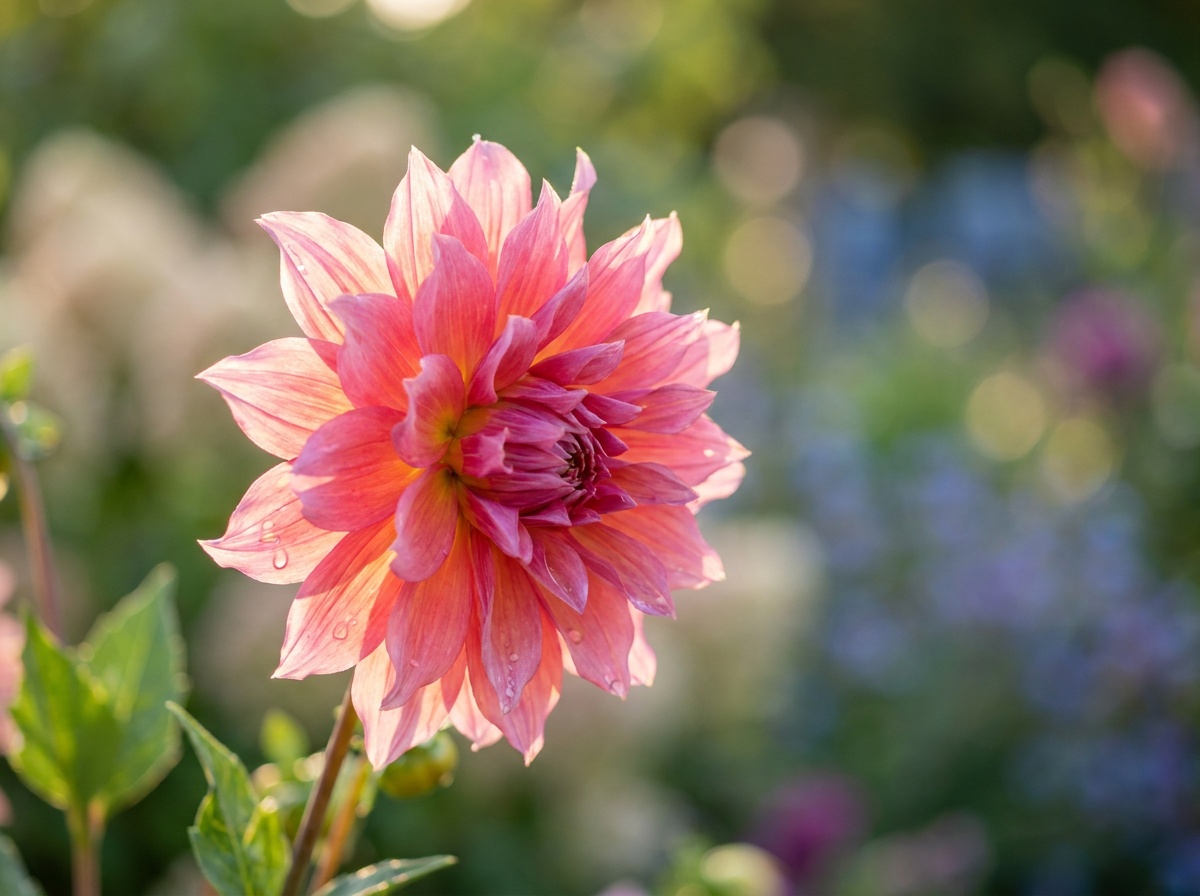
Direct midday sun creates hard shadows and blown highlights on pale petals. You have three good options. Shoot in the hour after sunrise or before sunset, when the light is warm and low. Shoot under a bright overcast, which acts like a giant softbox. Or move a potted plant, or yourself, into open shade. If you want to know exactly when the soft light lands where you live, the golden hour calculator gives you sunrise, sunset, and the golden window for any date.
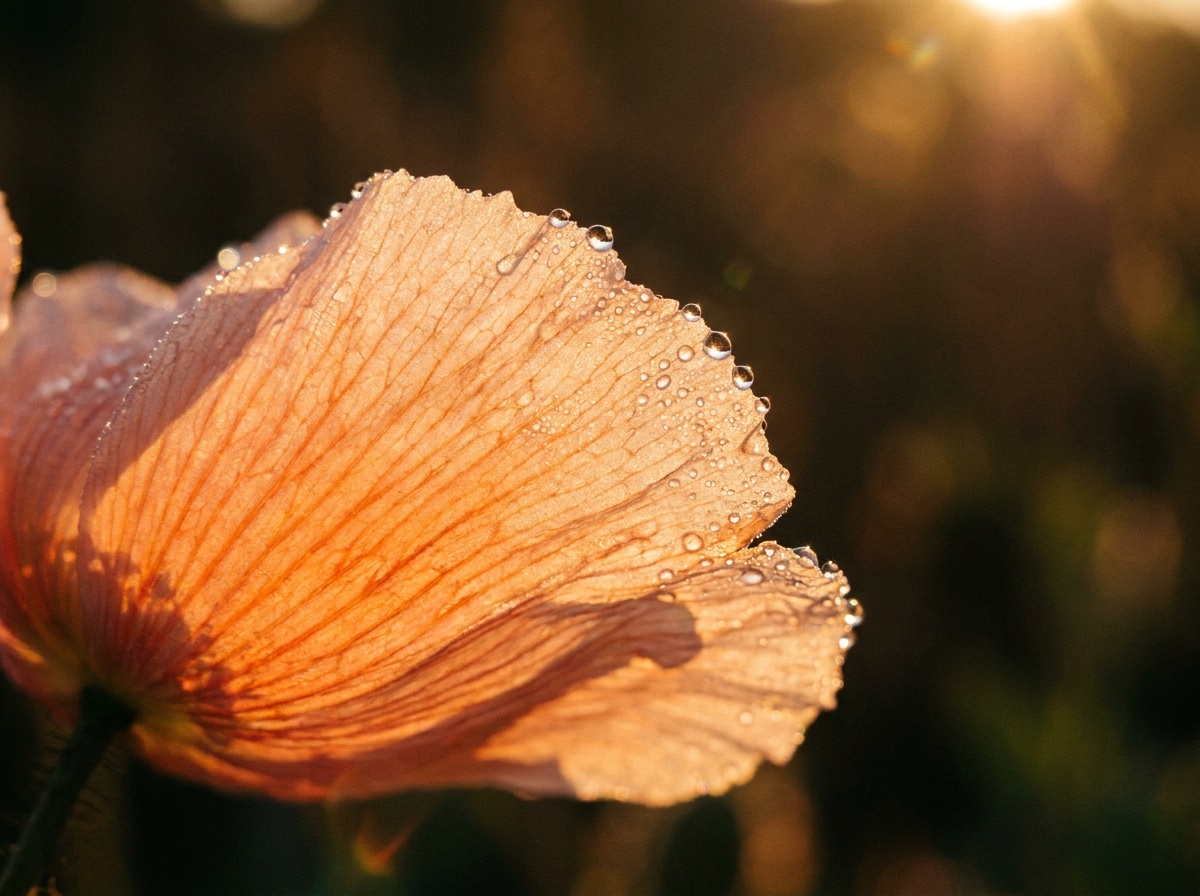
Backlight is the flower photographer's secret weapon. With the sun low and behind a translucent petal, the bloom glows from within and the edges catch a bright rim. Dew or a fine mist of water from a spray bottle in that backlight turns into tiny points of light along the petals. Position yourself so the flower sits between you and the low sun, then shade your lens with a hand or hood to keep flare off the front element.
Focus and depth of field
Wide apertures like f/2.8 to f/5.6 blur the background and lift one flower off the bed, which is usually what you want. The cost is a very shallow zone of sharpness, so focus on the part that matters, normally the near edge of the petals or the center of the bloom. If you are close in, even f/8 can leave only a few millimeters sharp, so this is exactly where macro technique earns its keep. Wind is the quiet enemy of close-up flower work: a breeze that you barely feel will smear the petals at slow shutter speeds, so wait for a lull or raise your ISO to keep the shutter quick.
A step-by-step for a single bloom
- Pick the light, not the flower. Shoot at golden hour, under overcast, or in open shade. Avoid hard midday sun.
- Choose a clean subject with an uncluttered patch of background behind it.
- Open the aperture to f/4 to f/5.6 to soften the background, and confirm the shutter is fast enough, usually 1/250 or quicker, to beat any breeze. Raise ISO before letting the shutter drop.
- Get down to the flower's level and shoot slightly upward or across so the background falls away.
- Focus on the near edge of the petals or the center of the bloom, where the eye expects sharpness.
- Wait for the lull. If a breeze is moving the bloom, pause until it settles or shield it with a card just out of frame.
Composition
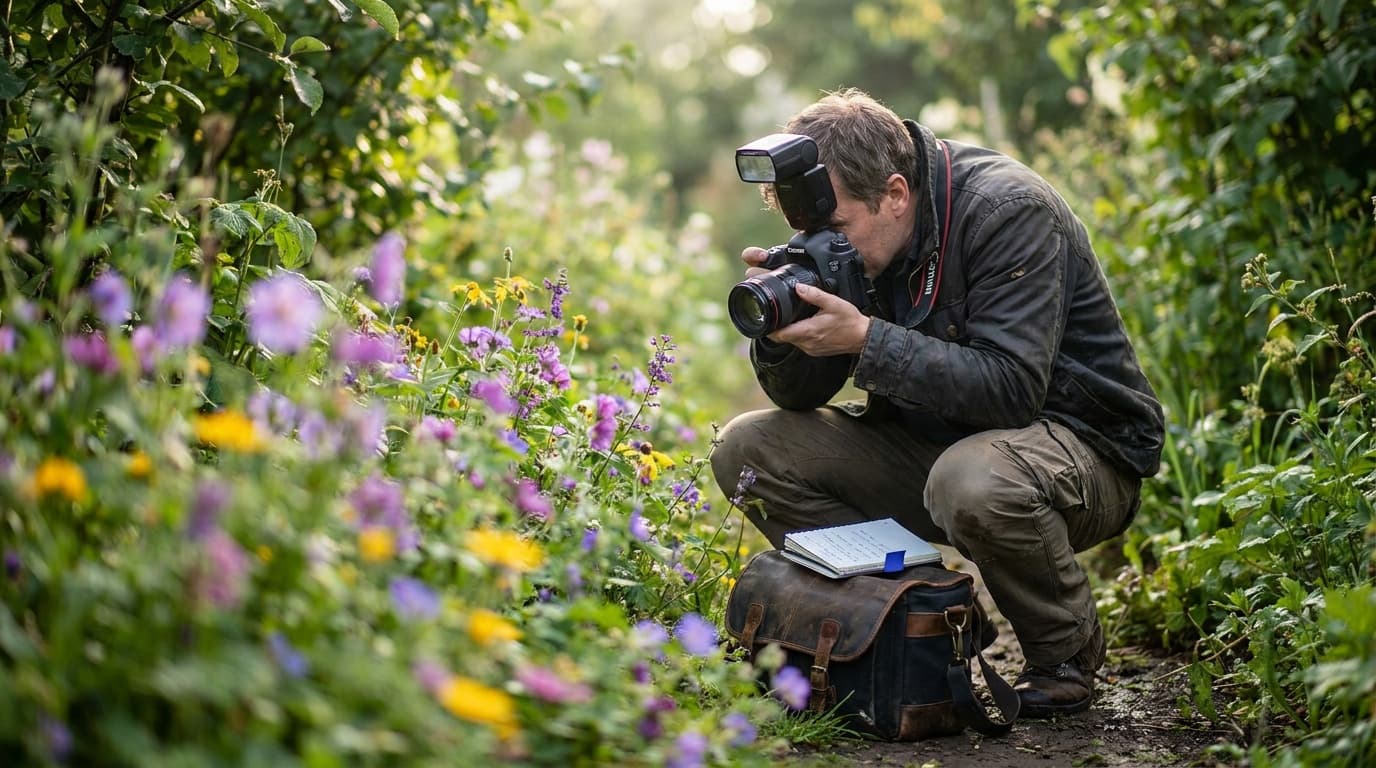
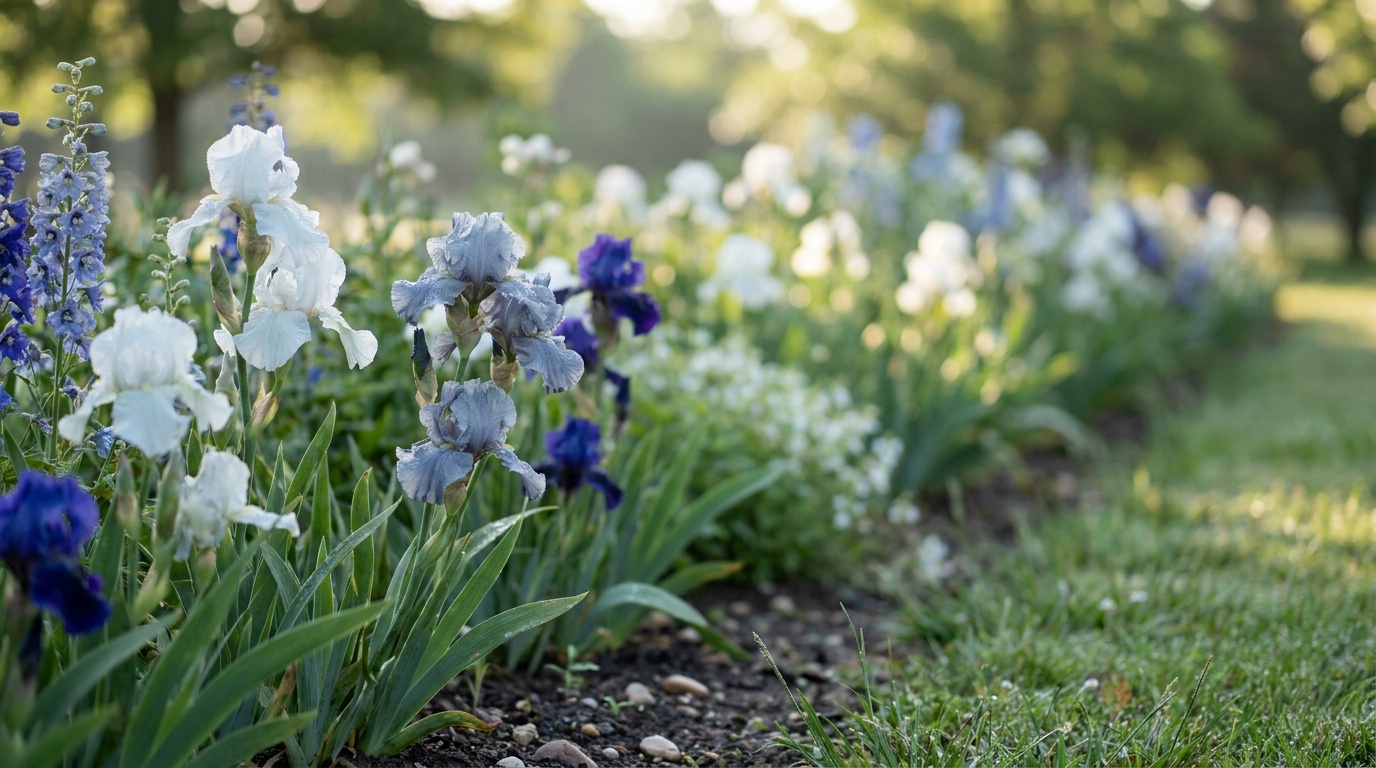
Get lower and closer than feels natural. Most garden snapshots are taken standing up, looking down, which flattens everything. Crouch to the flower's level and the background falls away into soft color. Use a plain backdrop where you can: foliage, sky, or shade reads better than a fence or a hose. Look for a single subject, a repeating pattern, or a clear line of color leading into the frame. The same composition habits that work for landscapes work in a flower bed, just at a smaller scale.
Photographing the harvest
If you grow food as well as flowers, the produce is worth shooting too, and it is the same craft of soft light and a clean background. The full approach is in how to photograph food, which covers styling a plate or a basket of what you just picked.
Common mistakes
Shooting in full midday sun is the big one. After that: standing too far back so the subject is lost in the bed, focusing on the wrong part of the flower, and shooting at a slow shutter in a breeze. Fix the light and the focus first, and most garden photos improve on their own.
What is the best camera setting for flower photography?
Start with a wide aperture, around f/4 to f/5.6, to separate the flower from the background, then make sure your shutter speed is fast enough to freeze any breeze, usually 1/250 or faster. Raise ISO before you let the shutter drop. Focus on the near edge of the petals or the center of the bloom.
Do I need a macro lens to photograph flowers?
No. A normal kit zoom or a 50mm lens photographs whole flowers and beds beautifully. A macro lens helps only when you want frame-filling detail of a single petal or the center of a bloom. Soft light and careful focus matter far more than the lens.
When is the best time to photograph a garden?
The hour after sunrise and the hour before sunset, when the light is soft, warm, and low. A bright overcast day also works well because the clouds soften the light all day. Avoid clear midday sun, which is hard and washes out color.
Keep going
Next useful steps
Pick one. Each link continues the same job without starting the research over.
Related Learn guides

Content Credentials and C2PA Explained for Photographers
Content Credentials record a photo's signed provenance and edits. Learn what C2PA proves, what it cannot prove, and how capture-to-export workflows work.
Open Gate Video Explained: When 3:2 Is Worth It
Open Gate records a taller sensor area for flexible 16:9, 9:16, and square crops. See when it helps, what it costs, and how to frame it correctly.
Pre-Capture Photography Explained: Get the Frame Before the Click
Pre-Capture buffers photos before the shutter is fully pressed. Learn how it works, which settings change, and when RAW, flash, or focus may be limited.
RAW vs JPEG: Which File Format Should You Shoot?
RAW keeps all your sensor data for maximum editing freedom; JPEG is smaller and ready to share. Here is how they differ and when each one is the right call.
Researched, not personally tested: picks compare specifications, available owner feedback, and established expert sources. As an Amazon Associate I earn from qualifying purchases. We may earn a commission from links here, at no extra cost to you. How we research →