We may earn a commission from links on this page, at no extra cost to you. Picks are researched, not sponsored.
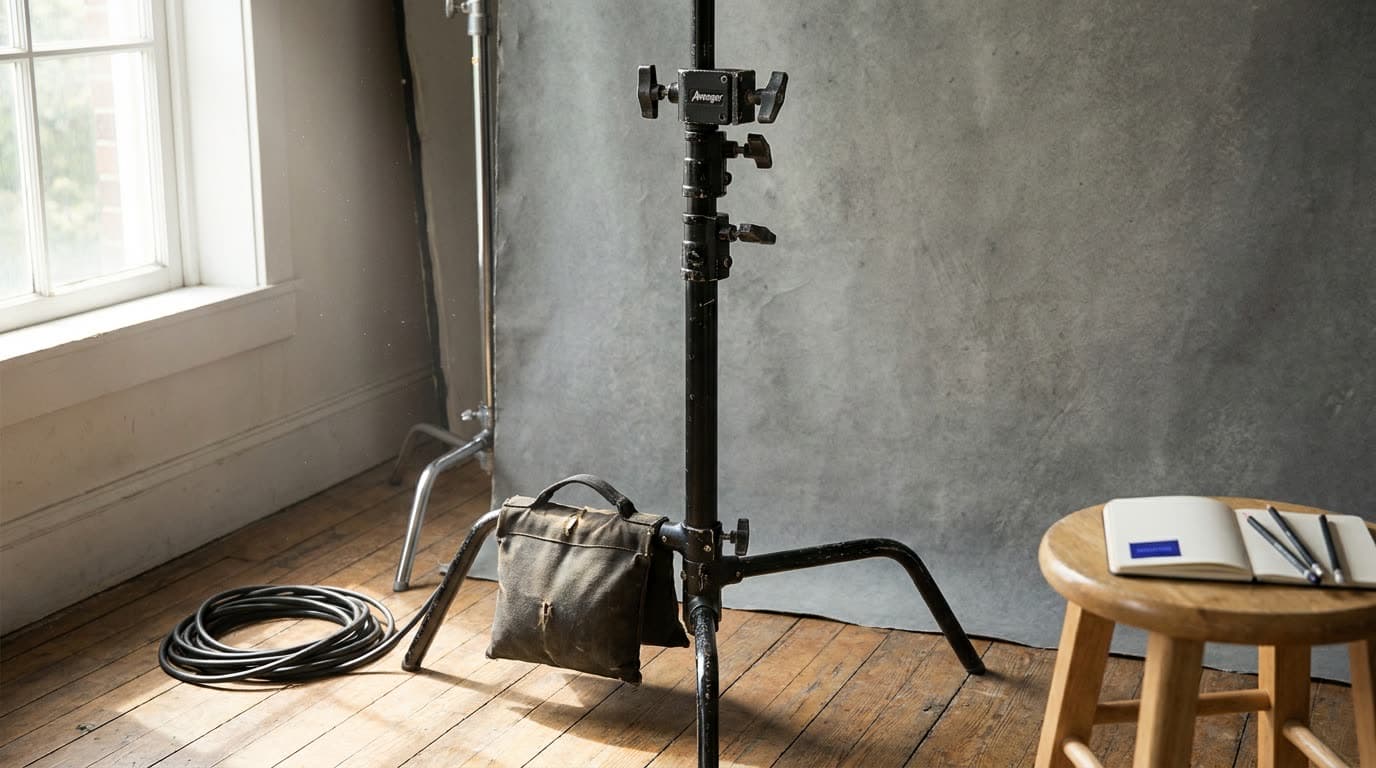
Grip gear is the unglamorous half of a studio. C-stands, sandbags, and clamps do not take a single photo, but they hold your lights, flags, and backgrounds steady and stop expensive gear from crashing to the floor. Skimp here and you spend the shoot fixing things that slip, sag, or tip.
If you are setting up a studio, our best softboxes and modifiers guide covers the light shapers these stands hold, and the exposure triangle covers the settings behind a controlled studio exposure.
How to choose
Start with the C-stand itself. The point of a C-stand over a basic light stand is the grip head and the grip arm: together they let you position a light or a flag out in space, off-axis, and lock it down so it does not drift. Look for a heavy steel base, a turtle base that nests so stands store flat, and a sliding leg so you can set up on stairs or get one leg under a table. Weight is a feature here, not a downside.
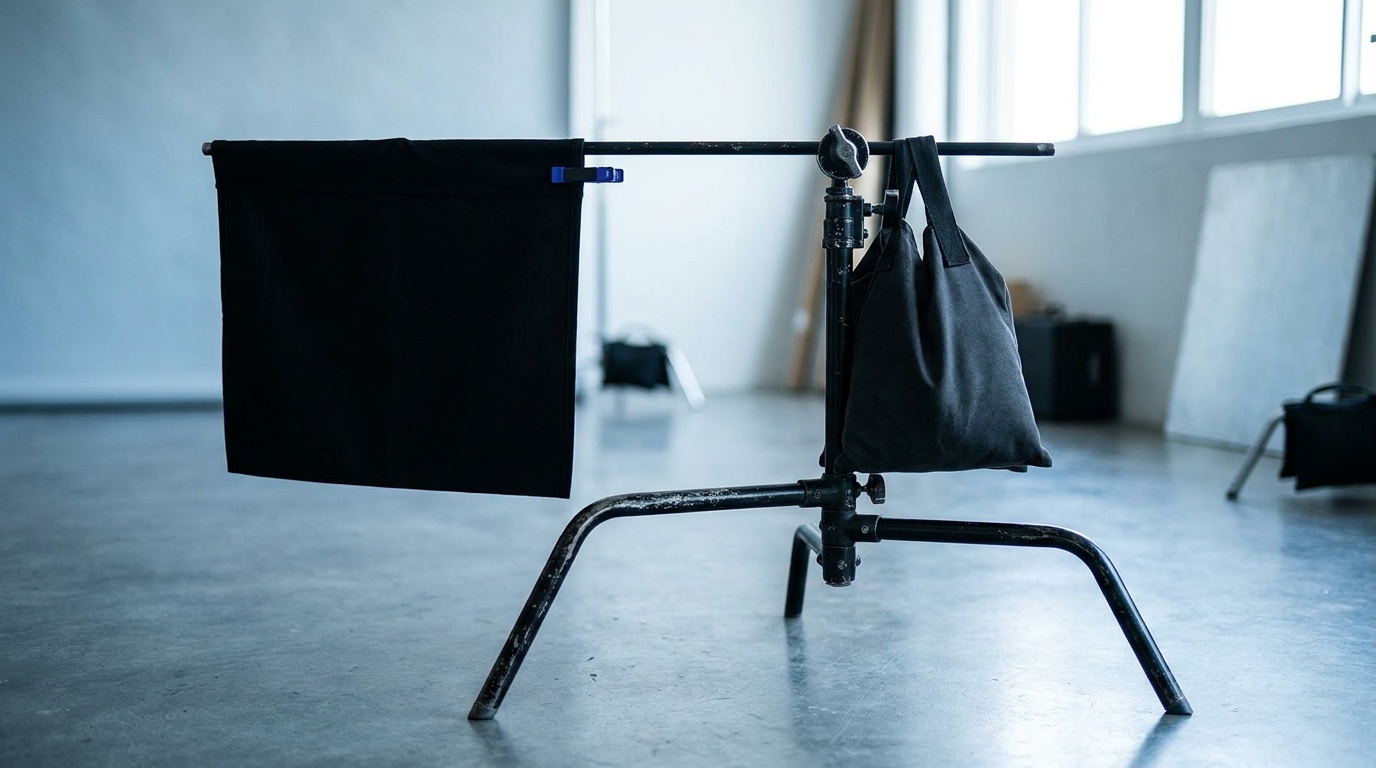
Then plan your sandbags, because a loaded C-stand is top-heavy. The rule is simple: every stand with an arm extended or a light hung off-center gets a sandbag on the leg under the load. Saddle-style bags drape over a leg and stay put. Buy bags by weight, not size, and get enough of them; running out of sandbags is how gear ends up on the floor.
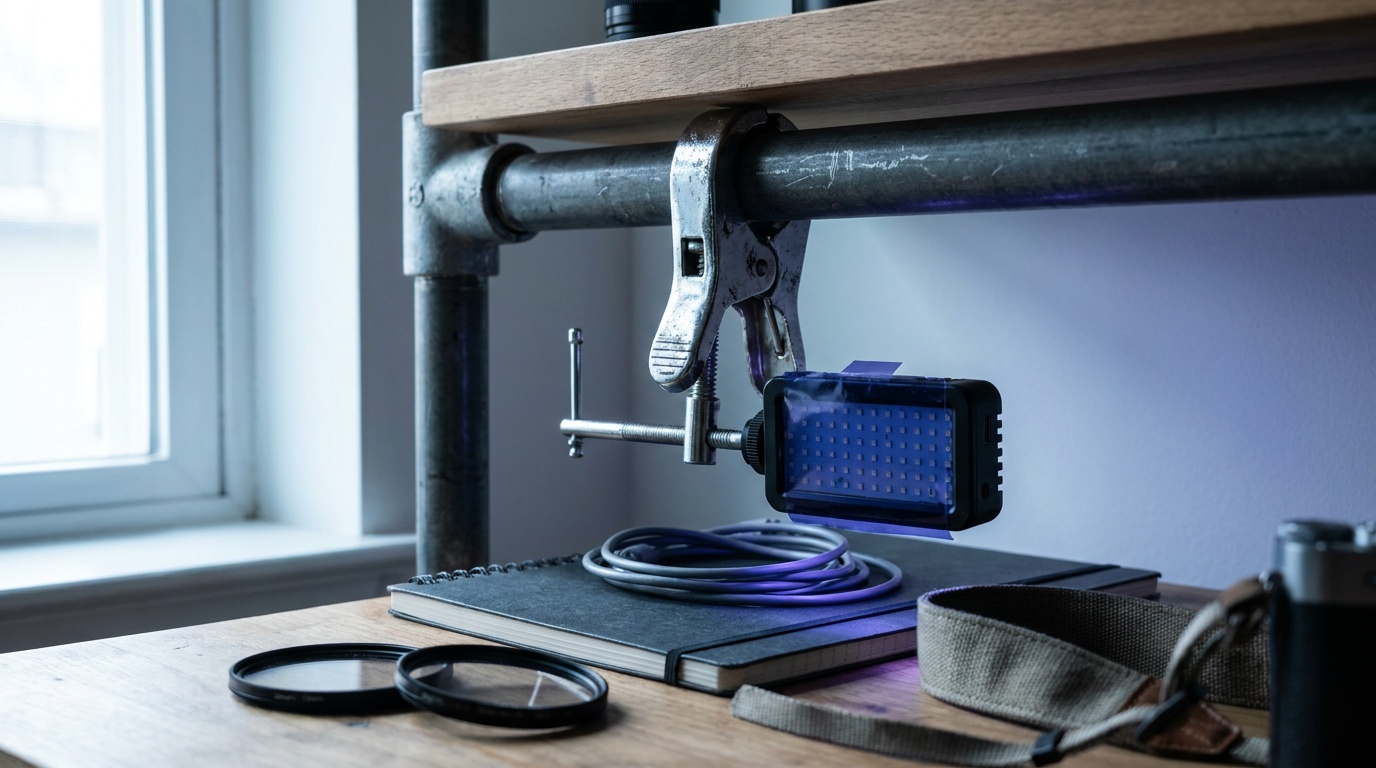
Last, weigh the small grip: clamps and adapters. A super clamp bites onto pipes, doors, and shelves to mount a light where no stand fits. A grip head and a baby pin let you attach almost anything to a stand. Spring clamps hold gels, fabric, and paper. None of it is expensive, and it is what turns a pile of stands into a flexible rig.
The picks
Best Overall
Matthews C-Stand
Studios that want a stand that holds a light exactly where it is set.
Check price at AmazonThe Matthews C-Stand is the industry reference for a reason. The heavy base sits planted, the grip head and 40-inch arm position a light or flag precisely and lock without slipping, and the turtle base folds flat for storage. It is heavy to carry and costs more than a basic stand, which is exactly why it does the job: when you set a light, it stays set. For a studio you will use for years, buy this once.
Best Value
Neewer C-Stand
A first C-stand or extra units to fill out a studio kit.
Check price at AmazonThe Neewer C-Stand is the value pick. You get the same basic design, a grip head, an arm, and a folding base, for noticeably less than the premium brands. The steel is a little lighter and the finish less refined, so it benefits even more from a sandbag, but for a first studio stand or a second and third unit to fill out a kit, the value is strong.
Best Sandbag
Amazon Basics Photography Sandbags (4-Pack)
Keeping loaded stands planted on any set.
Check price at AmazonThe Amazon Basics photography sandbags are the practical way to keep stands planted. The pack has four empty saddle bags with dual pouches and zipper closures, each holding up to 20 lb of sand or gravel, for about $17 with more than 2,400 Amazon ratings. They are lighter-duty than a Cordura grip bag, but four bags let you weight every leg of a loaded stand instead of one. It is the cheapest insurance against a light crashing down.
Most Useful
Manfrotto Super Clamp
Getting a light or accessory into a spot no stand can reach.
Check price at AmazonThe Manfrotto Super Clamp is the most useful small grip you can own. It bites hard onto pipes, doors, shelves, and railings, then accepts a stud or a baby pin to mount a light, a phone, or a small monitor where no stand will fit. The jaws are strong enough to trust with real weight. For getting a light into a tight or odd spot, nothing is more flexible.
The Neewer Spring Clamps are the inexpensive grip that solves a hundred small problems. They clamp gels onto barn doors, hold fabric and paper backgrounds in place, and pinch off a stray bit of light. A pack costs little and lives in the grip bag. They are not load-bearing for heavy gear, but for everything light, they are the quiet workhorse of the studio.
Common mistakes
The most common one is buying light stands when the job needs C-stands, then watching a light drift the moment you let go. The grip head and arm are the whole point. The second is under-buying sandbags; people get one or two and run out the moment two stands have arms extended. The third is rigging from the wrong leg: on a C-stand, the tall leg goes under the load and the arm extends over it, so the weight is supported, not levering the base over.
A safe rig is the foundation for controlled light. See our best lights for video guide for the sources these stands hold, and how to photograph products at home for putting a controlled setup to work.
What is the difference between a C-stand and a light stand?
A basic light stand just raises a light straight up on its post. A C-stand adds a grip head and a grip arm, which let you position a light or a flag out in space, off to the side, and at an angle, then lock it so it does not drift. C-stands are also heavier and more stable. For anything beyond a light pointed straight at the subject, a C-stand earns its place.
How many sandbags do I need?
Plan for one sandbag per stand that has an arm extended or a light hung off-center, which on a real set is most of them. It is common to want four to six bags for a small studio. Running out of sandbags is the usual reason a light ends up on the floor, so it is better to have spares.
Are cheaper C-stands worth it?
For a first stand or to fill out a kit, yes. A budget C-stand has the same basic design and does the core job, it is just a little lighter and less refined than a premium one, so it benefits more from a sandbag. For a single stand you will trust with an expensive light for years, the heavier industry-standard option is worth the extra cost.
Compare picks
The short version
Use this to narrow the list before opening the detailed cards.
Scores weigh fit, owner sentiment, build, and value. Affiliate links do not change pick order. Methodology
Buying order
Start with the skip note. A good deal on the wrong camera is still the wrong camera.
Compare verdictsIf you already own lenses, check the system path before buying into a new mount.
Check systemsOnce the fit makes sense, compare current deals and retailer listings.
Check current deals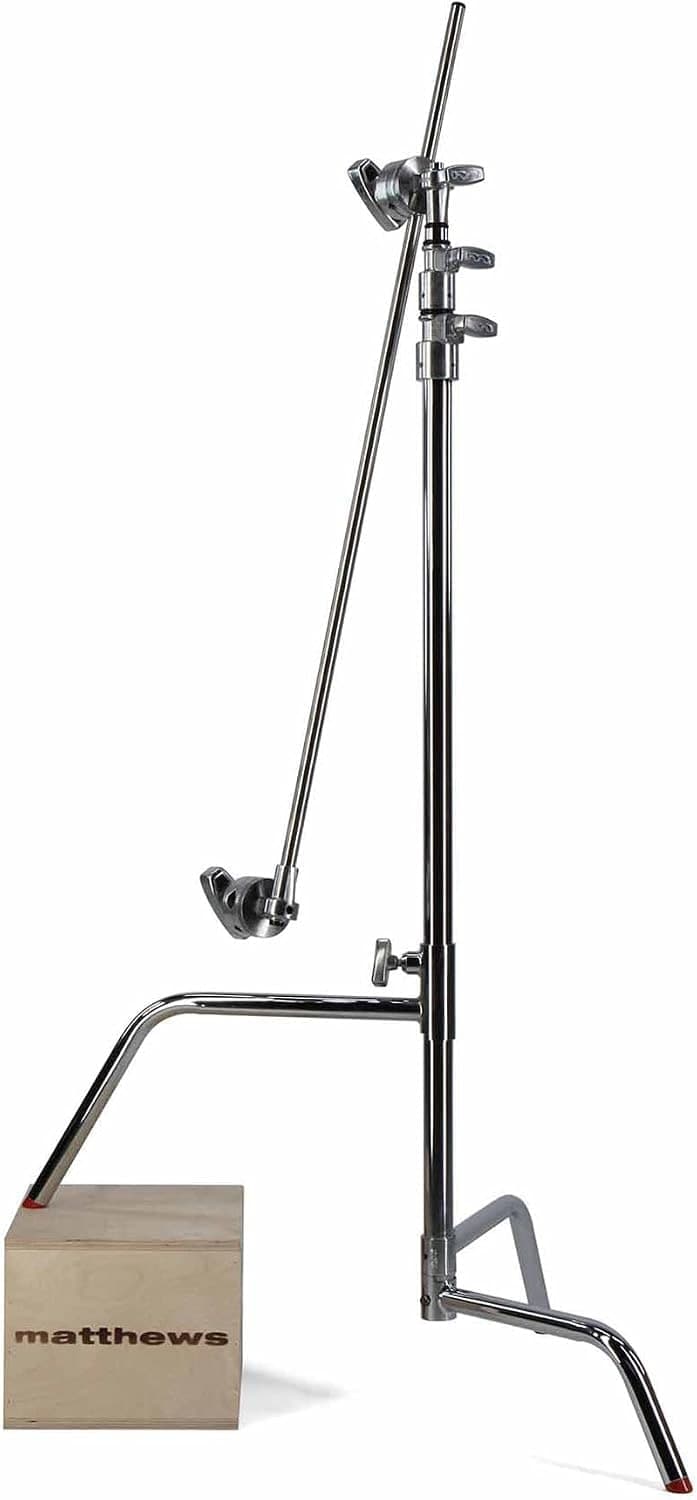
Studios that want a stand that holds a light exactly where it is set.
Use the retailer for the current price after the tradeoff makes sense. Confirm payload, plate type, height, folded size, and quick-release system.
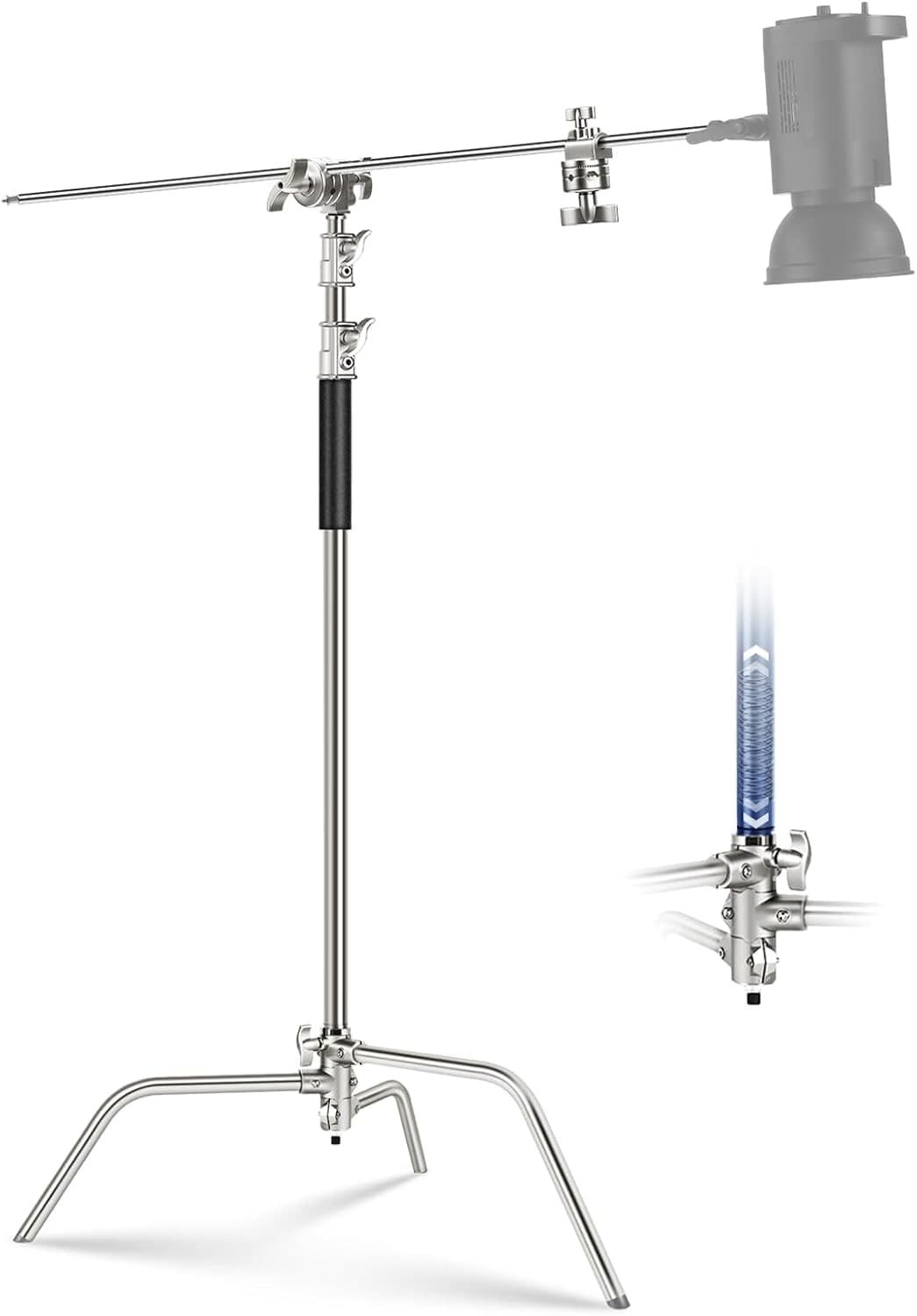
Tradeoff: Lighter steel, benefits from a sandbag
Use the retailer for the current price after the tradeoff makes sense. Confirm payload, plate type, height, folded size, and quick-release system.
Use the retailer for the current price after the tradeoff makes sense. Confirm exact version, included accessories, compatibility, and seller listing.
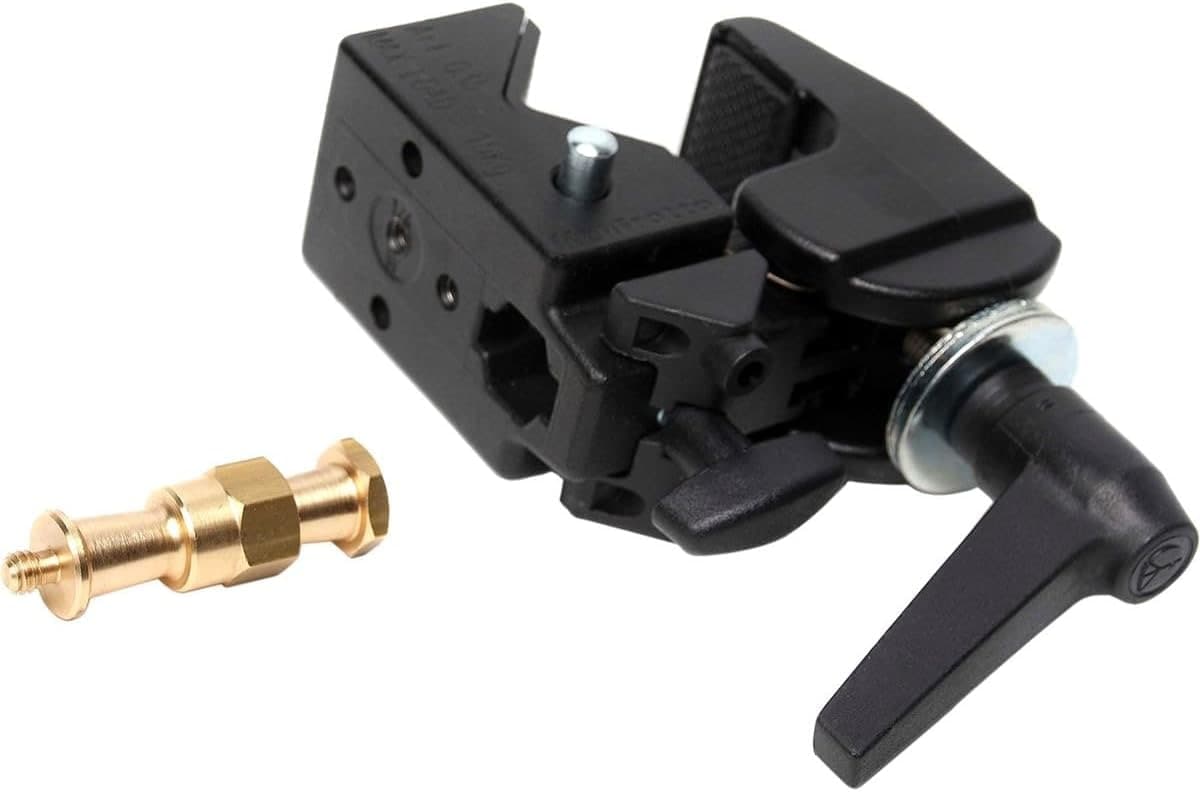
Getting a light or accessory into a spot no stand can reach.
Use the retailer for the current price after the tradeoff makes sense. Confirm exact version, included accessories, compatibility, and seller listing.
Price ladder
The useful range here runs from $17 to $309. Start with the ceiling that matches the assignment.
- Studios that want a stand that holds a light exactly where it is set.
- Rock-solid stability
- Heavy to carry
Use the retailer for the current price after the tradeoff makes sense. Confirm payload, plate type, height, folded size, and quick-release system.
- A first C-stand or extra units to fill out a studio kit.
- Affordable
- Lighter steel, benefits from a sandbag
Use the retailer for the current price after the tradeoff makes sense. Confirm payload, plate type, height, folded size, and quick-release system.
- Keeping loaded stands planted on any set.
- Four bags for the price of one branded bag
- Ships empty, you add sand
Use the retailer for the current price after the tradeoff makes sense. Confirm exact version, included accessories, compatibility, and seller listing.
- Getting a light or accessory into a spot no stand can reach.
- Strong jaws
- Needs a stud or pin for many mounts
Use the retailer for the current price after the tradeoff makes sense. Confirm exact version, included accessories, compatibility, and seller listing.
- Securing backgrounds, gels, and fabric quickly.
- Cheap multi-pack
- Not for heavy gear
Use the retailer for the current price after the tradeoff makes sense. Confirm exact version, included accessories, compatibility, and seller listing.
| Pick | Score | Price | Verdict | Action |
|---|---|---|---|---|
| Best OverallMatthews C-Stand | 9.1
| $305 - $350 | Studios that want a stand that holds a light exactly where it is set. Wins: Rock-solid stability Skip: Heavy to carry | Check Amazon · $305 - $350 Use the retailer for the current price after the tradeoff makes sense. Confirm payload, plate type, height, folded size, and quick-release system. |
| Best ValueNeewer C-Stand | 8.4
| $85 - $129 | A first C-stand or extra units to fill out a studio kit. Wins: Affordable Skip: Lighter steel, benefits from a sandbag | Check Amazon · $85 - $129 Use the retailer for the current price after the tradeoff makes sense. Confirm payload, plate type, height, folded size, and quick-release system. |
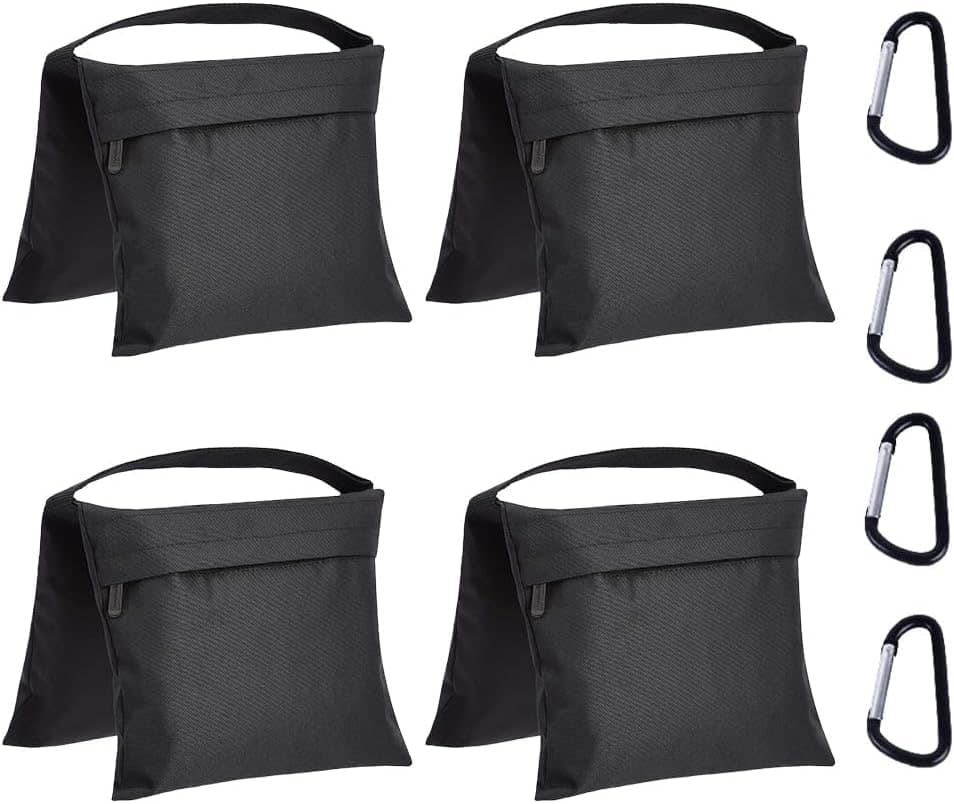 Best SandbagAmazon Basics Photography Sandbags (4-Pack) Best SandbagAmazon Basics Photography Sandbags (4-Pack) | 8.7
| $15 - $20 | Keeping loaded stands planted on any set. Wins: Four bags for the price of one branded bag Skip: Ships empty, you add sand | Check Amazon · $15 - $20 Use the retailer for the current price after the tradeoff makes sense. Confirm exact version, included accessories, compatibility, and seller listing. |
| Most UsefulManfrotto Super Clamp | 9.0
| $28 - $45 | Getting a light or accessory into a spot no stand can reach. Wins: Strong jaws Skip: Needs a stud or pin for many mounts | Check Amazon · $28 - $45 Use the retailer for the current price after the tradeoff makes sense. Confirm exact version, included accessories, compatibility, and seller listing. |
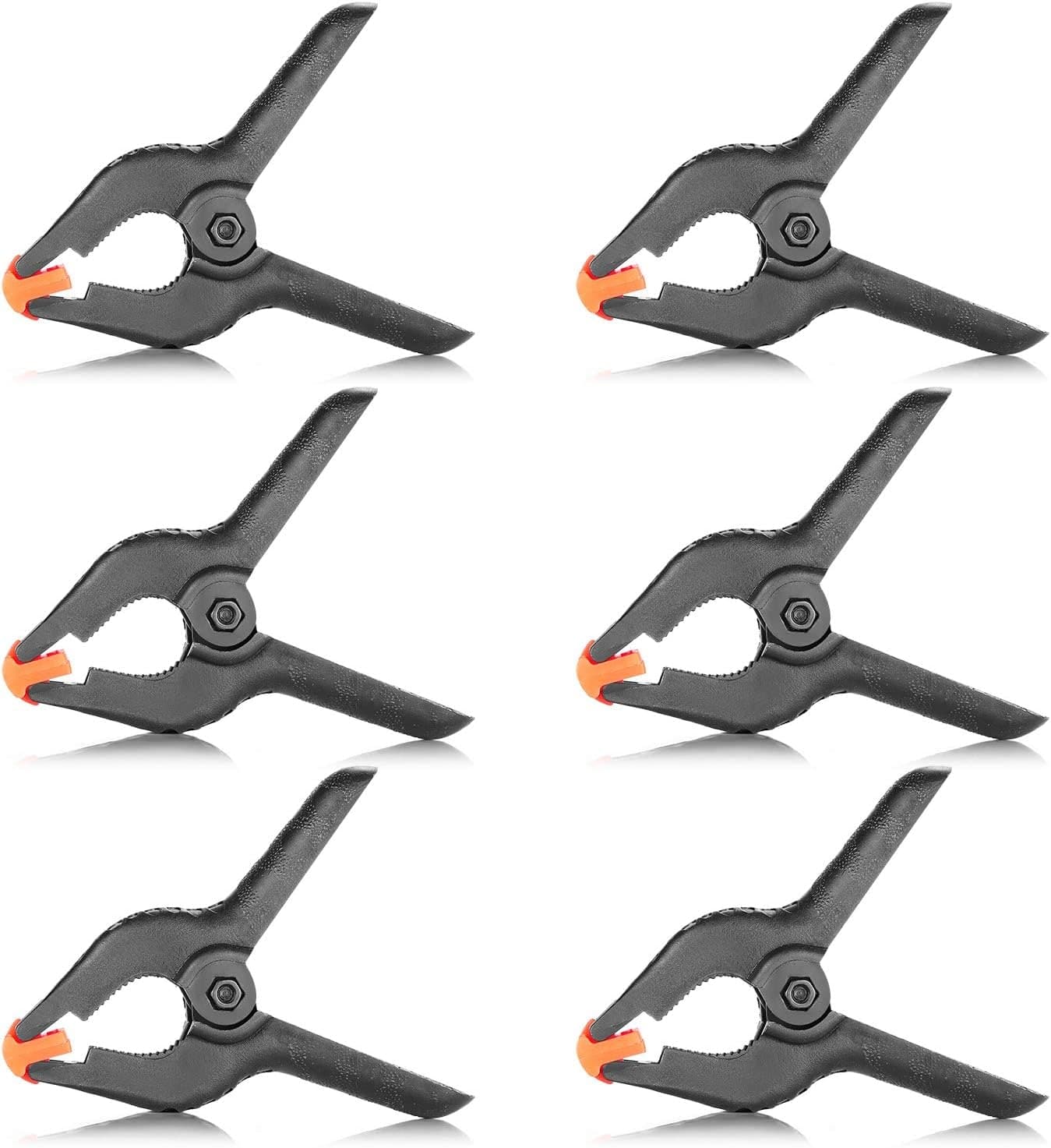 Best BudgetNeewer Spring Clamps Best BudgetNeewer Spring Clamps | 8.2
| $32 - $37 | Securing backgrounds, gels, and fabric quickly. Wins: Cheap multi-pack Skip: Not for heavy gear | Check Amazon · $32 - $37 Use the retailer for the current price after the tradeoff makes sense. Confirm exact version, included accessories, compatibility, and seller listing. |
Keep going
Next useful steps
Pick one. Each link continues the same job without starting the research over.
Shoot kits
Buy around the job, not the spec sheet
Studio table
Product studio kit
$5,268
A high-detail body, macro lens, portable strobe, modifier, backdrop, and grip pieces for repeatable product photos at home or in a small studio.
Best small-commerce kit
Buy order: start with the first piece that makes the job possible, then add the support pieces that remove friction.
Camera: start here. If this piece does not make the shoot easier, the rest of the kit can wait.
Safety: add it after the core setup proves useful.
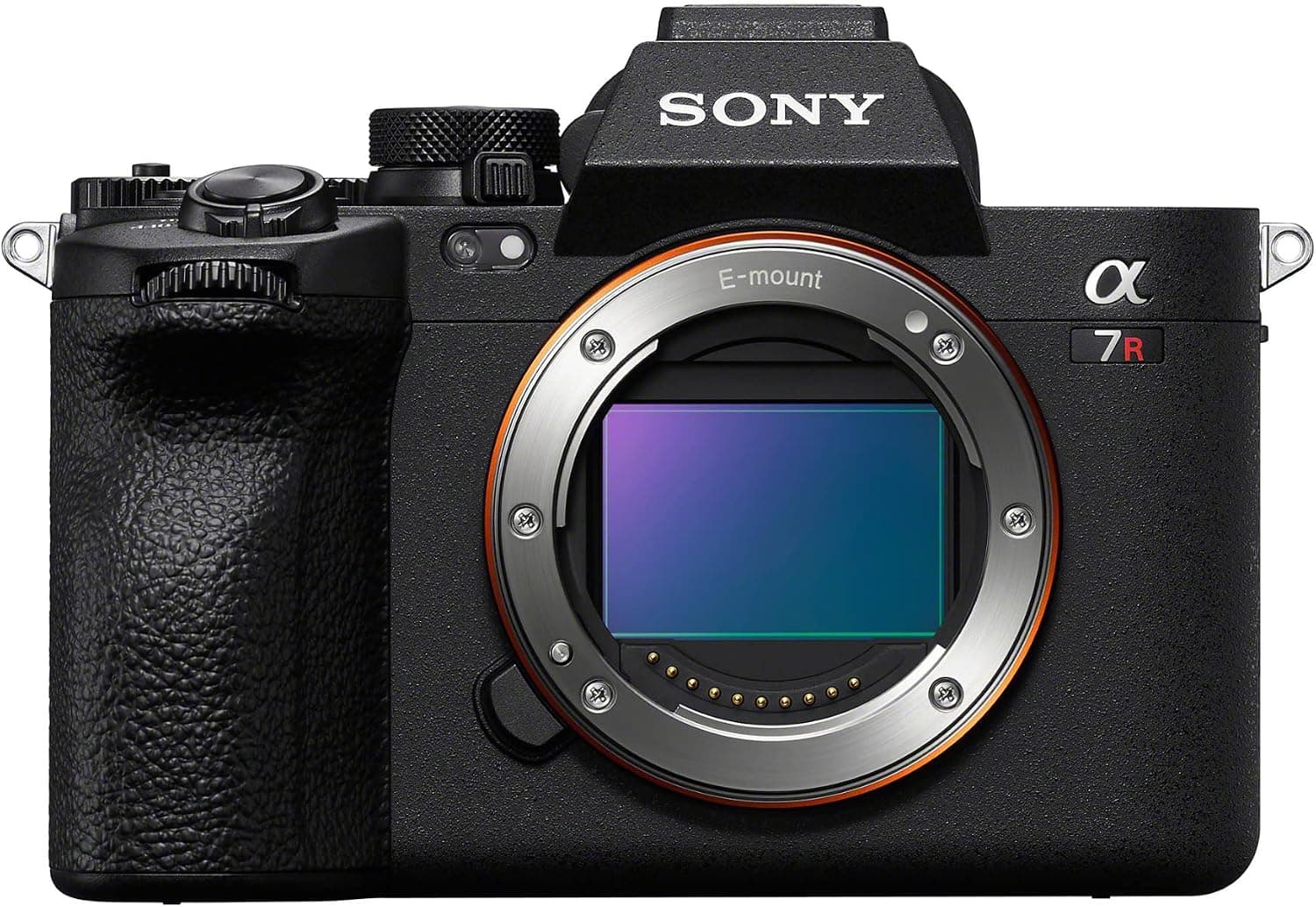
Sony a7R V
High-resolution files give product work enough detail for crops, retouching, and marketplace layouts.
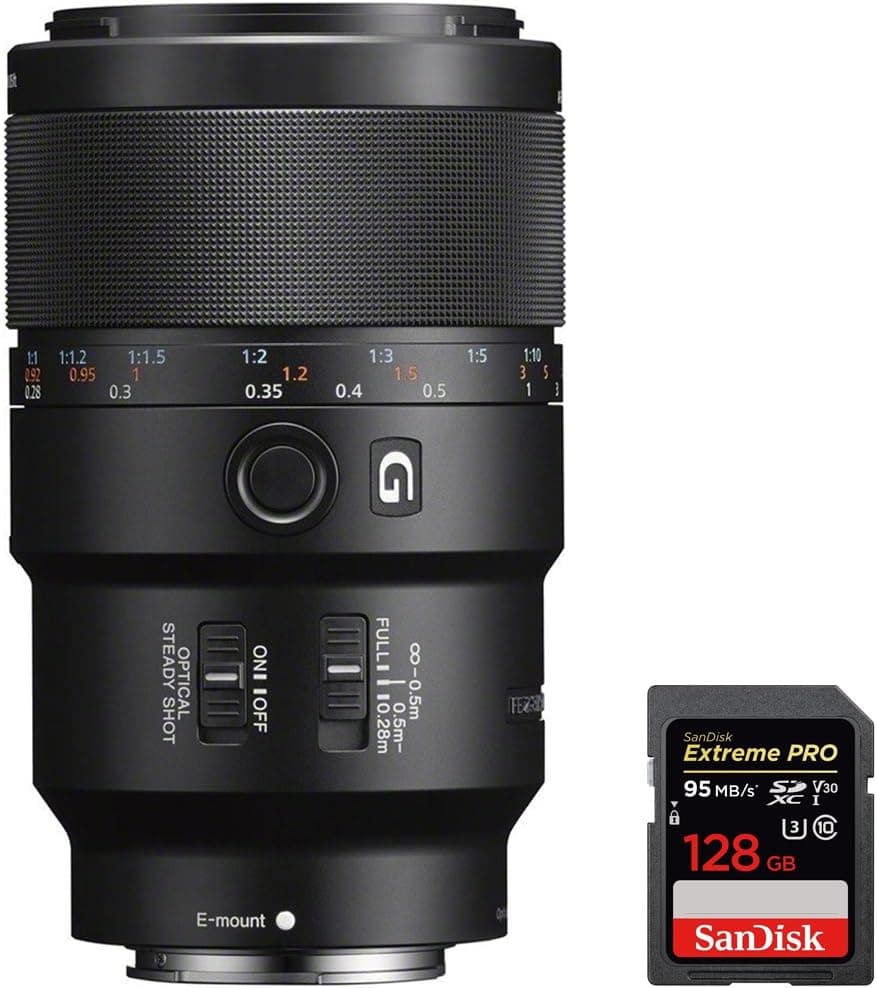
Sony FE 90mm f/2.8 Macro G OSS
True close focus for small products, labels, texture, and detail shots.
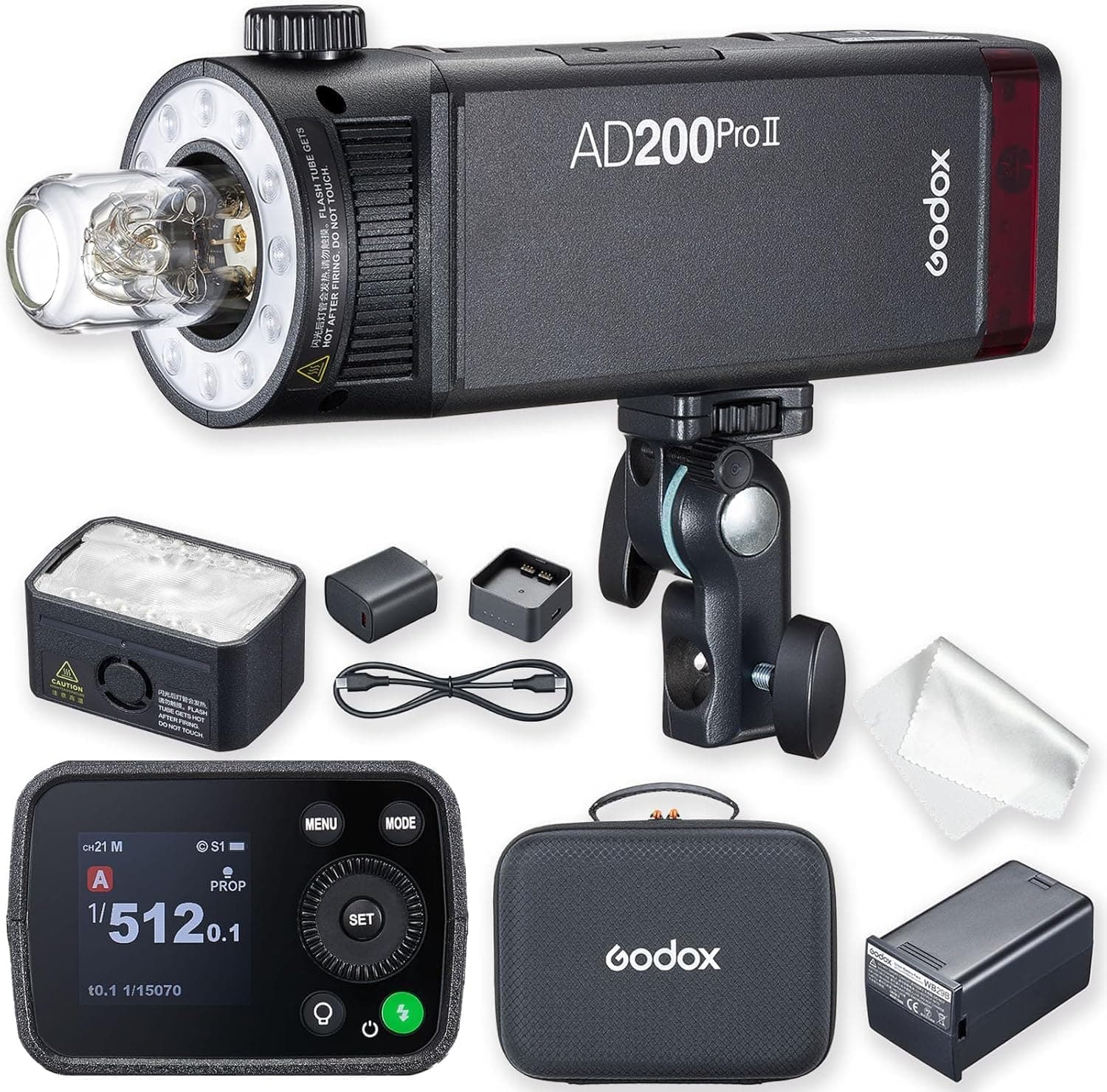
Godox AD200 Pro
More control and output than a speedlight while still staying portable.
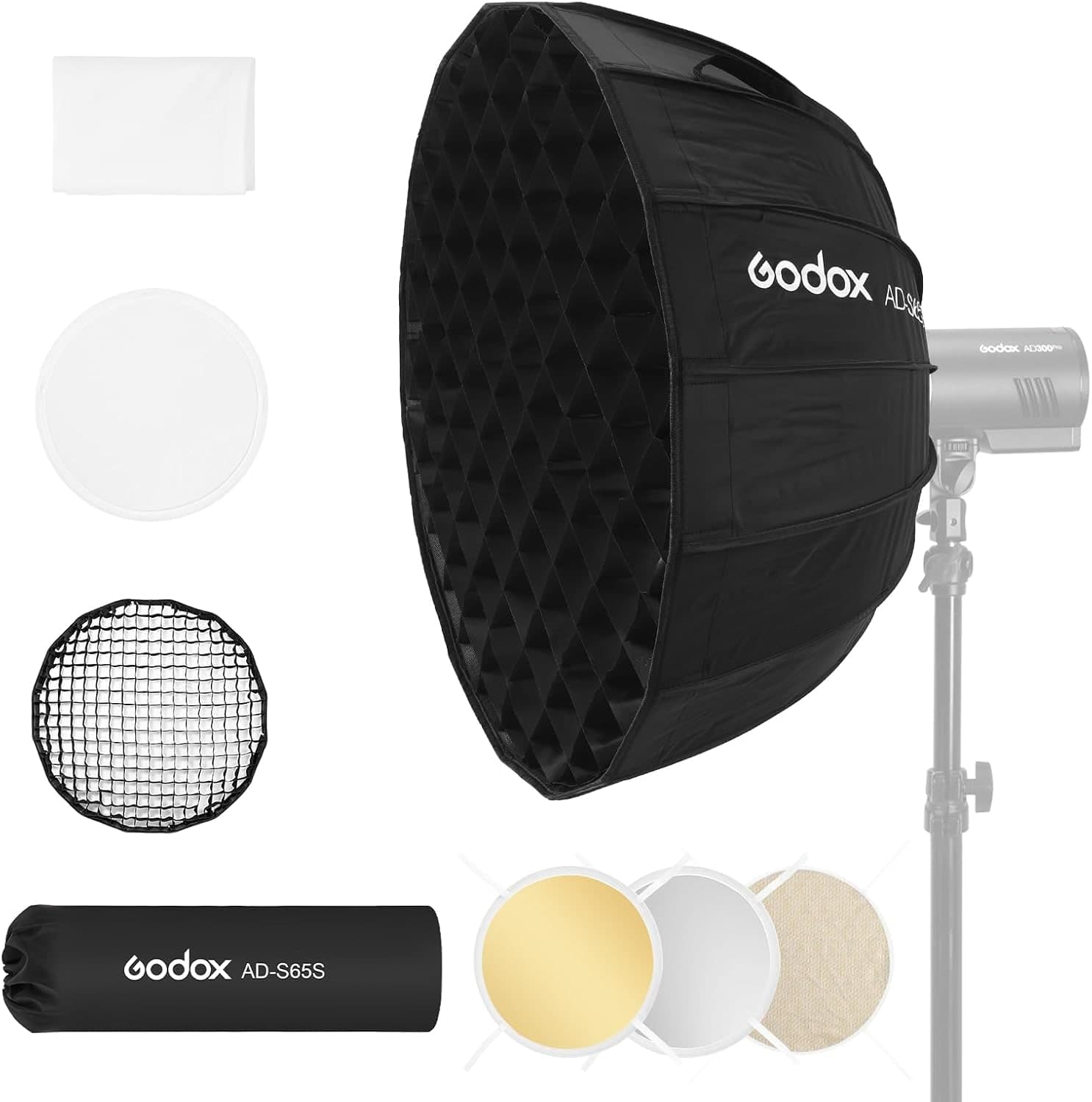
Godox AD-S65S
Soft, controlled light with a round catchlight for bottles, ceramics, food, and tabletop objects.
Savage Seamless Paper
A clean sweep removes distracting horizon lines and makes products read professionally.
Matthews C-Stand
Holds lights, flags, and reflectors in fixed positions while the product stays untouched.
Amazon Basics Photography Sandbags (4-Pack)
Keeps the stand planted when a modifier or boom arm pulls the load off-center.
Prices are rough catalog totals. Retailer prices change, and you can swap pieces to fit your system.
Related Gear guides
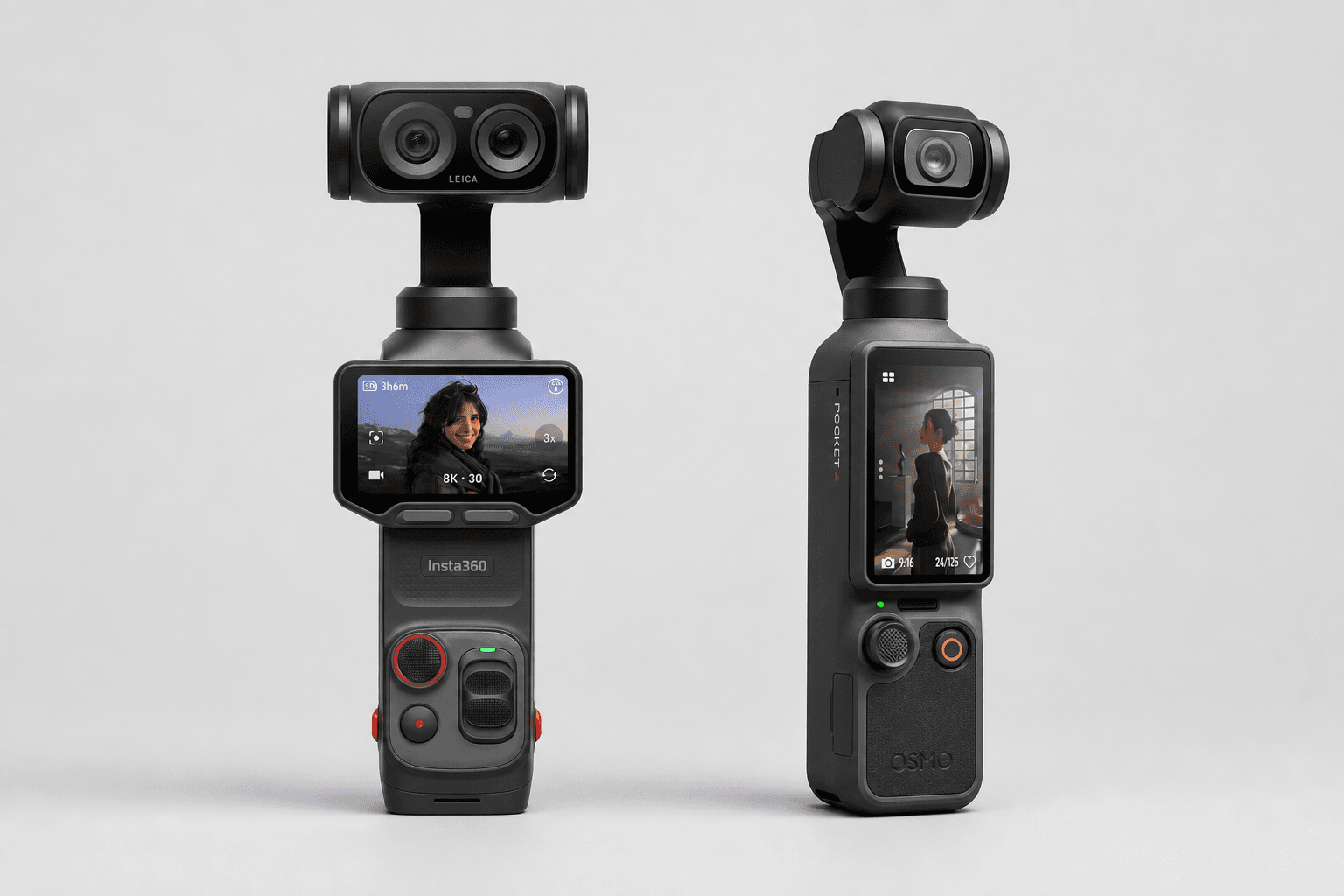
Insta360 Luna Ultra vs DJI Osmo Pocket 4: Which Pocket Gimbal Should You Buy?
Compare Luna Ultra and DJI Pocket 4 by lenses, video, Log formats, storage, U.S. availability, and the filming jobs each pocket gimbal handles best.
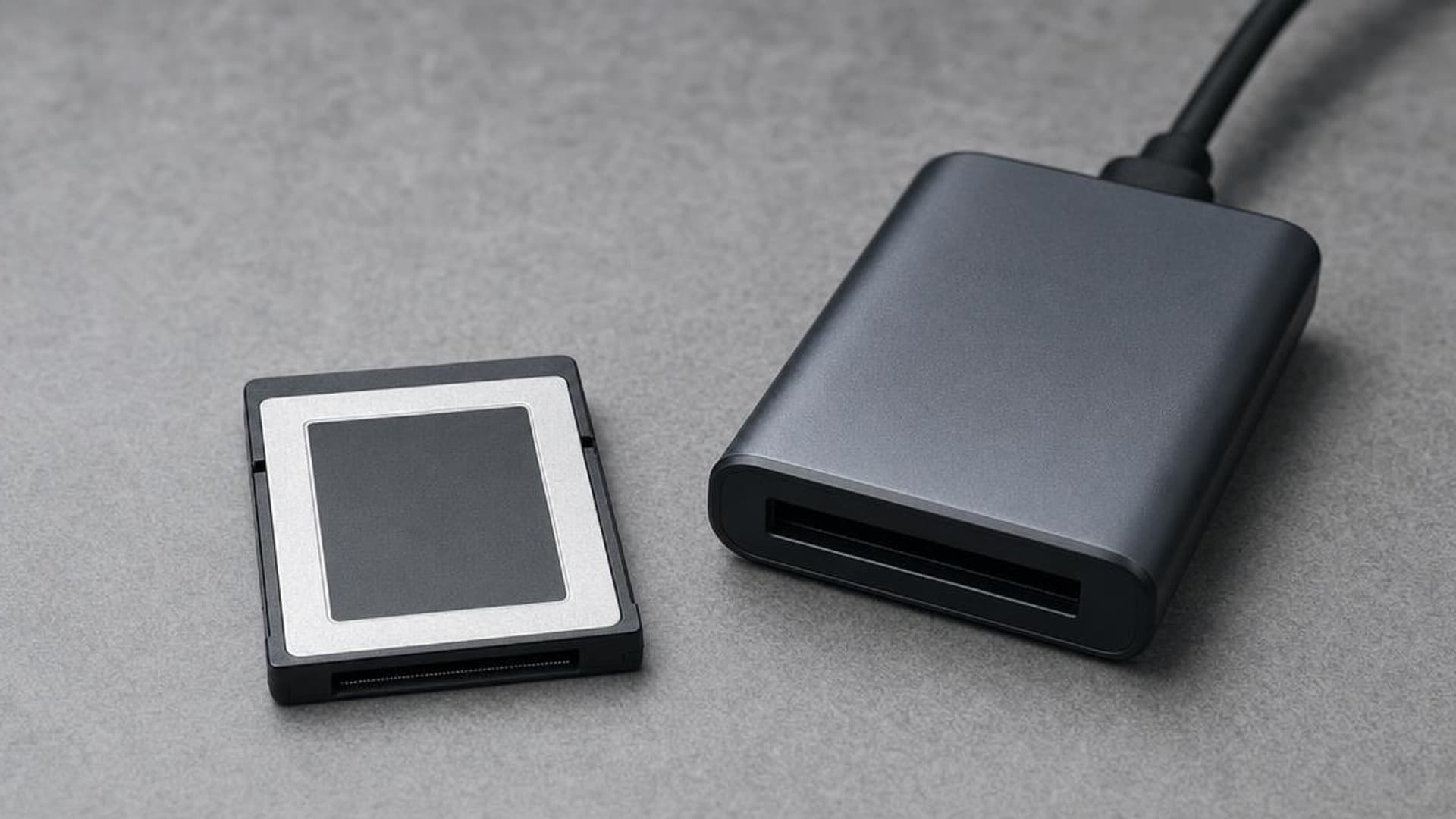
CFexpress 4.0 and VPG Explained: Buy the Card Your Camera Needs
CFexpress 4.0 doubles theoretical bandwidth, while VPG certifies sustained video writes. Learn Type A vs B, VPG classes, and when 4.0 is worth paying for.
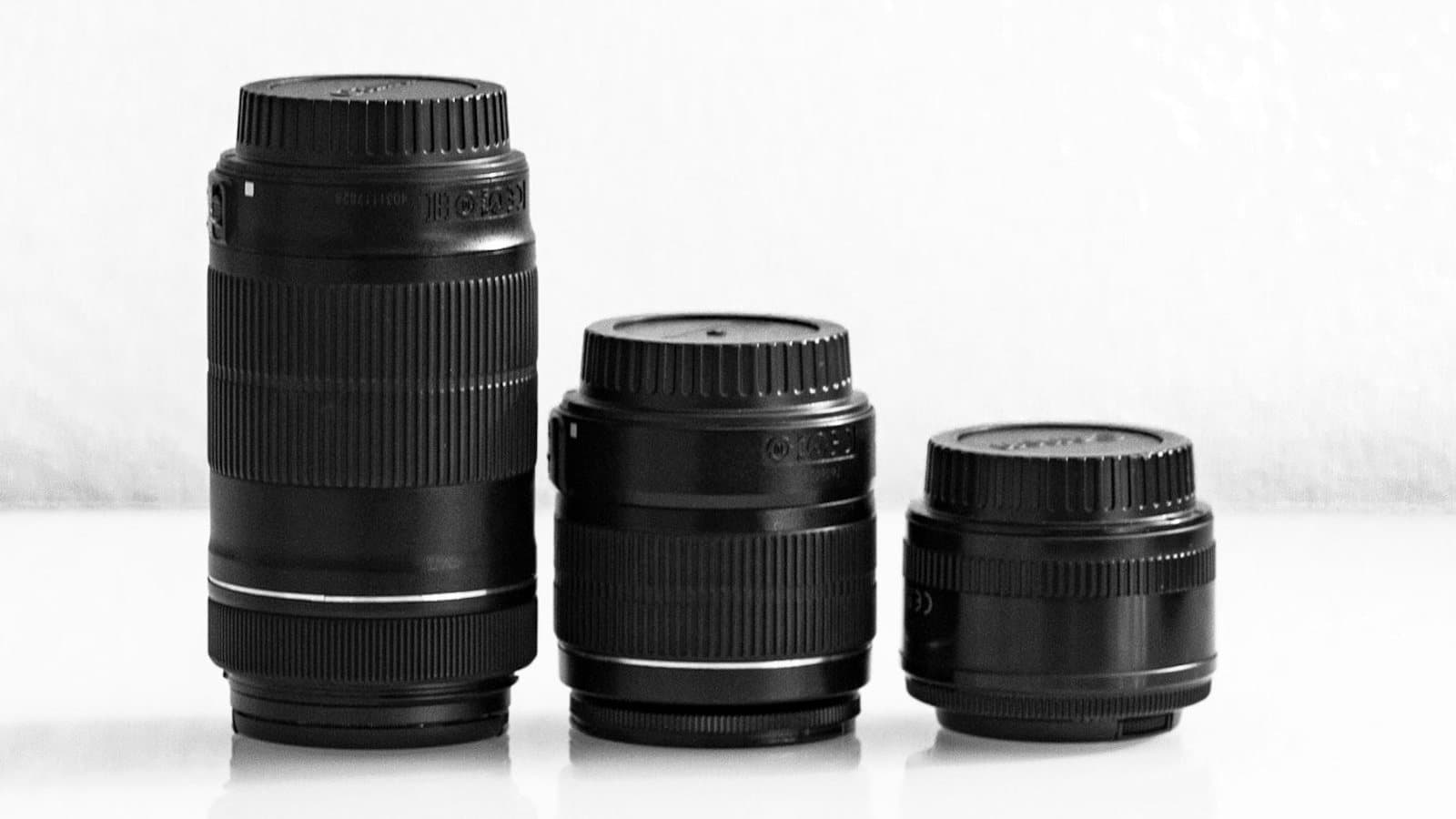
Focal Length Explained: What 24mm, 50mm, 85mm, and 200mm Actually Do
What the millimeter number on a lens changes in the field: angle of view, compression, and working distance. When to reach for 24, 50, 85, or 200mm.
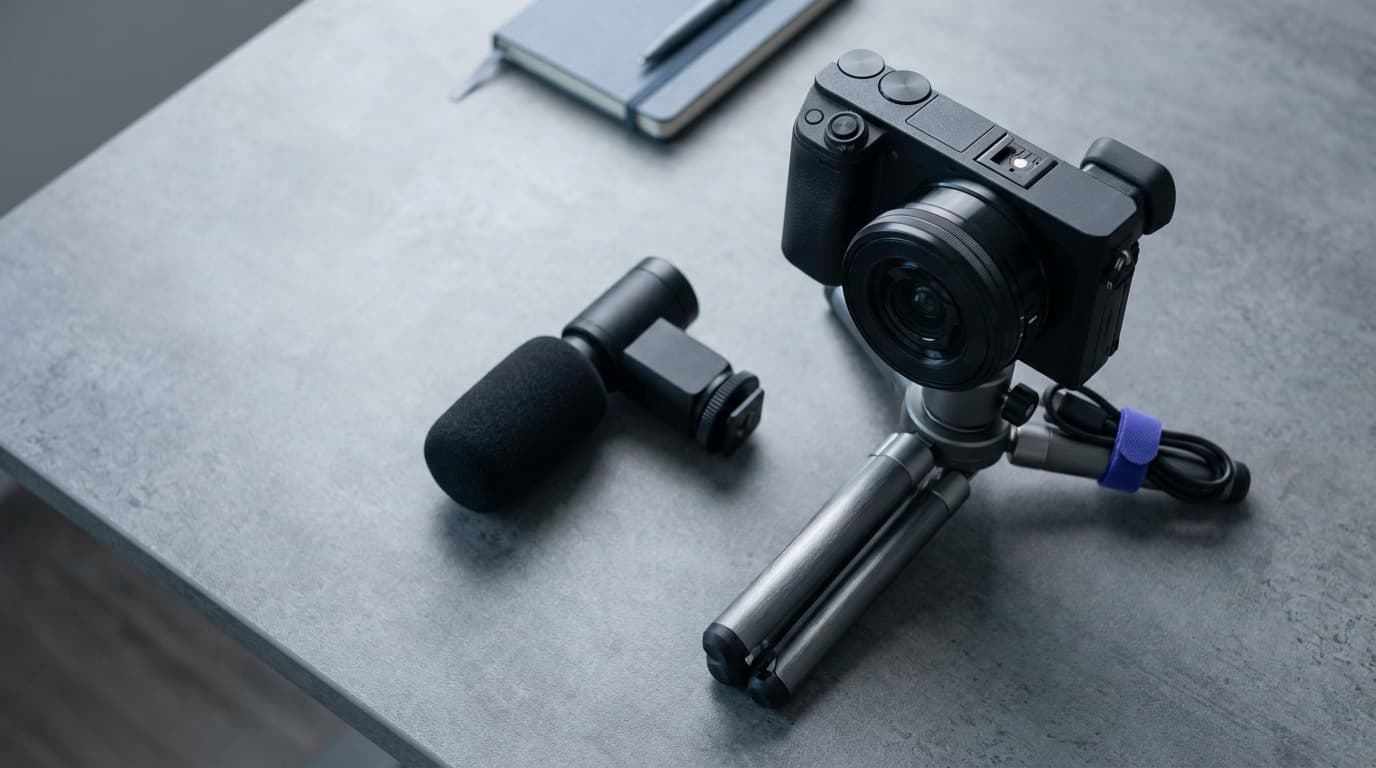
Canon EOS R50 V vs Sony ZV-E10 II: Which Beginner Vlogging Camera Should You Buy?
Canon EOS R50 V is the easier beginner creator kit. Sony ZV-E10 II is the deeper lens-system pick. Compare the practical tradeoffs.
Researched, not personally tested: picks compare specifications, available owner feedback, and established expert sources. As an Amazon Associate I earn from qualifying purchases. We may earn a commission from links here, at no extra cost to you. How we research →