We may earn a commission from links on this page, at no extra cost to you. Picks are researched, not sponsored.
What this means in real life
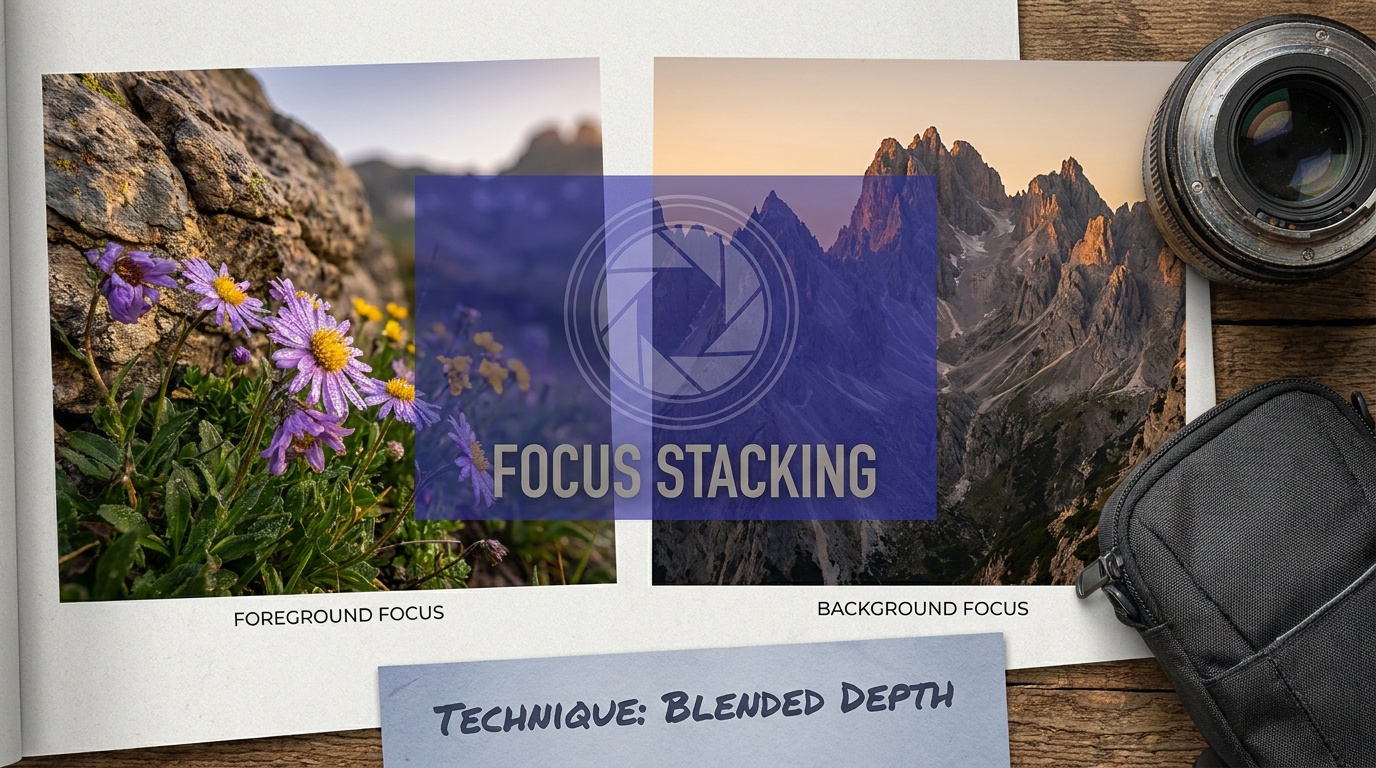
Even a small aperture has limits. In macro work the depth of field can be a millimeter thin, so a single frame leaves most of the subject soft. In a landscape with a rock right at your feet and mountains far away, no single focus point catches both. Stopping the aperture all the way down to f/22 widens the zone, but it can also soften the whole image through diffraction. Focus stacking sidesteps the compromise: instead of one frame trying to do everything, you take several, each sharp in a different slice, and let software keep only the sharp parts of each.
When to stack
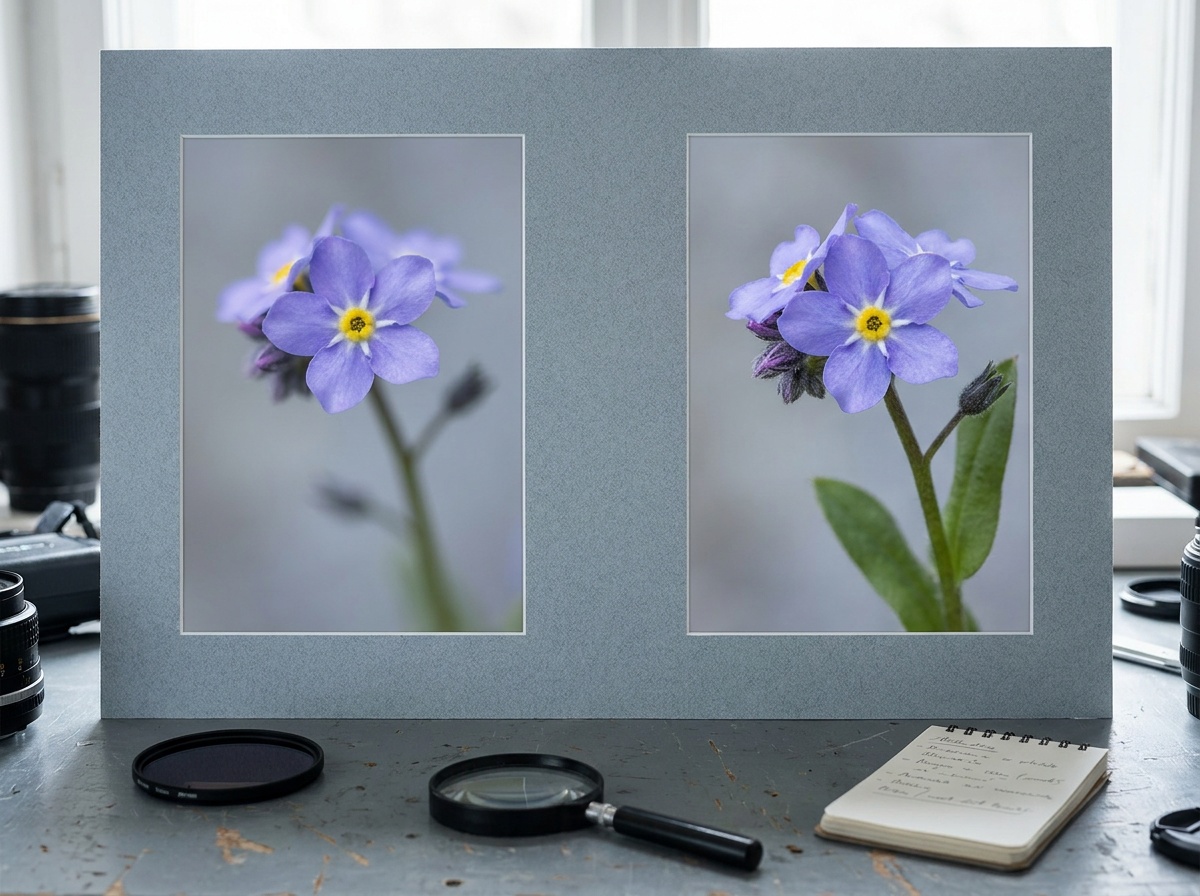
Stack when the near-to-far distance is too great for one frame at a clean aperture. That is most common in macro and close-up work, and in landscapes with a strong, very close foreground. If everything in your scene is roughly the same distance away, you do not need to stack; a single well-focused frame at f/8 to f/11 is sharper and simpler. Stacking also assumes a still subject, so it suits flowers in calm air, products, and rock-solid landscapes, not wind or motion.
The settings
Lock everything down so only the focus changes between frames.
Keep the aperture in the lens's sharp range, around f/5.6 to f/11, rather than stopping fully down, because the whole point is to avoid diffraction softening. Lock exposure in manual mode so the frames blend cleanly, and lock white balance too. The focus steps should overlap so no slice of the scene falls between two frames. This is a deliberate, methodical extension of the exposure triangle discipline: nothing moves but the focus ring.
The size of each focus step is what makes or breaks a stack. A safe rule is to advance focus by about a third of the depth of field per frame, so consecutive slices overlap rather than leaving a soft gap between them. In practice that means small, even nudges of the focus ring at high magnification and slightly larger ones for a landscape. When in doubt, take more frames with smaller steps; extra overlap costs only storage, while a missed slice cannot be recovered after the shoot.
The technique
The full sequence:
- Mount on a tripod, compose, and set manual exposure at a sharp aperture like f/8.
- Focus on the nearest point you want sharp and take the first frame.
- Step focus slightly farther and shoot again, repeating in small overlapping increments until the farthest point is sharp.
- Trigger each frame with a remote or self-timer so the frames stay aligned.
- Merge in your editor's focus-merge or stack-and-blend command, which picks the sharpest pixels from each frame.
A macro subject might need 10 to 30 frames; a landscape often needs only 3 to 5. Many cameras have a focus-bracketing mode that automates the steps for you once you set the first focus point and the step size. This is a core tool for astrophotography foregrounds and for any landscape photography scene with a dramatic close element, where you want the foreground rock and the distant peak equally crisp.
Common mistakes
Leaving gaps between focus steps is the classic error, and it shows up as a soft band running through the final image. Letting the subject or camera move between frames breaks the alignment, so a tripod and a still subject are essential. Changing exposure between frames, often from shooting in an automatic mode, makes the blend uneven. Stopping the aperture down too far defeats the purpose, since diffraction then softens every frame you stack. And forgetting to lock focus and exposure in manual lets the camera quietly re-decide between shots.
How many frames do I need for focus stacking?
It depends on the depth of the scene and the aperture. A flat-ish landscape may need only 3 to 5 frames, while a deep macro subject can need 10 to 30 or more. The rule is simple: enough overlapping focus steps that no slice of the subject is left soft.
Can I focus stack handheld?
It is possible for a quick 3-frame landscape stack if the software aligns the frames, but a tripod is strongly recommended. Macro stacking, with its razor-thin focus slices and many frames, really does need a tripod and a still subject to align cleanly.
Why not just use a small aperture like f/22 instead?
Stopping down that far widens depth of field but softens the entire image through diffraction. Focus stacking lets you shoot at a sharp aperture like f/8 and still get front-to-back sharpness, so the final result is crisper than a single f/22 frame.
Practice this
Turn the guide into a working setup
Keep going
Next useful steps
Pick one. Each link continues the same job without starting the research over.
Related Learn guides

Content Credentials and C2PA Explained for Photographers
Content Credentials record a photo's signed provenance and edits. Learn what C2PA proves, what it cannot prove, and how capture-to-export workflows work.
Open Gate Video Explained: When 3:2 Is Worth It
Open Gate records a taller sensor area for flexible 16:9, 9:16, and square crops. See when it helps, what it costs, and how to frame it correctly.
Pre-Capture Photography Explained: Get the Frame Before the Click
Pre-Capture buffers photos before the shutter is fully pressed. Learn how it works, which settings change, and when RAW, flash, or focus may be limited.
RAW vs JPEG: Which File Format Should You Shoot?
RAW keeps all your sensor data for maximum editing freedom; JPEG is smaller and ready to share. Here is how they differ and when each one is the right call.
Researched, not personally tested: picks compare specifications, available owner feedback, and established expert sources. As an Amazon Associate I earn from qualifying purchases. We may earn a commission from links here, at no extra cost to you. How we research →