We may earn a commission from links on this page, at no extra cost to you. Picks are researched, not sponsored.
A lens purchase should fix a specific limitation. A fast prime helps when the kit zoom is too dark or the background stays too sharp. A constant-aperture zoom helps when changing focal lengths matters more than the brightest possible aperture. Pick the job first, then confirm the exact mount printed on the lens listing.
Which budget lens fits your camera?
| Camera system | Pick | Useful for | Check before buying |
|---|---|---|---|
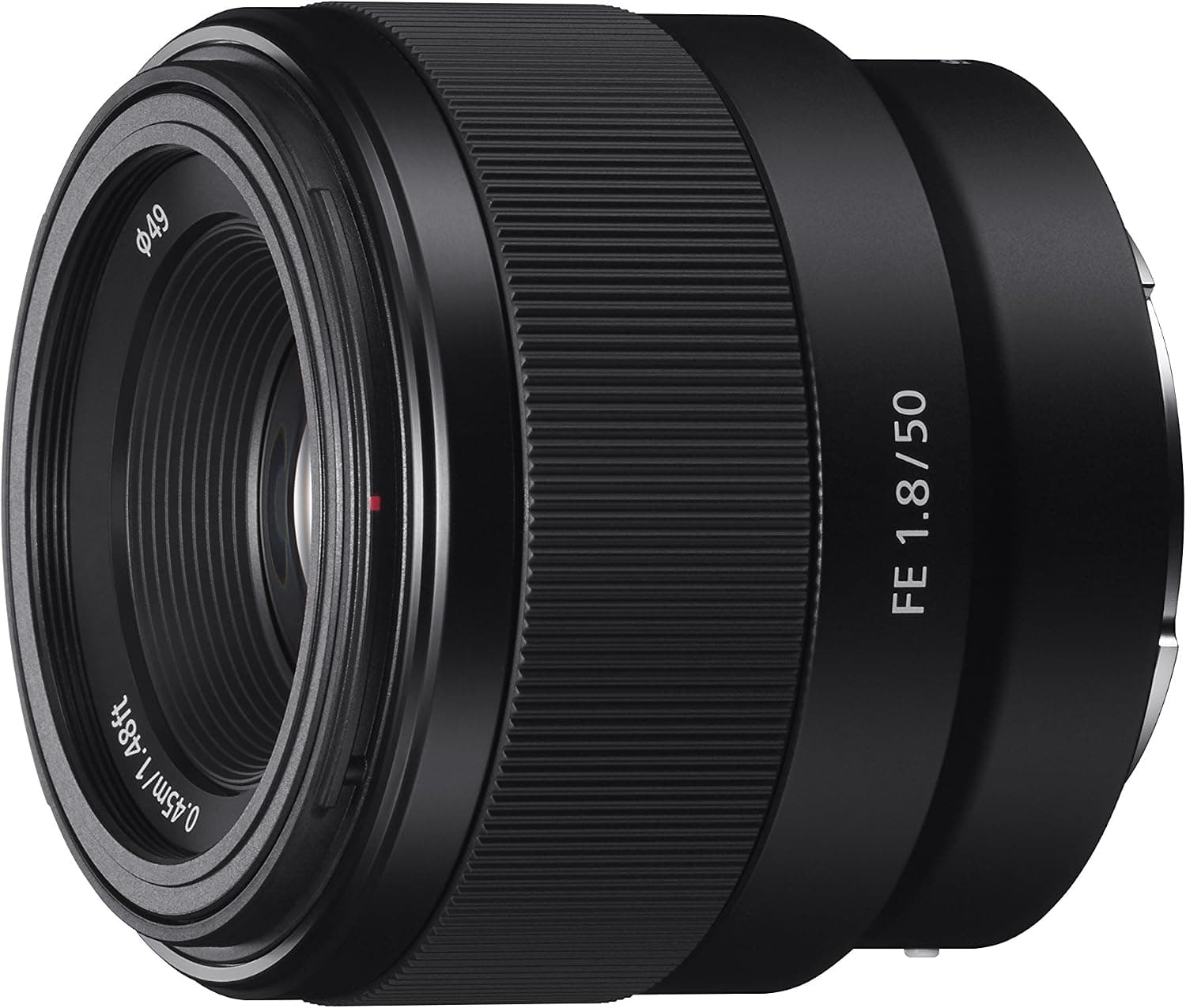
| Sony E full frame | Sony FE 50mm f/1.8 | Everyday stills and low-cost background blur | Autofocus is better suited to stills than fast action |
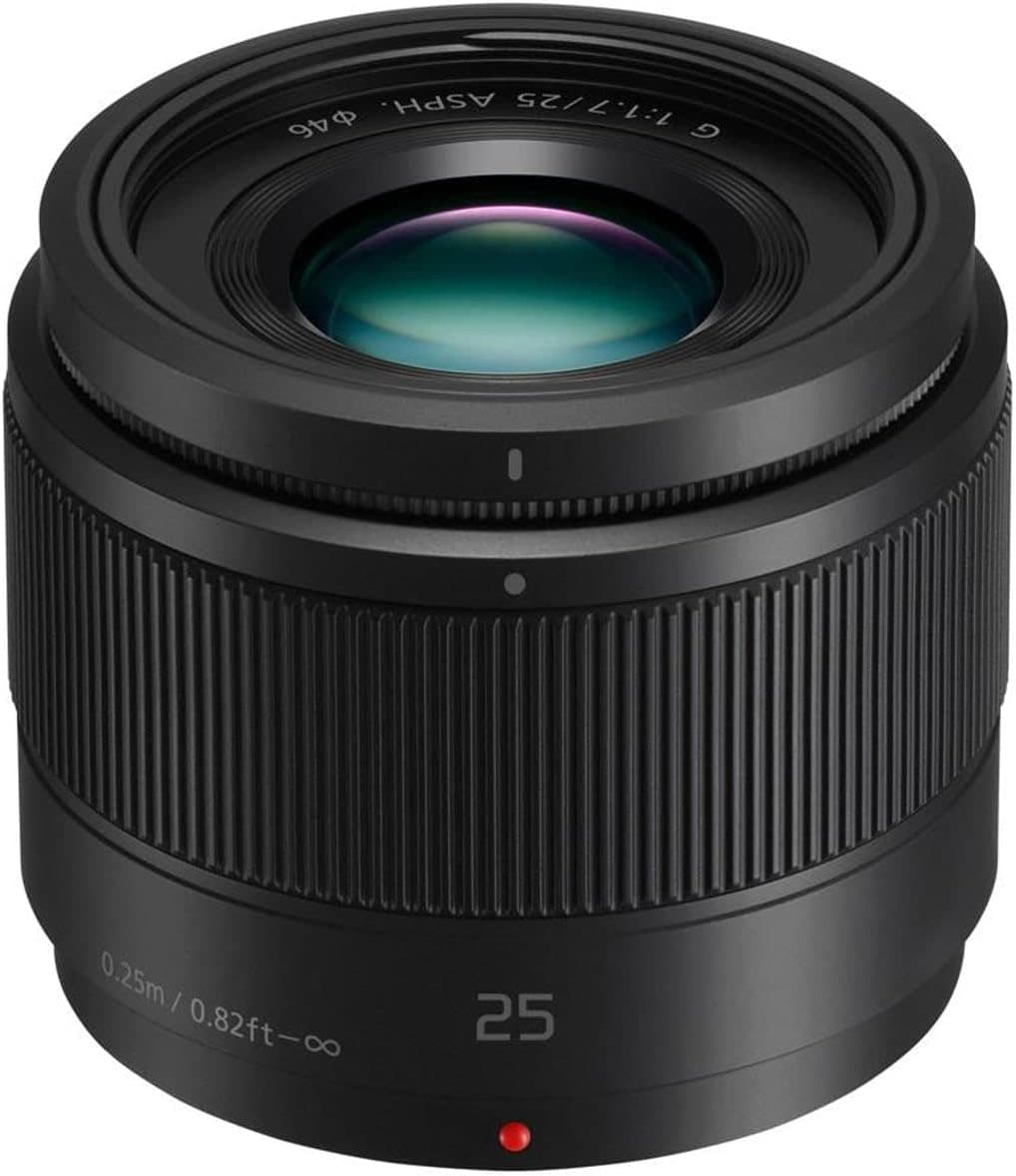
| Micro Four Thirds | Panasonic 25mm f/1.7 | Normal 50mm-equivalent view | No optical stabilization |
| Micro Four Thirds | OM System 45mm f/1.8 | Portraits and subject separation | 90mm-equivalent view is tight indoors |
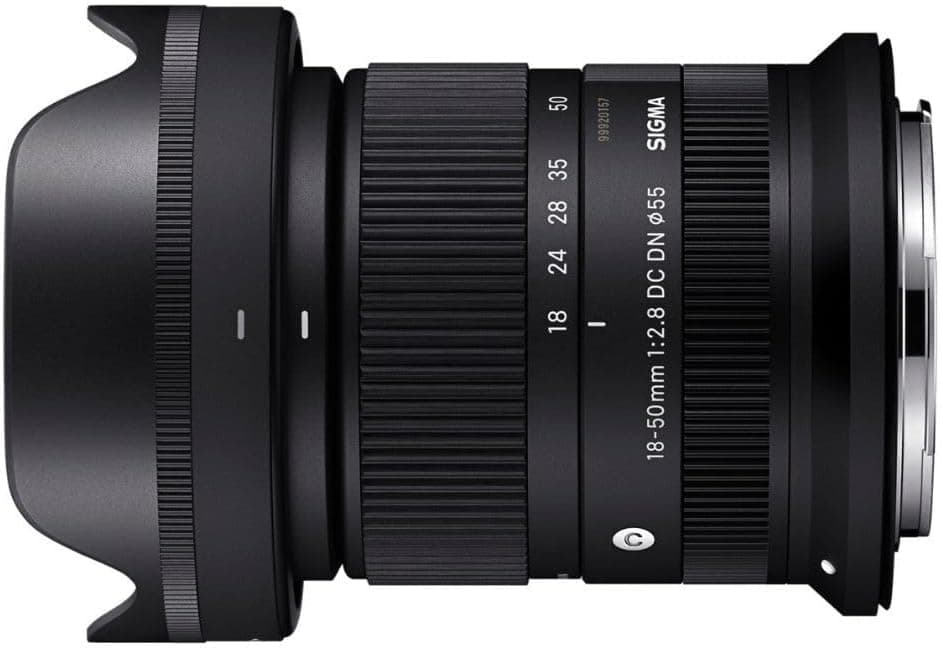
| APS-C, supported mounts | Sigma 18-50mm f/2.8 DC DN | One small everyday zoom | Buy the exact E, X, L, or RF mount version |
| Sony E or Nikon Z full frame | Viltrox AF 85mm f/1.8 | Portraits | Confirm mount and firmware support |
| Canon RF | Canon RF 50mm f/1.8 STM | Remaining stock or used value | Canon lists it as discontinued |

Prime or zoom: which saves more money?
A prime gives you a brighter aperture at a lower price, but only one focal length. A zoom costs more for the same brightness but can replace several primes. Choose a prime when you know the framing you use most. Choose a zoom when a missed framing opportunity would cost more than the extra lens price. Our prime versus zoom guide explains the tradeoff in detail.
How does sensor size change the focal length?
A 25mm lens on Micro Four Thirds frames roughly like a 50mm lens on full frame. A 45mm lens on Micro Four Thirds frames roughly like a 90mm lens. That changes composition, not the number printed on the barrel. Check sensor sizes explained before copying a full-frame focal-length recommendation onto a smaller sensor.
The current picks
Sony FE 50mm f/1.8: low-cost Sony full-frame prime
Research pick
Sony FE 50mm f/1.8
First-time Sony owners who want a budget prime for portraits and low light.
Check price at AmazonThis is Sony's compact full-frame 50mm f/1.8. It gives stills shooters a bright normal prime at a low entry price. Its autofocus is not the reason to buy it, so video and fast-action users should compare newer focusing designs before choosing on price alone.
Panasonic 25mm f/1.7: normal Micro Four Thirds prime
Best Budget
Panasonic Lumix G 25mm f/1.7
Micro Four Thirds beginners wanting an affordable nifty fifty equivalent.
Check price at AmazonThe Panasonic 25mm gives a 50mm-equivalent field of view on Micro Four Thirds. It is small, bright, and suited to everyday stills, available light, and simple portraits. It has no optical stabilization, so owners of bodies without in-body stabilization should account for that in low light.
OM System 45mm f/1.8: small portrait prime
Best Value
Olympus M.Zuiko 45mm f/1.8
Micro Four Thirds shooters wanting an affordable portrait lens.
Check price at AmazonThe 45mm f/1.8 gives a 90mm-equivalent view on Micro Four Thirds, which is useful for headshots and cleaner backgrounds. It is less flexible in small rooms. Buy it because you want the tighter portrait view, not merely because the price is low.
Sigma 18-50mm f/2.8: compact APS-C zoom
Best Value
Sigma 18-50mm f/2.8 DC DN Contemporary
APS-C shooters who want a compact constant-aperture everyday zoom.
Check price at AmazonSigma makes the 18-50mm f/2.8 DC DN for several APS-C systems, but each version has a different mount. The card above is the Sony E version. Choose the matching Canon RF, Fujifilm X, L-Mount, or Sony E listing for your camera. The lens trades stabilization and a long telephoto end for a small body and constant f/2.8 aperture.
Viltrox 85mm f/1.8: lower-cost full-frame portrait lens
Best Budget
Viltrox AF 85mm f/1.8
Budget-minded portrait shooters on Sony or Nikon Z.
Check price at AmazonThe Viltrox 85mm f/1.8 offers full-frame portrait framing without first-party 85mm pricing. It is best for deliberate portraits, not the fastest action. Verify the mount on the product page because a Sony E lens will not fit a Nikon Z body and vice versa.
Canon RF 50mm f/1.8 STM: discontinued, buy only at a value price
Remaining-stock value
Canon RF 50mm f/1.8 STM
Canon RF owners who find remaining stock or a used copy at a clearly lower price.
Check price at AmazonCanon marks the RF 50mm f/1.8 STM discontinued. Existing copies still work and the lens remains small and bright, but stock, warranty, and price can vary. Compare remaining-stock and used pricing before buying. A discontinued lens at its old bargain price can make sense; one marked up because supply is thin does not.
What should you check before ordering?
- Match the complete mount name, not just the brand.
- Check whether the stated focal length suits your sensor size.
- Compare body-only and kit pricing before buying a replacement zoom.
- Read the product status note when a lens is discontinued or previous generation.
- Leave room in the budget for a hood, filter, and return shipping if fit is uncertain.
For more specific jobs, continue to portrait lenses or landscape lenses.
Sources
Model status and specifications checked Aug 20, 2026: Canon RF 50mm f/1.8 product status, Sony FE 50mm f/1.8 specifications, Sigma 18-50mm f/2.8 mount options, Panasonic 25mm f/1.7 specifications, and OM System 45mm f/1.8 specifications.
What is the best first lens on a budget?
Choose a normal prime that fits your mount if you want the brightest aperture for the money. On full frame that is often around 50mm. On APS-C it is around 30mm to 35mm, and on Micro Four Thirds it is around 25mm.
Is a discontinued lens worth buying?
It can be when the price is low, the mount still fits your camera, and warranty or return terms are clear. Do not pay a scarcity markup for a basic lens merely because new stock is disappearing.
Should I buy a budget prime or a budget zoom?
Buy a prime for a brighter aperture and lower cost. Buy a zoom when changing focal lengths quickly matters more. A compact f/2.8 zoom costs more than a basic prime but may replace several lenses.
Compare picks
The short version
Use this to narrow the list before opening the detailed cards.
Scores weigh fit, owner sentiment, build, and value. Affiliate links do not change pick order. Methodology
Buying order
Start with the skip note. A good deal on the wrong camera is still the wrong camera.
Compare verdictsIf you already own lenses, check the system path before buying into a new mount.
Check systemsOnce the fit makes sense, compare current deals and retailer listings.
Check current dealsCamera system shortcut
If you already own one of these systems, keep the comparison inside that ecosystem before checking out.
Autofocus hybrid kits
Simple camera paths
First-time Sony owners who want a budget prime for portraits and low light.
Use the retailer for the current price after the tradeoff makes sense. Confirm mount, focal length, filter size, and autofocus compatibility.
Tradeoff: Plastic build
Use the retailer for the current price after the tradeoff makes sense. Confirm mount, focal length, filter size, and autofocus compatibility.
8.8/10 Aperture Score
Use the retailer for the current price after the tradeoff makes sense. Confirm mount, focal length, filter size, and autofocus compatibility.
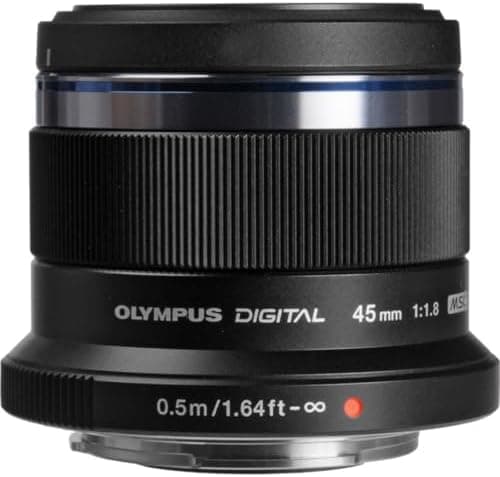
Micro Four Thirds shooters wanting an affordable portrait lens.
Use the retailer for the current price after the tradeoff makes sense. Confirm mount, focal length, filter size, and autofocus compatibility.
Price ladder
The useful range here runs from $200 to $550. Start with the ceiling that matches the assignment.
- First-time Sony owners who want a budget prime for portraits and low light.
- Low price
- Autofocus is slow and noisy
Use the retailer for the current price after the tradeoff makes sense. Confirm mount, focal length, filter size, and autofocus compatibility.
- Micro Four Thirds beginners wanting an affordable nifty fifty equivalent.
- Low price
- Plastic build
Use the retailer for the current price after the tradeoff makes sense. Confirm mount, focal length, filter size, and autofocus compatibility.
- Micro Four Thirds shooters wanting an affordable portrait lens.
- Very low price
- No weather sealing
Use the retailer for the current price after the tradeoff makes sense. Confirm mount, focal length, filter size, and autofocus compatibility.
- APS-C shooters who want a compact constant-aperture everyday zoom.
- Tiny and light for f/2.8
- No weather sealing
Use the retailer for the current price after the tradeoff makes sense. Confirm mount, focal length, filter size, and autofocus compatibility.
- Budget-minded portrait shooters on Sony or Nikon Z.
- Low price for full frame
- Autofocus slower than first-party
Use the retailer for the current price after the tradeoff makes sense. Confirm mount, focal length, filter size, and autofocus compatibility.
- Canon RF owners who find remaining stock or a used copy at a clearly lower price.
- Very low price
- Plastic mount
Use the retailer for the current price after the tradeoff makes sense. Confirm mount, focal length, filter size, and autofocus compatibility.
| Pick | Score | Price | Verdict | Action |
|---|---|---|---|---|
| PickSony FE 50mm f/1.8 | 7.4
| $200 - $250 | First-time Sony owners who want a budget prime for portraits and low light. Wins: Low price Skip: Autofocus is slow and noisy | Check Amazon · $200 - $250 Use the retailer for the current price after the tradeoff makes sense. Confirm mount, focal length, filter size, and autofocus compatibility. |
| Best BudgetPanasonic Lumix G 25mm f/1.7 | 8.0
| $150 - $250 | Micro Four Thirds beginners wanting an affordable nifty fifty equivalent. Wins: Low price Skip: Plastic build | Check Amazon · $150 - $250 Use the retailer for the current price after the tradeoff makes sense. Confirm mount, focal length, filter size, and autofocus compatibility. |
| Best ValueOlympus M.Zuiko 45mm f/1.8 | 8.5
| $280 - $350 | Micro Four Thirds shooters wanting an affordable portrait lens. Wins: Very low price Skip: No weather sealing | Check Amazon · $280 - $350 Use the retailer for the current price after the tradeoff makes sense. Confirm mount, focal length, filter size, and autofocus compatibility. |
| Best ValueSigma 18-50mm f/2.8 DC DN Contemporary | 8.8
| $500 - $600 | APS-C shooters who want a compact constant-aperture everyday zoom. Wins: Tiny and light for f/2.8 Skip: No weather sealing | Check Amazon · $500 - $600 Use the retailer for the current price after the tradeoff makes sense. Confirm mount, focal length, filter size, and autofocus compatibility. |
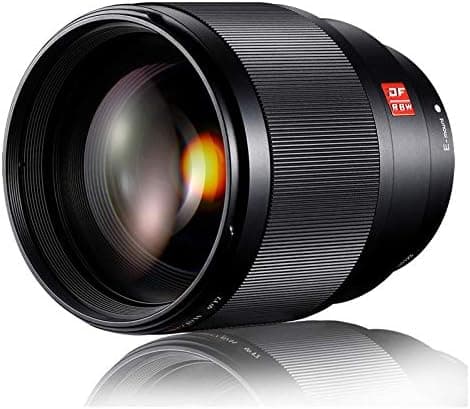 Best BudgetViltrox AF 85mm f/1.8 Best BudgetViltrox AF 85mm f/1.8 | 8.4
| $325 - $370 | Budget-minded portrait shooters on Sony or Nikon Z. Wins: Low price for full frame Skip: Autofocus slower than first-party | Check Amazon · $325 - $370 Use the retailer for the current price after the tradeoff makes sense. Confirm mount, focal length, filter size, and autofocus compatibility. |
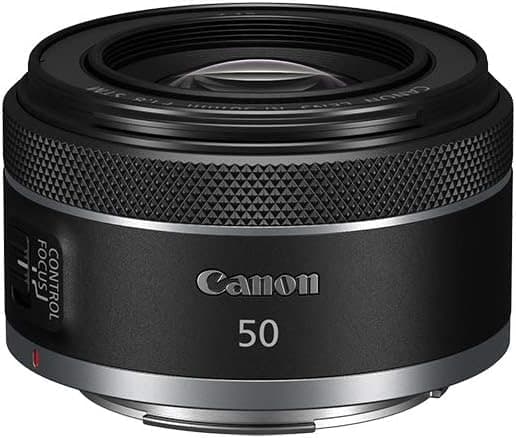 Remaining-stock valueCanon RF 50mm f/1.8 STM Remaining-stock valueCanon RF 50mm f/1.8 STM | 7.8
| $180 - $220 | Canon RF owners who find remaining stock or a used copy at a clearly lower price. Wins: Very low price Skip: Plastic mount | Check Amazon · $180 - $220 Use the retailer for the current price after the tradeoff makes sense. Confirm mount, focal length, filter size, and autofocus compatibility. |
Keep going
Next useful steps
Pick one. Each link continues the same job without starting the research over.
Shoot kits
Buy around the job, not the spec sheet
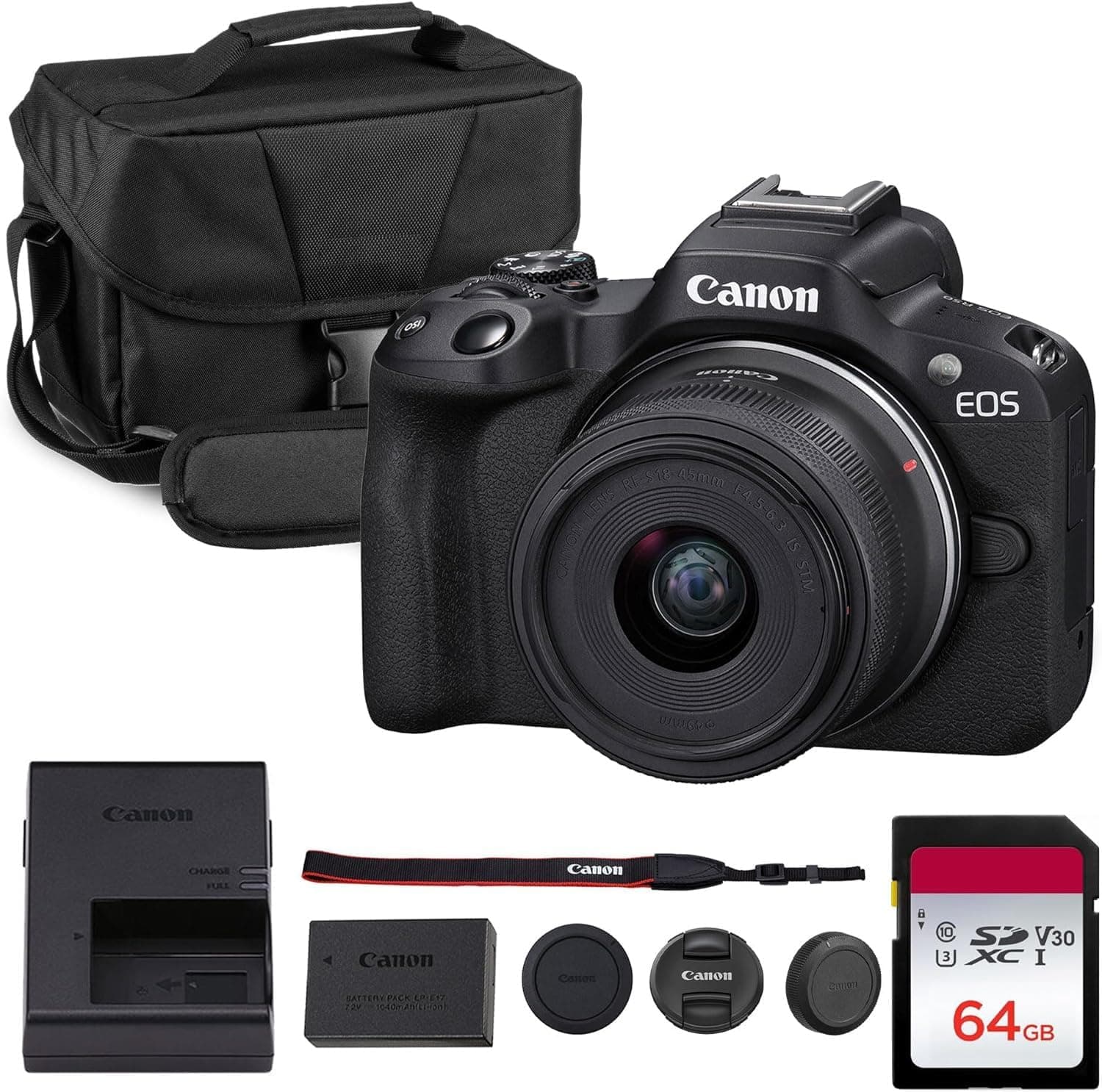
Beginner photo
First real camera kit
$1,068
An affordable body, a sharp prime, a reliable card, and a small carry setup that does not turn learning into a hauling problem.
Best learning kit
Buy order: start with the first piece that makes the job possible, then add the support pieces that remove friction.
Camera: start here. If this piece does not make the shoot easier, the rest of the kit can wait.
Carry: add it after the core setup proves useful.
Canon EOS R50
Small, approachable, and good enough to learn exposure, autofocus, and lens choice properly.
Canon RF 50mm f/1.8 STM
Cheap, bright, and useful for portraits, detail shots, and learning depth of field.
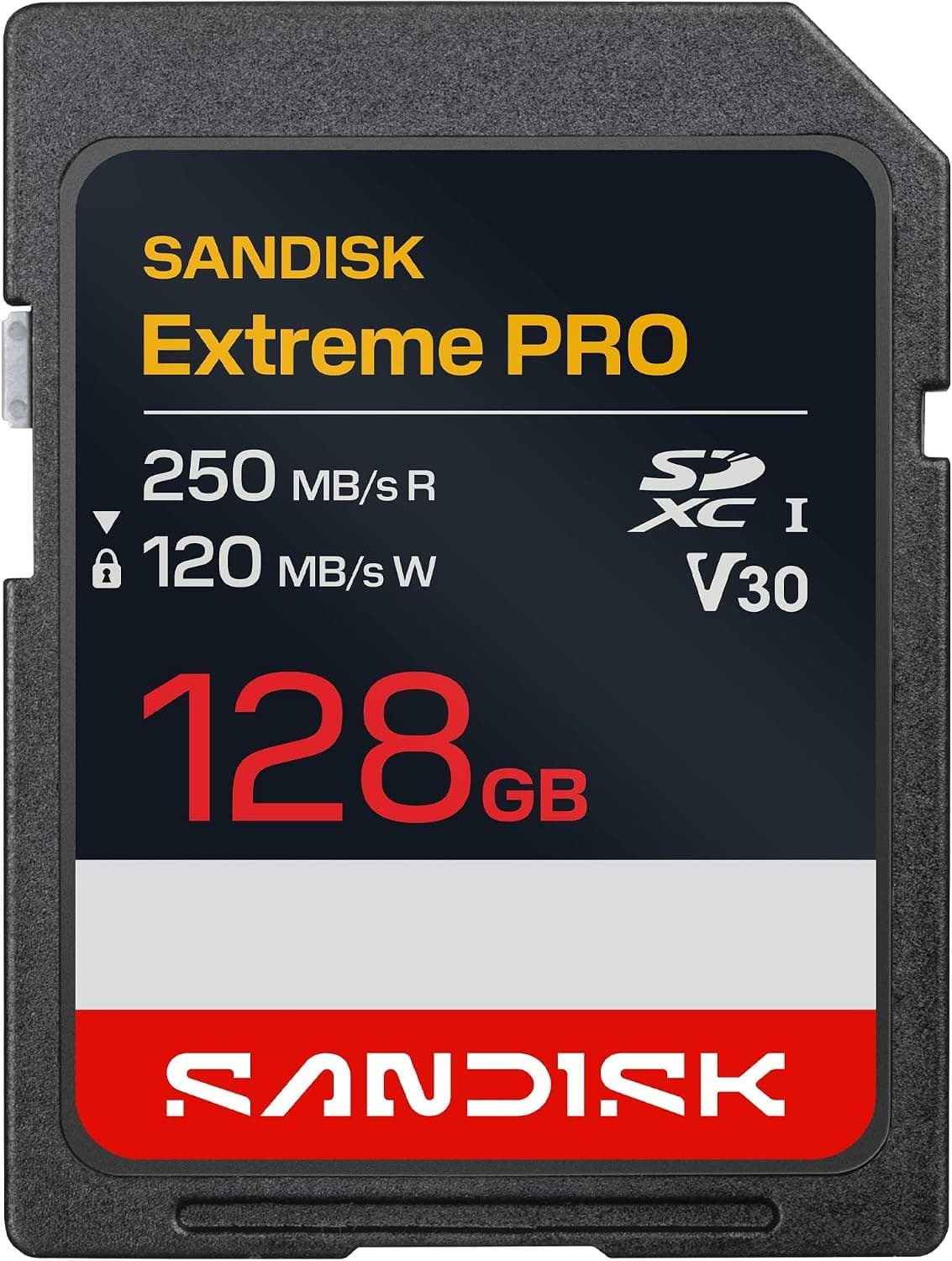
SanDisk Extreme Pro SDXC 128GB
Fast enough for normal stills and video without making storage the exciting purchase.
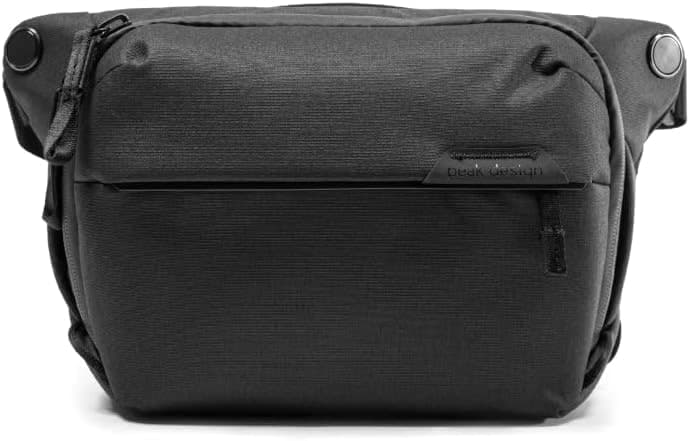
Peak Design Everyday Sling 6L V2
Room for a small body and lens without dragging a full backpack everywhere.
Prices are rough catalog totals. Retailer prices change, and you can swap pieces to fit your system.
Related Gear guides
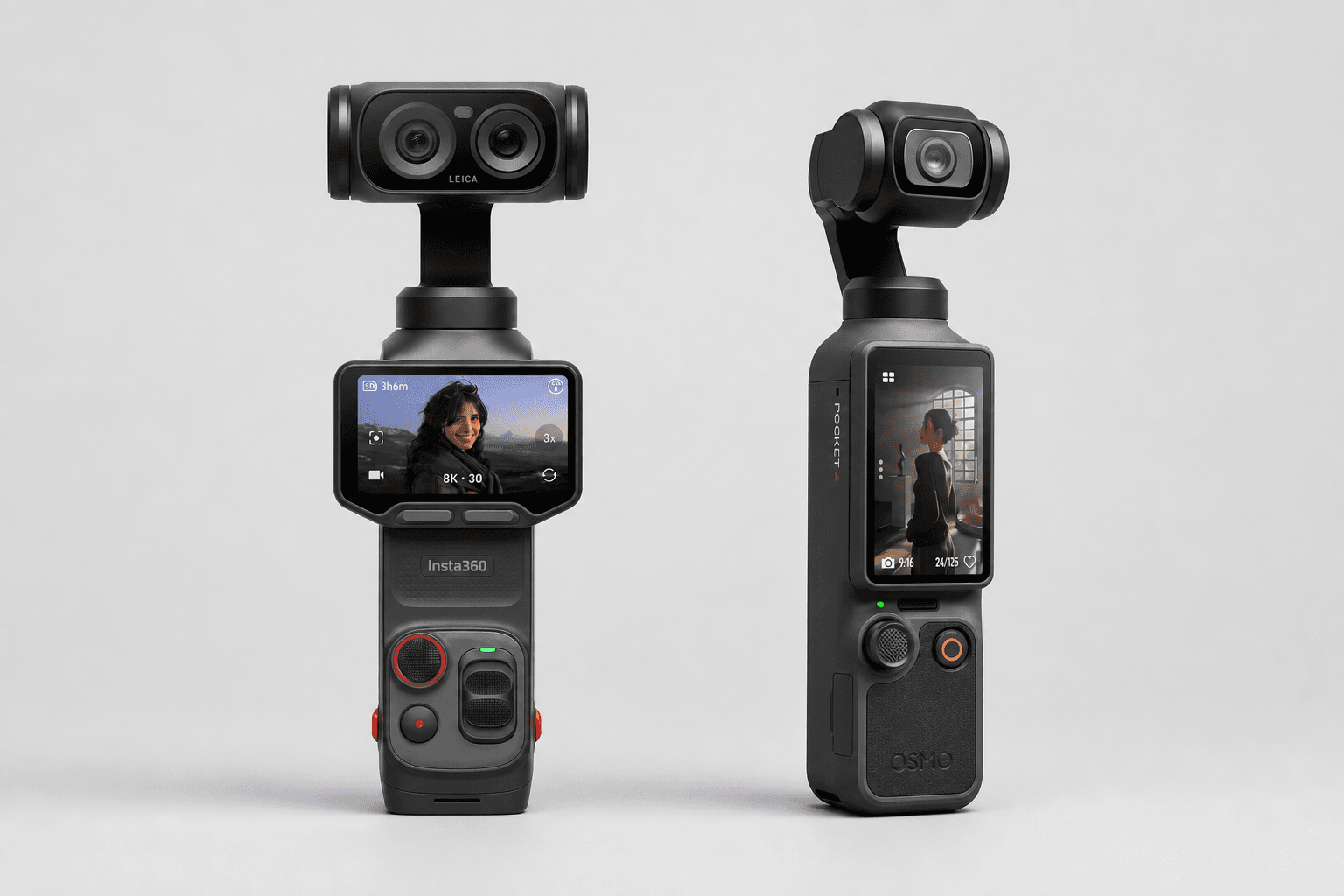
Insta360 Luna Ultra vs DJI Osmo Pocket 4: Which Pocket Gimbal Should You Buy?
Compare Luna Ultra and DJI Pocket 4 by lenses, video, Log formats, storage, U.S. availability, and the filming jobs each pocket gimbal handles best.
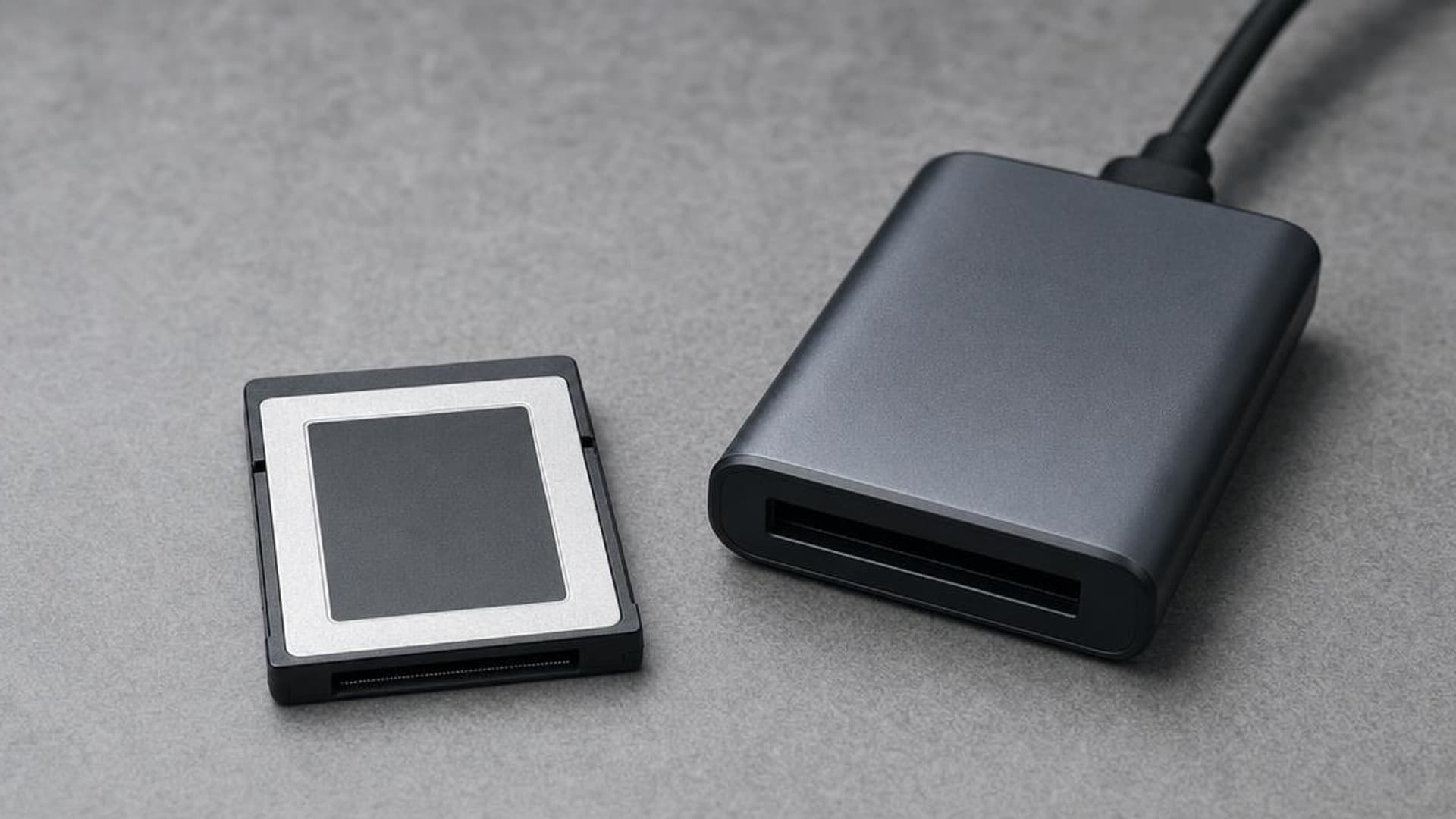
CFexpress 4.0 and VPG Explained: Buy the Card Your Camera Needs
CFexpress 4.0 doubles theoretical bandwidth, while VPG certifies sustained video writes. Learn Type A vs B, VPG classes, and when 4.0 is worth paying for.
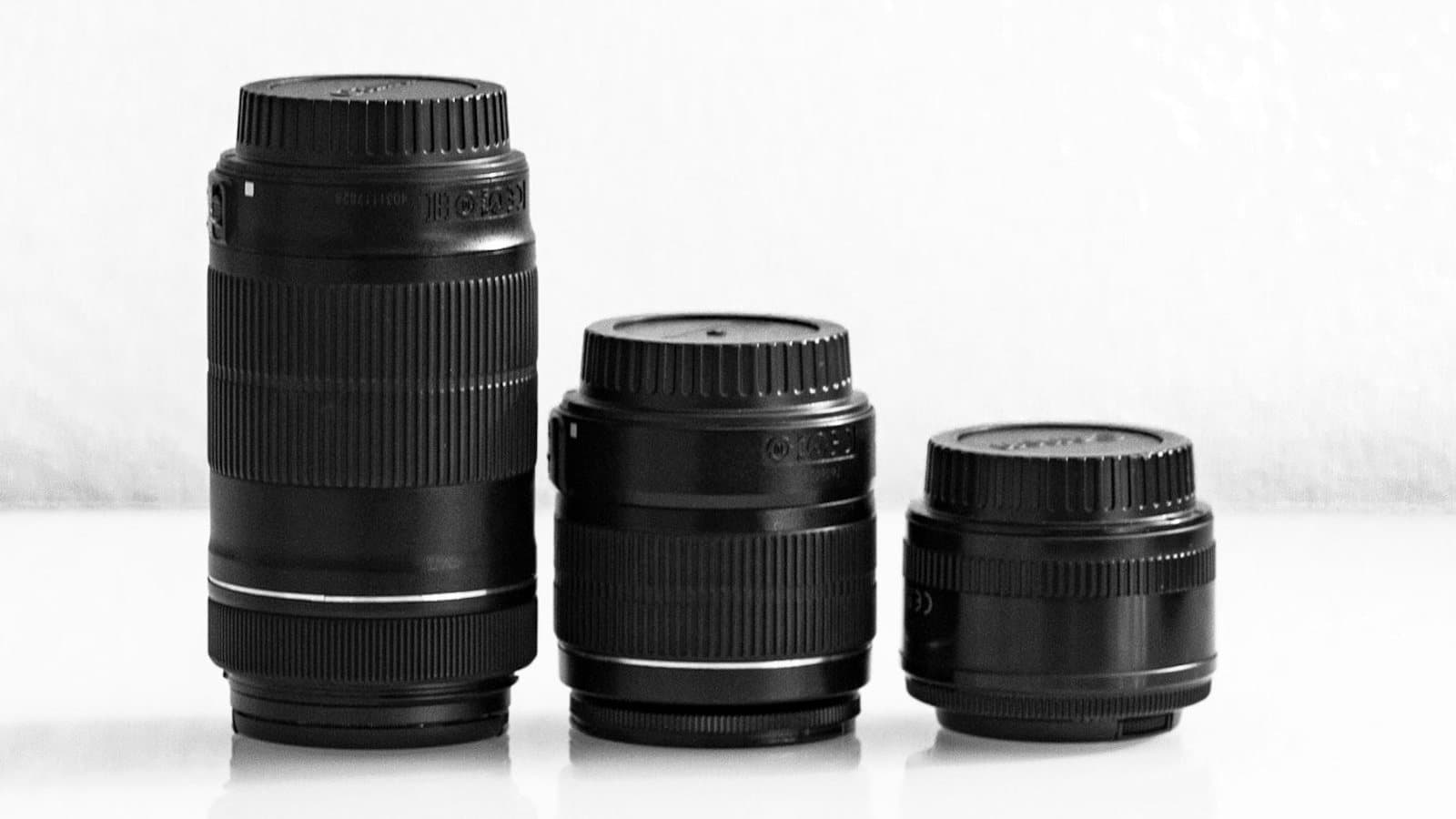
Focal Length Explained: What 24mm, 50mm, 85mm, and 200mm Actually Do
What the millimeter number on a lens changes in the field: angle of view, compression, and working distance. When to reach for 24, 50, 85, or 200mm.
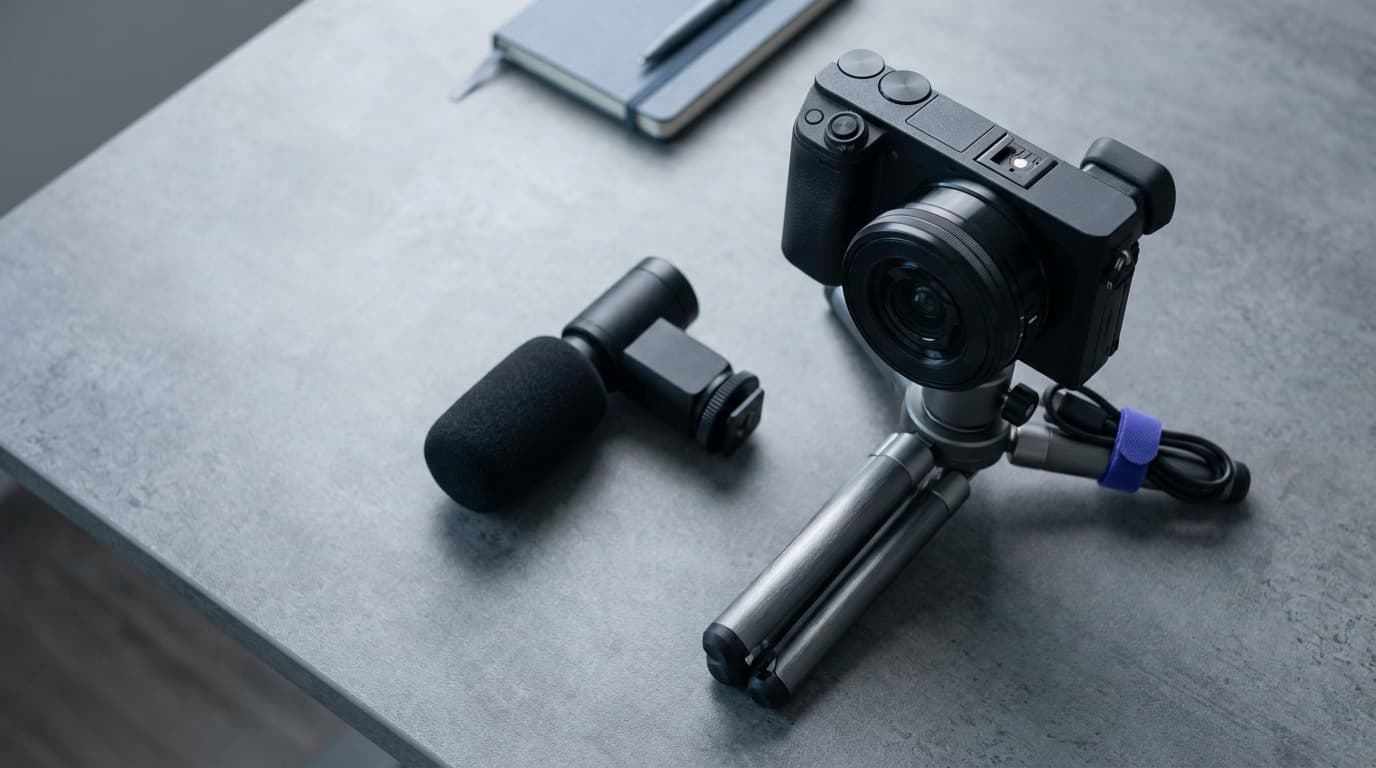
Canon EOS R50 V vs Sony ZV-E10 II: Which Beginner Vlogging Camera Should You Buy?
Canon EOS R50 V is the easier beginner creator kit. Sony ZV-E10 II is the deeper lens-system pick. Compare the practical tradeoffs.
Researched, not personally tested: picks compare specifications, available owner feedback, and established expert sources. As an Amazon Associate I earn from qualifying purchases. We may earn a commission from links here, at no extra cost to you. How we research →