We may earn a commission from links on this page, at no extra cost to you. Picks are researched, not sponsored.
Your reaction time is often slower than the event. Pre-Capture solves that by keeping a rolling buffer of recent frames. The oldest unsaved frame is discarded as a new one arrives. A full press tells the camera to write the most recent part of that buffer to the card, usually along with frames captured after the press.
Camera makers use several names for the same basic idea: Pre-Capture, Pre-Release Capture, Pro Capture, Pre-Continuous Shooting, and Pre-Burst. The saved duration, frame rate, file type, and trigger behavior are not standardized.
What happens before you press the shutter?
| Stage | What the camera does | What you do |
|---|---|---|
| Ready | Meters and waits | Frame the likely action area |
| Buffering | Continuously captures frames into temporary memory | Half-press the shutter or hold the assigned control |
| Trigger | Marks the current instant | Press fully when the action happens |
| Save | Writes the chosen pre-trigger and post-trigger frames to the card | Keep following the subject until the burst ends |
Nothing is permanently saved until the trigger condition is met. Holding the half-press for a long time does not normally fill the card, but it does use power and keeps the sensor, processor, autofocus, and buffer active.
How much time does Pre-Capture save?
It depends on the camera and frame rate. Sony's a9 III help guide allows a pre-capture interval from 0.005 to 1.0 second and requires continuous shooting. Canon's EOS R6 Mark III manual gives about 0.5 second at roughly 40 fps. Nikon's Z8 manual lets the photographer choose how much of the final buffer is saved when the shutter is fully pressed.
A longer interval is not always better. At 120 fps, one second creates 120 near-duplicate files before the main burst even starts. Use enough time to cover your reaction delay and the event's first movement.
| Subject | Useful starting interval | Why |
|---|---|---|
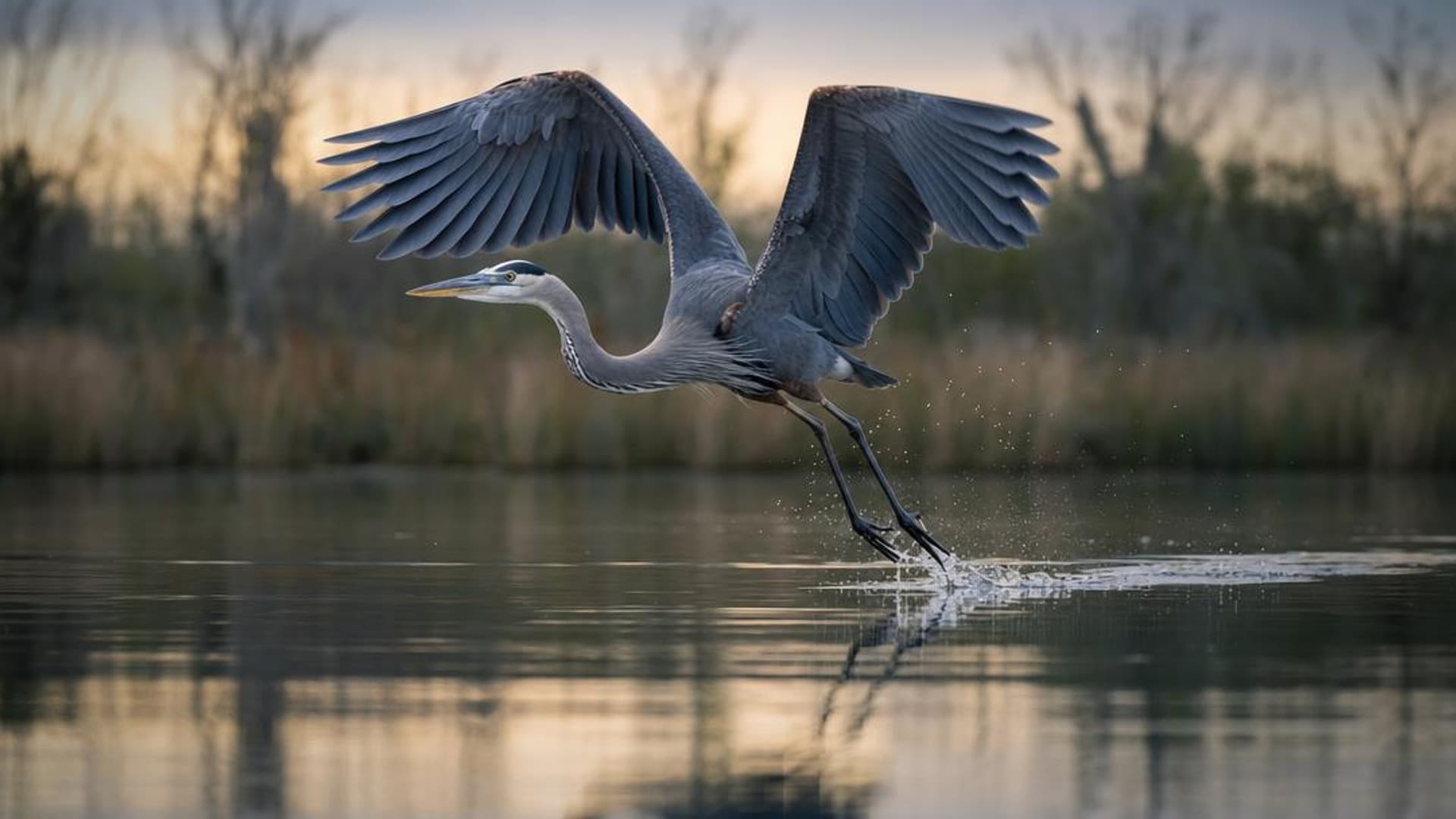
| Perched bird taking flight | 0.5 to 1.0 sec | The launch can happen without warning |
| Baseball or tennis contact | 0.2 to 0.5 sec | Timing is predictable but the exact contact frame is brief |
| Dog jumping for a toy | 0.3 to 0.5 sec | Covers the leap without creating an excessive sequence |
| Finish-line expression | 0.2 to 0.5 sec | Keeps the reaction just before and after the line |
These are starting points, not universal settings. Test how your camera behaves at the selected burst rate.
What settings can Pre-Capture change?
File format may be restricted
Do not assume the mode saves RAW. Nikon's Z8 High-Speed Frame Capture + modes save JPEG, with image-area and size limits at some frame rates. Other cameras can retain RAW at lower burst rates or use a separate high-speed format. Check the manual for the exact drive mode.
Electronic shutter is common
Canon states that the EOS R6 Mark III uses the electronic shutter for Pre-Continuous Shooting and disables flash. Electronic shutter can introduce rolling-shutter distortion under fast motion or banding under some artificial lights unless the camera has a very fast readout or global shutter. Use the LED flicker guide when indoor bands appear, and check a test burst for bent bats, clubs, wheels, or wings.
Focus still has to predict movement
The buffer cannot rescue missed focus. Canon warns that sudden distance changes during the half-press can leave subjects out of focus. Use continuous autofocus, an appropriate subject-detection mode, and a focus area that gives the subject room to enter. The autofocus modes guide explains AF-C and tracking choices.
Battery, buffer, and card speed matter
Pre-Capture keeps more of the camera awake. A low battery can interrupt operation, and the feature may pause while previous images are written to the card. Use a card approved for the selected burst mode, begin with a full battery, and practice the half-press timing before a one-chance event.
How do you set it up without getting hundreds of useless frames?
- Choose the normal exposure first. Set a shutter speed that freezes the action and an aperture that leaves enough focus depth.
- Select continuous autofocus. Confirm the camera tracks the subject before enabling the buffer.
- Choose the lowest adequate burst rate. More fps helps with very brief motion, but it creates more files and may reduce resolution or file quality.
- Start with 0.5 second. Shorten it when the sequence is too repetitive; lengthen it when the launch frame is still missing.
- Use a deliberate trigger. Half-press is intuitive, while a separate AF button can reduce accidental buffering on cameras that support it.
- Review a full sequence. Inspect focus, distortion, exposure consistency, and the first saved frame at 100 percent.
Is Pre-Capture cheating?
No. It is a capture tool, like continuous autofocus or a motor drive. It does not choose the location, light, background, shutter speed, focus area, or final frame. It helps a photographer deal with human reaction time. The skill moves toward anticipation and setup rather than a perfectly timed single press.
The feature is most useful when the moment is genuinely hard to predict. For repeatable action, learning the rhythm and using a shorter burst often produces fewer files and a more deliberate result.
A camera built around fast Pre-Capture
The Sony a9 III can buffer up to one second before the full press and shoot at very high burst rates with a global shutter. That makes it unusually strong for professional sports and wildlife, but it is an expensive specialist body. The best sports cameras and wildlife camera guide cover more practical price points.
Best for Sports
Sony a9 III
Sports and wildlife professionals who need distortion-free high-speed capture.
Check price at AmazonPrimary sources
- Sony a9 III: Pre-Capture settings, interval, and trigger controls
- Canon EOS R6 Mark III: Pre-Continuous Shooting behavior and restrictions
- Nikon Z8: High-Speed Frame Capture + and JPEG restrictions
- Nikon Z8: Pre-Release Capture buffer options
Does Pre-Capture record all the time?
It normally buffers only while you half-press the shutter or hold the assigned trigger. The rolling buffer is temporary until you press fully, at which point the selected pre-trigger frames are written to the card.
Can Pre-Capture save RAW files?
Sometimes. File support depends on the camera, burst rate, and drive mode. Nikon's Z8 High-Speed Frame Capture + modes save JPEG, while other implementations may support RAW in selected modes. Check the manual before a critical shoot.
Why is my flash disabled in Pre-Capture?
Many implementations use an electronic shutter and continuous high-speed capture, which are not compatible with normal flash timing. Canon explicitly disables flash in its Pre-Continuous Shooting mode.
What is the best Pre-Capture time for birds?
Start around 0.5 second. Increase it toward one second when takeoff is very unpredictable, or shorten it when you are creating too many near-duplicate files. Focus tracking and shutter speed still matter more than the buffer length.
Keep going
Next useful steps
Pick one. Each link continues the same job without starting the research over.
Related Learn guides

Content Credentials and C2PA Explained for Photographers
Content Credentials record a photo's signed provenance and edits. Learn what C2PA proves, what it cannot prove, and how capture-to-export workflows work.
Open Gate Video Explained: When 3:2 Is Worth It
Open Gate records a taller sensor area for flexible 16:9, 9:16, and square crops. See when it helps, what it costs, and how to frame it correctly.

RAW vs JPEG: Which File Format Should You Shoot?
RAW keeps all your sensor data for maximum editing freedom; JPEG is smaller and ready to share. Here is how they differ and when each one is the right call.
Time-Lapse Photography: Settings, Intervals, and the Day-to-Night Move
Shoot one frame every few seconds for hours, then play them back as video. Here are the settings, the interval math, and the tricky day-to-night transition.
Researched, not personally tested: picks compare specifications, available owner feedback, and established expert sources. As an Amazon Associate I earn from qualifying purchases. We may earn a commission from links here, at no extra cost to you. How we research →